Viviano Codazzi: Architect of Baroque Visions
Viviano Codazzi (1604 – 1670) stands as a pivotal figure in the Italian Baroque, an artist whose meticulous architectural paintings and evocative capricci cemented his place within the artistic landscape of the era. Born in Valsassina near Bergamo, Italy, Codazzi’s early life was marked by familial relocation to Rome in 1605, setting him on a path toward mastering the burgeoning artistic currents of the city. While biographical details remain somewhat sparse, evidence suggests he received formal training in Rome, establishing himself as part of a vibrant artistic milieu that would shape his distinctive style and career trajectory.
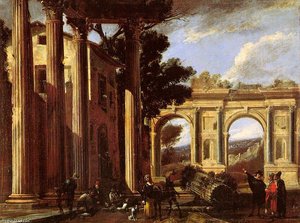
Codazzi’s fame rests primarily upon his architectural paintings – grand compositions depicting Roman ruins and idealized landscapes populated by figures rendered with remarkable realism. Unlike many of his contemporaries who focused on portraiture or mythological subjects, Codazzi dedicated himself to capturing the grandeur and complexity of the built environment, reflecting a fascination with classical antiquity that was characteristic of Baroque aesthetics. His approach distinguished him from others; he skillfully employed “bamboccianti,” specialized painters adept at creating realistic figures within architectural backgrounds—a technique championed by luminaries like Michelangelo Cerquozzi and Jan Melchior van Rossum. This collaborative method ensured the harmonious integration of human presence into monumental spaces, elevating Codazzi’s works beyond mere topographical representations. He was a true innovator in his time, pushing boundaries and redefining artistic conventions.
A significant commission arrived from Madrid in 1633 – a quartet of canvases portraying scenes from Roman history for the Buen Retiro palace, undertaken jointly with Domenico Gargiulo. Among these ambitious projects was an unforgettable depiction of gladiatorial combats within the Colosseum, showcasing Codazzi’s ability to convey dramatic narrative and visual splendor. This undertaking solidified his reputation as a master painter capable of tackling monumental undertakings and collaborating effectively with fellow artists. The partnership between Codazzi and Gargiulo became legendary, resulting in artworks that exemplify the Baroque ideal of combining grandeur and psychological depth—a testament to their shared vision and artistic prowess.
Codazzi’s stylistic innovations profoundly impacted subsequent generations of painters. He embraced the Bamboccianti technique, collaborating with Michelangelo Cerquozzi and Jan Melchior van Rossum, who brought a similar level of realism to architectural backgrounds. This collaborative spirit was central to Codazzi's artistic philosophy, mirroring the broader trends within Baroque art—a movement characterized by dynamism, theatricality, and an unwavering commitment to capturing the essence of human experience against monumental landscapes. His influence can be seen in the works of artists like Gian Paolo Panini, who adopted Codazzi’s meticulous attention to detail and perspective.
Codazzi's artistic legacy extends beyond individual masterpieces; he fostered a tradition of architectural fantasy—a genre that celebrated imagination alongside observation. He died in Rome in November 1670, leaving behind an indelible mark on the history of Baroque art. His paintings continue to inspire awe and admiration for their breathtaking beauty and masterful execution, securing his place as one of Italy’s most influential artists of the seventeenth century. Viviano Codazzi remains a beacon of artistic excellence—a testament to the transformative power of vision and collaboration within the context of a vibrant cultural epoch.