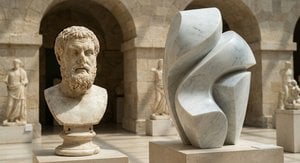
Stella Scala & Simeone Crispino: Exploring Memory and Transformation Through Sculpture and Photography
Italian art duo Vedovamazzei (Stella Scala & Simeone Crispino) have captivated audiences with their distinctive approach to artistic expression, blending sculpture, painting, installation, and photography into conceptually rich works that delve into themes of history, architecture, and the vibrant heritage of Naples. Born in Naples and Milan respectively, Stella Scala (1964) and Simeone Crispino (1962) embarked on their collaborative journey in 1991, adopting the evocative moniker “vedovamazzei” – a phrase derived from a door plate they discovered serendipitously on a Naples street. This seemingly accidental name encapsulates the duo’s artistic ethos: an embrace of chance encounters and a fascination with unexpected juxtapositions.
Early Influences & Artistic Formation
Stella Scala’s artistic roots lie in a grounding in classical sculpture and architectural studies, fostering an appreciation for meticulous craftsmanship and formal precision. Her formative years were profoundly shaped by exposure to the monumental grandeur of Naples – a city renowned for its ancient ruins and breathtaking Baroque churches – instilling within her a deep respect for tradition and a desire to engage with enduring artistic legacies. Simultaneously, Simeone Crispino's background encompasses photography and experimental filmmaking, equipping him with skills in visual storytelling and manipulating perception. He honed his craft documenting urban landscapes and exploring the interplay between image and sound, cultivating an eye for detail and a sensitivity to narrative structure. These disparate influences converge within Vedovamazzei’s oeuvre, resulting in artworks that simultaneously honor established artistic conventions while daringly pushing boundaries of creative exploration.
The Vedovamazzei Method: Translation and Transformation
Vedovamazzei's signature technique revolves around what they term “translation,” a process characterized by a deliberate layering of media and conceptual interventions. It begins with the meticulous reproduction of historical pictorial works – primarily Renaissance frescoes – onto sheets of paper using photographic techniques. This initial step isn’t merely about replication; it’s an act of reimagining, transforming the original image into a new visual language. Subsequently, Vedovamazzei invite children between six and twelve years old to recreate these images from memory—a crucial element that introduces an element of subjective interpretation and disrupts the idealized representation inherent in the original artwork. This step underscores the duo’s belief that artistic creation is fundamentally shaped by perception and experience. Finally, Vedovamazzei transform these childlike drawings into large-scale sculptures or translate them into photographic prints, completing a circuitous journey that highlights the complexities of artistic production and reception.
Notable Exhibitions & Recognition
Vedovamazzei's work has garnered international acclaim, appearing in prestigious venues such as Magazzino d’arte moderna in Rome, Piazza Alighiero Boetti in Rome, BienNoLo in Milan, and Galerie Fucares in Madrid. Their piece *Abbronzatissimi*, featuring reproductions of Rembrandt self-portraits executed by children, was particularly lauded for its conceptual depth and artistic innovation. Critics recognized Vedovamazzei’s ability to synthesize disparate influences—classical sculpture alongside photographic experimentation—creating artworks that defy categorization while resonating with universal themes. Furthermore, their installation *Nave Emmet Native Amer* at Dublin Contemporary 2011 garnered critical attention for its exploration of themes related to death penalty information centre and the role of art in confronting societal issues. Their ongoing collaborations with institutions like Siena Pellegrinaio hall and Cosmo Trastevere solidify Vedovamazzei’s position as prominent figures within contemporary artistic discourse.
Legacy & Critical Reception
Vedovamazzei's enduring influence stems from their unwavering commitment to challenging conventional notions of artistic representation and engaging audiences in profound dialogues about cultural heritage. Their method—the “translation”—serves as a powerful critique of visual culture, questioning assumptions about authorship and highlighting the role of memory in shaping our understanding of art history. Vedovamazzei’s work continues to inspire artists and scholars alike with its daring experimentation across diverse media and its ability to provoke thoughtful reflection on pressing ethical dilemmas—a testament to their enduring contribution to the artistic landscape of the 21st century.