
Yi Eungro, 1904 – 1989

Gemälde von Yi Eungro: Die 99 berühmtesten Werke, nach Beliebtheit sortiert

Das berühmteste Gemälde von Yi Eungro ist Untitled (1969) im Lee Ungno Museum in Daegu. Mit Composition (1970) und Composition (1970) wird die Trilogie der drei weltweit bekannten Werke vervollständigt. Unser Katalog listet 99 Werke von Yi Eungro auf; die folgenden 99 sind die meistbeachteten Werke, jeweils mit Angabe des Entstehungsjahres, des Museums und ihrer kunsthistorischen Bedeutung.

Die Rangfolge basiert auf unserem Popularitäts-Score, der Suchanfragen, Besuche und Bestellungen für jedes Werk kombiniert. Aktualisiert am Oktober 2026.

Porträt von Yi Eungro
Yi Eungro · 1904 – 1989
Geboren · gestorben
1904 – 1989, Seoul
Stilrichtung
Abstrakter expressionismus
Werke in unserem Katalog
99
Bekannteste Werke
Untitled (1969)
Die meisten Werke in
Lee Ungno Museum

Die 10 berühmtesten Gemälde von Yi Eungro

Die Reisen des Marco Polo Serie (1980) von Yi Eungro
9

Die Reisen des Marco Polo Serie

1980 · Malerei · Lee Ungno Museum, Daegu

Dieses fesselnde Werk schöpft seine reiche thematische Quelle aus der Die Reisen des Marco Polo Serie, einem monumentalen Werkkomplex, der vom meisterhaften koreanisch-französischen Künstler Yi Eungro entworfen wurde. Weit über eine bloße Darstellung hinaus fungiert dieses Gemälde als visuelles Memoir – eine traumhafte Kartografie einer unbekannten Welt, betrachtet durch die anspruchsvolle Linse ostasiatischer Perspektiven, die auf europäische Neugier treffen. Das eigentliche Wesen dieser Serie spricht vom kulturellen Austausch und dem…

Die Reisen des Marco Polo Serie (1980) von Yi Eungro
10

Die Reisen des Marco Polo Serie

1980 · Lee Ungno Museum, Daegu

In den evokativen Tiefen der Die Reisen des Marco Polo Serie begegnen wir einer Welt, in der die Grenzen zwischen historischer Chronik und persönlicher Traumlandschaft verschwimmen. Dieses besondere Werk, geschaffen vom Meister Lee Ungno im Jahr 1980, dient als Fenster zu einer verlorenen Erzählung – ein Fragment einer grandiosen, aus fünfundsiebzig Gemälden bestehenden Odyssee, die für ein nie veröffentlichtes Buch gedacht war. Dieses Gefühl einer „ungesehenen Geschichte“ verleiht dem Werk…

Yi Eungro, Gemälde 11 bis 99

Die Reisen des Marco Polo Serie (1980) von Yi Eungro
#11

Die Reisen des Marco Polo Serie

1980 · Lee Ungno Museum

Das Kunstwerk präsentiert sich als monochrome Landschaft, die mit schwarzer Tusche auf einem hellen, saugfähigen Untergrund geschaffen wurde. Die Komposition wird durch eine Abfolge von dreieckigen Formen definiert,…

Die Reisen Marco Polos Serie (1980) von Yi Eungro
#12

Die Reisen Marco Polos Serie

1980 · Lee Ungno Museum

Die ersten künstlerischen Impulse erhielt Ungno durch die Hongseong Botong Hakyo, wo er grundlegende Fähigkeiten in der Zeichnung und der Farbenlehre schärfte. Doch erst die Unterweisung durch Song…

The travels of Marco Polo Series (1980) von Yi Eungro
#13

The travels of Marco Polo Series

1980 · Lee Ungno Museum

In the profound stillness of Yi Eungro’s The Travels of Marco Polo Series, we find ourselves transported not merely to a geographical location, but to a dreamscape where…

Komposition (1970) von Yi Eungro
#14

Komposition

1970 · Lee Ungno Museum

In dem eindringlichen Meisterwerk Komposition, das im Jahr 1970 entstand, erreicht der legendäre koreanische Künstler Lee Ungno (Yi Eungro) eine atemberaubende Synthese aus östlicher Materialität und westlicher Abstraktion.…

Die Reisen Marco Polos Serie (1980) von Yi Eungro
#15

Die Reisen Marco Polos Serie

1980 · Lee Ungno Museum

Eine panoramische Vision von Entdeckung und Harmonie: Yi Ungnos „Die Reisen Marco Polos Serie“ Yi Ungnos „Die Reisen Marco Polos Serie“, gemalt im Jahr 1980, steht als ein…

Mask (1985) von Yi Eungro
#16

Mask

1985 · Lee Ungno Museum

In the quiet intimacy of Mask, we encounter a profound dialogue between form and raw material. Created in 1985, this evocative sculpture serves as a hauntingly beautiful testament…

Totem (1966) von Yi Eungro
#18

Totem

1966 · Lee Ungno Museum
Face (1964) von Yi Eungro
#20

Face

1964 · Lee Ungno Museum
Totem (1964) von Yi Eungro
#21

Totem

1964 · Lee Ungno Museum
Mask (1965) von Yi Eungro
#23

Mask

1965 · Lee Ungno Museum
People (1967) von Yi Eungro
#26

People

1967 · Lee Ungno Museum
Composition (1968) von Yi Eungro
#27

Composition

1968 · Lee Ungno Museum

In 1967, Lee Ungno was imprisoned for 2 years and 6 months for his involvement in the East Berlin Affair. He suffered most from an inability to continue…

Bamboo (1976) von Yi Eungro
#33

Bamboo

1976 · Lee Ungno Museum

The starting point of Lee Ungno’s artistic world was bamboo, one of the “Four Gracious Plants (Sagunja),” and it was also bamboo that he favored most as a…

City (1974) von Yi Eungro
#62

City

1974 · Lee Ungno Museum
People (1979) von Yi Eungro
#66

People

1979 · Lee Ungno Museum
People (1979) von Yi Eungro
#67

People

1979 · Lee Ungno Museum
People (1979) von Yi Eungro
#68

People

1979 · Lee Ungno Museum
People (1979) von Yi Eungro
#71

People

1979 · Lee Ungno Museum
People (1980) von Yi Eungro
#72

People

1980 · Lee Ungno Museum
People (1980) von Yi Eungro
#73

People

1980 · Lee Ungno Museum
People (1981) von Yi Eungro
#78

People

1981 · Lee Ungno Museum
People (1981) von Yi Eungro
#79

People

1981 · Lee Ungno Museum
People (1981) von Yi Eungro
#80

People

1981 · Lee Ungno Museum
People (1989) von Yi Eungro
#85

People

1989 · Lee Ungno Museum
Komposition (1964) von Yi Eungro
#86

Komposition

1964 · Lee Ungno Museum

In der evokativen Welt der Abstraktion der Mitte des 20. Jahrhunderts fangen nur wenige Werke die Urkraft der Natur so greifbar ein wie Yi Eungros Komposition. Dieses 1964…

Menschen (1985) von Yi Eungro
#87

Menschen

1985 · Lee Ungno Museum

In der weiten, evokativen Ausdehnung von Yi Eungros Meisterwerk aus dem Jahr 1985, „Menschen“, werden wir zu einer tiefgründigen Meditation über die kollektive menschliche Erfahrung eingeladen. Dieses monumentale…

The travels of Marco Polo Series (1980) von Yi Eungro
#88

The travels of Marco Polo Series

1980 · Lee Ungno Museum

This painting is from Goam’s The Travels of Marco Polo Series, which he undertook when asked to produce artworks for a book of that name. The whole series…

The travels of Marco Polo Series (1980) von Yi Eungro
#89

The travels of Marco Polo Series

1980 · Lee Ungno Museum

This painting is from Goam’s The Travels of Marco Polo Series, which he undertook when asked to produce artworks for a book of that name. The whole series…

The travels of Marco Polo Series (1980) von Yi Eungro
#90

The travels of Marco Polo Series

1980 · Lee Ungno Museum

This painting is from Goam’s The Travels of Marco Polo Series, which he undertook when asked to produce artworks for a book of that name. The whole series…

The travels of Marco Polo Series (1980) von Yi Eungro
#91

The travels of Marco Polo Series

1980 · Lee Ungno Museum

This painting is from Goam’s The Travels of Marco Polo Series, which he undertook when asked to produce artworks for a book of that name. The whole series…
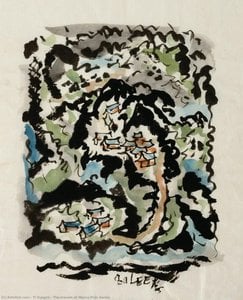
The travels of Marco Polo Series (1980) von Yi Eungro
#92

The travels of Marco Polo Series

1980 · Lee Ungno Museum

This painting is from Goam’s The Travels of Marco Polo Series, which he undertook when asked to produce artworks for a book of that name. The whole series…

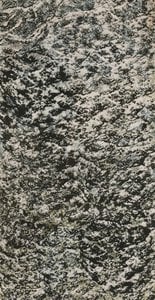
Landscape (1950) von Yi Eungro
#95

Landscape

1950 · Lee Ungno Museum

This painting is an early example that captures Ungno’s major step into abstract art. Although it is still suggestive of specific forms such as tree branches and leaves,…

Composition (1978) von Yi Eungro
#96

Composition

1978 · Lee Ungno Museum

In the 1970s and ‘80s, Lee Ungno produced a lot of print works that were connected with his Abstract Letter or People series in content, while showing diverse…

People (1986) von Yi Eungro
#97

People

1986 · Lee Ungno Museum

Lee Ungno started his People series in 1979 and continued it until his death. In the early series, people appeared as dancing figures in groups, while the Series…

Composition (1972) von Yi Eungro
#98

Composition

1972 · Lee Ungno Museum

A great example of the constructive Abstract Letter works that Lee Ungno made in the 1970s, this painting represents the Chinese character 壽 (soo), meaning ‘life’. The solid…

Composition (1977) von Yi Eungro
#99

Composition

1977 · Lee Ungno Museum

This work, which is linked to Abstract Letter series in content, presents a dramatic contrast between the white background and the red form. Ungno’s print works, except those…

Gemälde von Yi Eungro nach Epochen

Die Motive, die Yi Eungro am häufigsten gemalt hat

Die vier Motive, die in diesen Meisterwerken am häufigsten vorkommen, jeweils mit dem edelsten Beispiel.

Wo man die Gemälde von Yi Eungro sehen kann

Das Museum, in dem sich die meisten der auf dieser Seite aufgeführten Gemälde befinden.

Museum Stadt Werke von Yi Eungro Gemälde aus dieser Liste
Lee Ungno Museum, DaeguLee Ungno Museum Daegu 99 Untitled, Composition, Composition

Das berühmteste Gemälde von Yi Eungro aus jedem Jahrzehnt

  1. 1950s
    Landscape (1950) von Yi Eungro
    Nr. 95 von 99

    Landscape

    Alter 46 – 55 · Lee Ungno Museum

    This painting is an early example that captures Ungno’s major step into abstract art. Although it is still suggestive of specific forms such as tree branches and leaves,…

  2. 1960s
    Untitled (1969) von Yi Eungro
    Platz 1 von 99

    Untitled

    Alter 56 – 65 · Lee Ungno Museum
  3. 1970s
    Composition (1970) von Yi Eungro
    Platz 2 von 99

    Composition

    Alter 66 – 75 · Lee Ungno Museum
  4. 1980s
    Die Reisen des Marco Polo Serie (1980) von Yi Eungro
    Nr. 9 von 99

    Die Reisen des Marco Polo Serie

    Alter 76 – 85 · Lee Ungno Museum

    Dieses fesselnde Werk schöpft seine reiche thematische Quelle aus der Die Reisen des Marco Polo Serie, einem monumentalen Werkkomplex, der vom meisterhaften koreanisch-französischen Künstler Yi Eungro entworfen wurde.…

Fragen zu den Gemälden von Yi Eungro

Was ist das berühmteste Gemälde von Yi Eungro?Antwort anzeigen

Untitled (1969), Lee Ungno Museum, Daegu. Es folgen Composition (1970) und Composition (1970).

Wie alt war Yi Eungro, als Untitled gemalt wurde?Antwort anzeigen

65 Jahre alt: Untitled stammt aus dem Jahr 1969 und Yi Eungro wurde in 1904 geboren.

Was sind die 10 besten Gemälde von Yi Eungro?Antwort anzeigen

Untitled, Composition, Composition, I Ching 64 Hexagrams Sequence(山風蠱), I Ching 64 Hexagrams Sequence(澤風大過), I Ching 64 Hexagrams Sequence (火風鼎), Untitled, People, Die Reisen des Marco Polo Serie und Die Reisen des Marco Polo Serie. Die obige Rangliste gibt das Jahr und das Museum für jedes Werk an.

Wie viele Gemälde hat Yi Eungro geschaffen?Antwort anzeigen

Unser Katalog enthält 99 Werke von Yi Eungro, datiert von 1950 bis 1989.

Wo befinden sich die berühmtesten Gemälde von Yi Eungro?Antwort anzeigen

Die meisten davon befinden sich in Lee Ungno Museum (Daegu). Die obige Tabelle listet die Museen einzeln auf.

Wann hat Yi Eungro seine berühmtesten Werke gemalt?Antwort anzeigen

In 1970s: 52 der 99 Werke auf dieser Seite stammen aus dieser Zeit, darunter Composition.

Was sind die frühesten und spätesten berühmten Gemälde von Yi Eungro?Antwort anzeigen

Das früheste Werk auf dieser Seite ist aus dem Jahr Landscape (1950), das jüngste aus dem Jahr People (1989).

Was hat Yi Eungro am häufigsten gemalt?Antwort anzeigen

Korean art (6), Abstract forms (5) und Geometric forms (4), unter den 99 Werken auf dieser Seite.

Welches Medium hat Yi Eungro am häufigsten verwendet?Antwort anzeigen

Acryl auf Leinwand: 3 von 99 Werken auf dieser Seite.

Welcher Kunstrichtung gehört Yi Eungro an?Antwort anzeigen

Abstrakter expressionismus, wie die Gemälde auf dieser Seite zeigen.

Welche Gemälde von Yi Eungro kann ich im Lee Ungno Museum sehen?Antwort anzeigen

Untitled, Composition und Composition gehören zu den 99 Werken auf dieser Seite, die im Lee Ungno Museum, Daegu befinden sind.

Über Yi Eungro

Early Life and Training

Yi Eungro (이응노), born January 12, 1904, in Hongseong County, Chungcheongnam-do Province, South Korea, possessed an innate fascination for art from a young age. He diligently pursued classical Chinese studies under his father’s guidance and enrolled at Hongseong Botong Hakyo (홍성보통학교, 홍城초등학교, 洪城普通學校) for his primary education—a formative experience that instilled in him the foundational principles of Korean scholarship and artistic tradition. Recognizing his ambition to become a painter, he abandoned formal schooling to dedicate himself to mastering brushwork and ink wash techniques under Yeomjae Song Tae-hoe (예마재 송태호), a celebrated calligrapher-painter-photographer who profoundly shaped his artistic vision. This mentorship proved instrumental in establishing him as a student of the Haegang Style, which emphasized capturing the essence of nature through subtle brushstrokes and harmonious compositions.

Artistic Career in Korea and Japan

Lee Ungno’s professional journey commenced in Seoul in 1922, where he apprenticed under Kim Gyujin (김규진), a luminary of Korean art who championed innovation within established traditions. He honed his skills primarily through the study of Haegang Style, focusing on portraying bamboo—specifically Mukjuk (묵죽, 墨竹, ink bamboo)—with meticulous detail and expressive nuance. This dedication culminated in a prestigious award at the 3rd Annual Joseon Art Exhibition, marking his debut into the Korean art scene and solidifying his commitment to artistic excellence. Throughout the colonial period, Lee consistently garnered recognition for his contributions to Korean art, demonstrating unwavering perseverance and artistic integrity. However, he harbored a conviction that Korean ink painters needed to transcend conventional boundaries and embrace modern influences—a belief that fueled his experimentation with new stylistic approaches. In the early 1930s, Lee began producing landscapes infused with inspiration from Western-style paintings and naturalistic renderings, signaling a pivotal shift toward incorporating broader artistic perspectives. He actively sought to synthesize Eastern mediums and brushstrokes with Western compositional principles, reflecting an intellectual curiosity that propelled him beyond traditional stylistic constraints. His exploration of Japanese art techniques during his time in Tokyo further broadened his artistic horizons.

International Recognition and Later Life

Following extensive training in Korean ink wash painting—a cornerstone of Korean cultural heritage—Lee embarked on a transformative path toward mastering Western painting methods. His works from the 1950s showcased daring attempts to fuse Eastern aesthetics with Western perspective, demonstrating an unwavering commitment to artistic innovation. Recognizing his potential for groundbreaking achievement, he relocated to France in 1958, establishing himself as a prominent figure within the international art community. Lee Ungno’s artistic output during this period centered on abstract ink collages and monumental crowd paintings—pieces that captured the dynamism of urban life and challenged conventional notions of representation. These works cemented his legacy as one of Korea's foremost pioneers in abstract expressionism, leaving an indelible mark on the trajectory of modern Korean art.

Notable Achievements

Lee Ungno’s artistic accomplishments extended beyond mere stylistic experimentation; he actively fostered artistic education through Hongik University and founded Goam Misul Yeonguso (Go암 미술연구소), nurturing young talent and disseminating knowledge about Eastern art traditions. His publication of “Dongyanghwa Gamsang Gippeok” (동양화 감상 기법, The Impression and the Techniques of Oriental Painting) in 1956 served as a seminal text for aspiring artists—a testament to his dedication to preserving and promoting Korean artistic heritage. Furthermore, he established Académie de Peinture Orientale de Paris in the 1960s, fostering intercultural dialogue and enriching the artistic landscape of Europe. Lee Ungno’s unwavering commitment to artistic excellence and intellectual curiosity ensured that he would be remembered as a transformative figure within Korean art history.

Alle 99 Werke von Yi Eungro →