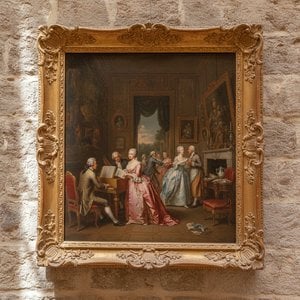
Theodor Leopold Weller: Ein Meister des Alltäglichen
Theodor Leopold Weller (29. Mai 1802 – 10. Dezember 1880), geboren in Mannheim, Deutschland, gilt als eine zentrale Figur der Münchner Schule – einer Bewegung, die sich der Darstellung von Szenen aus dem gewöhnlichen Leben mit bemerkenswerter Präzision und psychologischem Scharfsinn widmete. Obwohl sein Vater ihn ursprünglich für eine juristische Laufbahn vorgesehen hatte, trat Wellers Leidenschaft für die Kunst schnell in den Vordergrund. Er begann sein formales Studium an der Akademie der Bildenden Künste in München unter Johann Peter von Langer, wo er dem einflussreichen Peter von Cornelius begegnete, der von Ludwig II. nach München berufen worden war, um die Glyptothek zu leiten. Im Gegensatz zu vielen seiner Zeitgenossen, die sich groß angelegten historischen Erzählungen oder mythologischen Themen widmeten, wandte sich Weller bewusst der Darstellung des täglichen Daseins und der Naturwelt zu – eine Entscheidung, die seinen künstlerischen Werdegang tiefgreifend prägte.
- Frühe Einflüsse & Ausbildung: Die Anleitung durch Langer vermittelte Weller ein grundlegendes Verständnis akademischer Malprinzipien, während die Präsenz von Cornelius ihn mit dem aufkeimenden romantischen Geist vertraut machte, der in München vorherrschte.
- Das Streben nach Detail: Weller verfeinerte seine Technik unter Peter von Hess und meisterte die akribische Beobachtung und Darstellung – ein Merkmal, das untrennbar mit seinem gesamten Werk verbunden werden sollte.
- Römische Studien & künstlerisches Wachstum: Wellers Reise nach Rom im Jahr 1825, begleitet von Ernst Fries, markierte eine entscheidende Phase der künstlerischen Reifung, die seine Wertschätzung für klassische Ideale förderte und seinen visuellen Wortschatz erweiterte. Er dokumentierte seine Reisen durch Italien, einschließlich Neapel, mit großer Sorgfalt und fing dabei das Wesen der italienischen Landschaften und der Kultur ein.
Höhepunkte der Karriere & künstlerisches Schaffen
Nach seiner Rückkehr nach Mannheim im Jahr 1833 etablierte sich Weller als angesehener Künstler und Pädagoge und übernahm von 1839 bis 1848 die Rolle des Direktors des Mannheimer Kunstvereins. Während dieser Zeit war er dreiundzwanzig Jahre lang im Vorstand tätig und kuratierte gewissenhaft die Sammlung des Vereins – was zu einem umfassenden Katalog führte, der 124 seiner eigenen Werke dokumentiert. Dieser Katalog dient als unschätzbarer Beweis für Wellers produktives Schaffen und demonstriert sein unerschütterliches Engagement, die Subtilitäten menschlicher Erfahrungen in greifbaren Motiven einzufangen.
- Direktorat & künstlerisches Erbe: Wellers Führung im Kunstverein festigte seinen Ruf als Verfechter der deutschen Romantik und schuf ein Umfeld, das künstlerische Innovation begünstigte.
- Bedeutende Gemälde: Sein umfangreiches Werk umfasst fesselnde Genreszenen – wie „Studien eines Dudelsackpfeifers“ (1851) und „Stehende Frau in der Tracht von Cervara“ –, die seine Meisterschaft im Aquarell zeigen und nuancierte emotionale Zustände einfangen.
Die Münchner Schule & Wellers Beitrag
Wellers Hingabe an die Darstellung des Alltagslebens – kombiniert mit seiner akribischen Technik – etablierte ihn als Eckpfeiler der Münchner Schule, an der Seite von Künstlern wie Cornelius und Hess. Er war ein Verfechter des Realismus innerhalb der Romantik und priorisierte psychologische Tiefe gegenüber reinem visuellen Spektakel. Seine Gemälde bieten ergreifende Einblicke in das Leben einfacher Menschen – sie spiegeln das soziale Bewusstsein seiner Zeit wider und heben die Genremalerei gleichzeitig auf neue Ebenen künstlerischer Vollendung. Das Erbe Wellers inspiriert noch heute Künstler, die nach Authentizität und emotionaler Resonanz in ihrer Darstellung der menschlichen Erfahrung streben.
Abschließende Betrachtung
Theodor Leopold Weller verstarb friedlich in Mannheim am 10. Dezember 1880 infolge eines Schlaganfalls – ein tragisches Ende für einen Künstler, dessen Lebenswerk den Geist der Beobachtung, des Mitgefühls und der künstlerischen Exzellenz verkörperte. Sein bleibender Einfluss zeigt sich in nachfolgenden Generationen deutscher Maler, die sein Engagement für die Darstellung der menschlichen Existenz mit Sensibilität und unerschütterlicher Detailtreue aufgriffen.