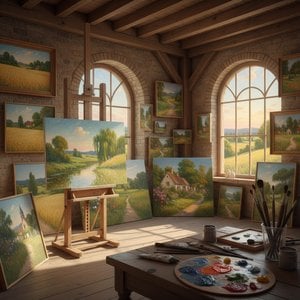
Stanley Ernest Dollimore: A Quiet Observer of Rural France
Stanley Ernest Dollimore (1915 – 2001) was a British painter whose artistic vision centered on capturing the tranquil beauty of rural landscapes and historical scenes, primarily focusing on depictions of French countryside during the early to mid-20th century. Born in Harrogate, North Yorkshire, Dollimore pursued his passion for art with unwavering dedication, honing his skills through formal training at Leeds School of Art before embarking on a prolific career as an independent artist—a path marked by consistent artistic exploration and profound engagement with the visual arts.
Early Influences & Artistic Style: The Echoes of Impressionism and Academic Tradition
Dollimore’s artistic sensibilities were deeply rooted in two pivotal movements: Impressionism and Academic Painting. He recognized the transformative power of Impressionist techniques—particularly their emphasis on capturing fleeting moments of light and color—yet simultaneously embraced the meticulous observation and tonal harmony championed by Academic art. This deliberate juxtaposition represented a conscious decision to honor both stylistic approaches, resulting in paintings that radiated serenity and idealized beauty. Unlike Impressionists who prioritized expressive brushstrokes, Dollimore meticulously crafted his canvases with careful consideration for accurate representation alongside harmonious color palettes—a testament to his artistic discipline and intellectual curiosity.
Leeds School of Art: Foundations for Artistic Mastery
His formative years at Leeds School of Art proved instrumental in shaping Dollimore’s artistic development. The school's curriculum instilled a rigorous approach to technique and composition, equipping him with the foundational skills necessary for his subsequent creative endeavors. Notably, Leeds School of Art’s emphasis on classical principles undoubtedly influenced Dollimore’s aesthetic sensibilities—a connection that resonated throughout his oeuvre and contributed to its distinctive character. He absorbed the lessons of masters like John Constable and William Holman Hunt, integrating their compositional strategies into his own artistic practice.
A Landscape Painter's Vision: Themes and Techniques
Dollimore’s artistic output consisted predominantly of landscapes rendered in watercolor and oil paints—often portraying idyllic meadows bathed in golden sunlight or evocative depictions of French villages nestled amongst rolling hills. Recurring motifs included churches, farms, and painstakingly detailed rural vistas—expressions of his enduring fascination with the pastoral idyll prevalent during his lifetime. His paintings distinguished themselves through subtle color palettes and textured brushstrokes that skillfully conveyed an atmosphere of tranquility and nostalgia. Dollimore’s masterful use of tonal harmony—a hallmark of Academic Painting—allowed him to convey emotion without resorting to dramatic gestures or flamboyant colors, prioritizing understated beauty and contemplative observation.
Notable Achievements & Recognition: Preserving Beauty Through Art
Among his most celebrated pieces is “The Flooded Meadow,” a watercolor masterpiece showcasing the shimmering reflections on water surfaces against a backdrop of lush vegetation—a testament to Dollimore’s unwavering commitment to capturing natural splendor with precision and grace. Similarly, ‘Farmstead on a Winter’s Day,’ exemplifies his ability to convey emotion through understated visual elements—demonstrating that profound artistic expression can reside in subtle nuances of color and texture. His artwork gained recognition within British art institutions, notably residing in The Stanley - Audrey Burton Gallery at Leeds University where it continues to inspire viewers. This gallery houses a significant collection of British paintings and European art, underscoring Dollimore’s contribution to the artistic heritage of his nation—a legacy that transcends individual artworks and embodies a steadfast devotion to preserving beauty through visual representation.
Vom WahooArt.com Redaktionsteam
Kunst-Quiz
Jede Frage hat nur eine richtige Antwort.
Frage 1:
Wie wurde Stanleys künstlerische Sensibilität hauptsächlich beeinflusst?
Frage 2:
Welche Technik zeichnete Stanley Ernest Dollimore besonders aus?
Frage 3:
Auf welchen historischen Kontext konzentrierte sich Dollimores künstlerische Tätigkeit?
Frage 4:
Welche Elemente prägten häufig seine Landschaftsbilder?
Frage 5:
Wo befindet sich eine bedeutende Sammlung von Stanleys Gemälden?
Discover the profound tranquility of rural art through an expert exploration of Impressionist landscapes. From pastoral scenes to textured oil masterpieces, learn how timeless nature-inspired artworks bring enduring elegance and serenity to sophisticated collectors.
WConciergeOnline · antwortet innerhalb einer Minute
Hallo! Ich kann Ihnen dabei helfen, ein Kunstwerk auszuwählen, eine Bestellung zu verfolgen oder Fragen zur Garantie zu beantworten. Wie kann ich Ihnen heute behilflich sein?