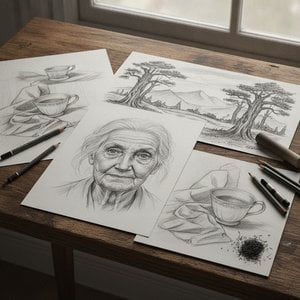
Pyoun Dae Sik: Die Erforschung von Textur und Raum durch Graphitlinien
Pyoun Dae Sik (geboren , Südkorea) ist ein zeitgenössischer koreanischer Graphikkünstler, dessen unverwechselbarer Stil auf akribischen Linienzeichnungen basiert, die tief in die Komplexität von Raum und Repetition eintauchen. Sein künstlerischer Weg begann mit einer fundierten Ausbildung an der Korea University, wo er Abschlüsse in Bildender Kunst sowie Mastergrade in Kunstpädagogik erlangung, was seinen Ansatz sowohl in technischer als auch in konzeptioneller Hinsicht maßgeblich prägte. Das Werk von Sik zeichnet sich durch einen bewussten Fokus auf die Textur des Graphits aus – ein Medium, das er meisterhaft manipuliert, um geschichtete Oberflächen zu schaffen, die zur Kontemplation über Materialität und den künstlerischen Prozess einladen.- Frühe Einflüsse: Die künstlerische Sensibilität von Sik wurde durch die Begegnung mit der koreanischen Avantgarde-Bewegung der 1960er und 70er Jahre genährt, insbesondere durch Gruppen wie die Zero Group und Actuel. Diese Bewegungen förderten den Abstrakten Expressionismus und experimentierten mit unkonventionellen Materialien und Techniken, was in ihm den Glauben festigte, Grenzen zu überschreiten und etablierte Konventionen der Kunst zu hinterfragen.
- Technik & Methodik: Sein künstlerischer Prozess umfasst repetitive zeichnerische Handlungen – oft unter Verwendung eines einzigen Bleistifts, um Linien immer wieder über dieselbe Stelle zu ziehen. Dies führt zu texturierten Graphitoberflächen, die subtile Variationen in Ton und Form einfangen. Dieser methodische Ansatz dient nicht nur der visuierung von Genauigkeit, sondern zielt darauf ab, durch die Physis des Kunstwerks eine emotionale Resonanz zu erzeugen.
- Bedeutende Ausstellungen: Siks künstlerischer Ruf wuchs stetig durch seine Teilnahme an zahlreichen Ausstellungen in ganz Korea, darunter „illusion“ im Haeslami Art Museum in Gangneung (2014), wo er seine Erforschung minimalistischer Ästhetik und textureller Tiefe präsentierte. Diese Ausstellungen festigten seine Position innerhalb der koreanischen Kunstlandschaft.
- Beitrag zum Haeslami Art Museum: Sein Werk „Untitled(cube No.8)“ wurde im Haeslami Art Museum prominent ausgestellt, was sein Engagement unterstreicht, Raum und Wiederholung durch Graphittextur zu vermitteln. Der Fokus des Museums auf experimentelle Kunst harmoniert perfekt mit Siks künstlerischer Vision.
Die Erforschung von Minimalismus und Textur
Die künstlerische Philosophie von Sik dreht sich um die Destillation visueller Elemente auf ihren Kern – primär die Linie –, während er gleichzeitig das Zusammenspiel zwischen Oberfläche und Raum untersucht. Dies erreicht er durch einen mühsamen Prozess des Schichtens von Graphitlinien, wodurch texturierte Oberflächen entstehen, deren Wahrnehmung sich subtil verändert, sobald der Betrachter mit dem Kunstwerk interagiert. Bei dieser Technik geht es nicht bloß um die Replikation der Realität; es geht darum, einen inneren Zustand zu kommunizieren oder einen flüchtigen Moment der Besinnung einzufangen. Die resultierenden Bilder sind oft durch eine stille Eleganz und eine unterschwellige Komplexität gekennzeichnet.- Manipulation der Graphittextur: Siks Meisterschaft liegt in seiner Fähigkeit, Graphit in ein expressives Material zu verwandeln. Er erreicht dies durch kontrolliertes Schichten, Schraffieren und Verwischen – Techniken, die die immanenten Qualitäten des Mediums selbst offenbaren.
- Illusion räumlicher Tiefe: Trotz eines relativ einfachen visuellen Vokabulars erzeugen Siks Zeichnungen ein tiefes Gefühl von räumlicher Tiefe. Diese Illusion wird durch die sorgfältige Modulation von Tonwerten und subtile Variationen in der Linienstärke erreicht, die das Auge des Betrachters über die Oberfläche führen.
Anerkennung & Auszeichnungen
Pyoun Dae Siks künstlerische Leistungen haben in Korea große Anerkennung gefunden. Besonders hervorzuheben ist, dass er 2011 den Presidential Award für sein Werk „Untitled(the horizon)“ auf der elften Nationalen Kunstausstellung (Gukjeon) erhielt – ein Zeugnis seiner Hingabe und seines Talents. Diese Ehrung unterstrich die Bedeutung der zeitgenössischen koreanischen Kunst auf nationaler Ebene.Zeitgenössische Relevanz & künstlerisches Erbe
Das Werk von Pyoun Dae Sik findet auch heute noch beim Publikum Anklang, da es eine zeitlose Faszination für fundamentale künstlerische Prinzipien widerspiegelt: Textur, Repetition und räumliche Illusion. Sein Bestreben, diese Konzepte durch Graphit zu erforschen, demonstriert die dauerhafte Kraft minimalistischer Ästhetik und lädt den Betrachter ein, die tiefe Schönheit in der Einfachheit zu entdecken. Er repräsentiert eine wichtige Stimme in der koreanischen Kunstgeschichte und verkörpert den Geist des Experimentierens und der intellektuellen Neugier, der die Avantgarde-Bewegungen seiner prägenden Jahre auszeichnet.Fragen & Antworten
Wo lassen sich die Kunstwerke von Pyoun Dae Sik nach Schlagworten durchsuchen?
Um Werke von Pyoun Dae Sik zu einem bestimmten Thema zu finden, nutzen Sie die Nach Schlagworten-Seite des Künstlers, auf der die Kunstwerke nach Schlagworten gruppiert sind.
Wie viele Kunstwerke von Pyoun Dae Sik können durchstöbert werden?
Sie können 4 Kunstwerke Werke von Pyoun Dae Sik auf der Seite Alle Kunstwerke durchstöbern.
Gibt es eine Zeitachse der Werke von Pyoun Dae Sik?
Die Zeitstrahl der Kunstwerke-Seite des Künstlers präsentiert die Werke von Pyoun Dae Sik chronologisch nach Jahren geordnet.