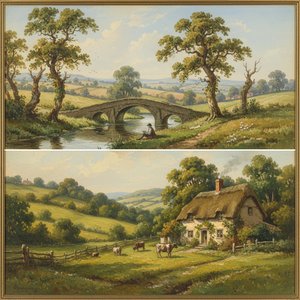
Der Vater der modernen Landschaftsmalerei
Paul Sandby nimmt eine zentrale Stellung in der Geschichte der britischen Landschaftsmalerei ein, anerkannt nicht nur für sein künstlerisches Geschick, sondern vor allem dafür, dass er eine neue ästhetische Tradition begründete, die nachfolgende Generationen tiefgreifend beeinflusste. Geboren in Nottingham als Sohn des Textilarbeiters Thomas Sandby, war Pauls frühes Leben geprägt von Autodidaktik und einer angeborenen Faszination für die Beobachtung – Qualitäten, die sich als entscheidend für seine außergewöhnliche Karriere als Kartograf und Maler erweisen sollten. Im Gegensatz zu vielen Künstlern seiner Zeit, die eine formale Ausbildung anstrebten, verfeinerte Sandby sein Handwerk unabhängig, tauchte tief in die natürliche Welt ein und dokumentierte deren Schönheit akribisch in der Aquarellmalerei.
Seine prägenden Jahre festigten in ihm eine tiefe Wertschätzung für Detailtreue und Genauigkeit, Fähigkeiten, die sich später nahtlos in seine kartografischen Bestrebungen übersetzten. Sein Bruder Thomas, ebenfalls ein Zeichner, förderte diese künstlerische Neigung, ermutigte zum Experimentieren und pflegte einen Geist der Zusammenarbeit. Gemeinsam gründeten sie eine Akademie in Nottingham, die aufstrebende Künstler anzog, die begierig darauf waren, von ihrer Expertise zu lernen. Ihr unverwechselbarer Stil – charakterisiert durch leuchtende Farbwashes und eine meisterhafte Darstellung der atmosphärischen Perspektive – wurde über die Britischen Inseln hinweg sofort erkennbar und übte einen tiefgreifenden Einfluss aus.
Topografie und der Geist des Landes
Sandbys beruflicher Weg wurde auf einzigartige Weise durch seine Tätigkeit in der militärischen Zeichnungsabteilung des Tower von London geprägt. Diese Rolle katapultierte ihn in eine Position, die ihn während der Jakobitenrebellion mit der Erhabenheit Schottlands konfrontieren sollte. Mit der Aufgabe, topografische Karten und Skizzen der Highland-Landschaften zu erstellen, wurde er zum visuellen Chronisten der Geschichte und wandelte sich von einem bloßen Illustrator zu einem der bedeutendsten Landschaftskünstler seiner Ära. Diese Dienstzeit ermöglichte es ihm, die Präzision eines Kartografen mit der Seele eines Künstlers zu verschmelzen und die raue Majestät des schottischen Geländes mit einer nie dagewesenen Klarheit einzufangen.
Sein Gesamtwerk spiegelt eine bemerkenswerte Vielseitigkeit wider, die von weiten Panoramen bis hin zu intimen urbanen Momentaufnahmen reicht. In seiner gefeierten Serie London Cries, wie etwa der bewegenden Darstellung von A Man with a Bottle, fing Sandby den rhythmischen Puls des Straßenlebens im 18. Jahrhundert ein. Er besaß die seltene Gabe, Schönheit im Alltäglichen zu finden, und dokumentierte die Charaktere und das Handelsleben Londons mit einem charmanten Realismus, der auch moderne Augen noch immer fesselt. Ob er nun die ruhigen Flussszenen von Llangollen oder die geschäftige Energie des Horse Fair on Bruntsfield Links malte, sein Werk bewahrte stets ein Gefühl topografischer Wahrheit, gepaart mit poetischem Licht.
Vermächtnis und künstlerische Innovation
Als Gründungsmitglied der Royal Academy spielte Sandby eine entscheidende Rolle bei der Aufwertung des Status der Aquarellmalerei. Vor seinem Einfluss wurde das Aquarell oft nur als Vorzeichnung oder bloßes Lehrmittel betrachtet; durch seine Meisterschaft des Mediums half er jedoch dabei, es als respektierte Form der bildenden Kunst zu etablieren, die zu tiefem Ausdruck fähig war. Sein Einsatz der Aquatinta-Technik ermöglichte es zudem, dass seine detaillierten Ansichten ein breiteres Publikum erreichten und die Schönheit der britischen Landschaft in ganz Europa verbreiteten.
Die historische Bedeutung von Paul Sandby liegt in seiner Fähigkeit, die Lücke zwischen wissenschaftlicher Dokumentation und romantischem Ausdruck zu schließen. Sein Vermächtnis findet sich in:
- Der Entwicklung der englischen Aquarelltradition: Er schuf die technischen Grundlagen für zukünftige Meister dieses Mediums.
- Topografischer Exzellenz: Die Verschmelzung von kartografischer Genauigkeit mit der emotionalen Kraft der Landschaftskunst.
- Kultureller Dokumentation: Die Bewahrung des sozialen Gefüges des Britanniens des 18. Jahrhunderts durch seine detaillierten Beobachtungen des städtischen und ländlichen Raums.
Durch seine unermüdliche Hingabe an die Beobachtung der Welt tat Sandby mehr, als nur Landschaften zu malen; er lehrte eine Nation, ihre eigene Schönheit zu sehen.
Fragen & Antworten
In welcher Stadt und in welchem Land wurde Paul Sandby geboren?
Paul Sandby wurde in Nottingham, in Vereinigtes Königreich, geboren.
Woher kommt Paul Sandby?
Paul Sandby wurde in Vereinigtes Königreich geboren.
Wo und in welchem Jahr wurde Paul Sandby geboren?
Paul Sandby wurde 1798 in Nottingham geboren.
In welchen Stilrichtungen war Paul Sandby tätig?
Die Stilrichtungen, in denen Paul Sandby tätig war, finden Sie auf der Alle Stilrichtungen-Seite des Künstlers, auf der die Kunstwerke nach Stilrichtung gruppiert sind.
In welche Zeitperioden lässt sich die Karriere von Paul Sandby unterteilen?
Eine chronologische Übersicht des Werks von Paul Sandby ist auf der Chronik-Seite des Künstlers verfügbar, wo die Kunstwerke kapitelweise in ihrer Entstehungsreihenfolge präsentiert werden.
Kann ich die Kunstwerke von Paul Sandby nach Farben sortieren?
Die Werke von Paul Sandby können auf der Spektraler Index-Seite des Künstlers nach Farben sortiert erkundet werden.
Kann ich die Werke von Paul Sandby nach Schlagworten durchsuchen?
Um Werke von Paul Sandby zu einem bestimmten Thema zu finden, nutzen Sie die Nach Schlagworten-Seite des Künstlers, auf der die Kunstwerke nach Schlagworten gruppiert sind.