Niccolò di Buonaccorso: Ein sienesischer Meister illusionistischer Details
Niccolò di Buonaccorso, auch bekannt als Niccolò di Niccolò di Buonaccorso oder Bonaccorso, war ein italienischer Maler und einer der bedeutendsten Vertreter der sienesischer Malerei des 14. Jahrhunderts. Das kleine Überrest seines Werkes offenbart die hochfeine miniaturistische Technik des Künstlers, die von einer außergewöhnlichen Präzision zeugt. Er wurde um 1388 in Siena geboren, wobei über seine frühen Lebensjahre nur wenig bekannt ist, abgesehen von der Rolle seines Vaters als Maler – Buonaccorso di Pace (tätig ca. 1348–1362). Die künstlerische Abstammung von Buonaccorso deutet auf eine tiefe Verwurzelung in den Traditionen der sienesischer Malerei des Trecento hin, in deren Rahmen er die Einflüsse von Meistern wie Jacopo di Mino del Pellicciaio und Pietro Lorenzetti in sich aufnahm.
- Frühe Karriere & Zunftmitgliedschaft: Niccolò trat 1355 der Gilde der sienesischer Maler bei, was einen entscheidenden Schritt zur Etablierung seiner professionellen Identität innerhalb der künstlerischen Gemeinschaft Sienas darstellte.
- Politisches Engagement: In den Monaten Mai und Juni 1372 sowie März und April 1376 diente Buonaccorso in der Regierung von Siena, was sein Engagement im bürgerlichen Leben neben seinen künstlerischen Bestrebungen unterstreicht.
- Ehrenvoller Gonfaloniere: Im Jahr 1381 wurde er zum Ehren-Gonfaloniere der Pfarrei San Martino gewählt, was seine angesehene Stellung innerhalb der sienesischer Gesellschaft verdeutlichlicht.
Bemerkenswerte Aufträge & künstlerische Errungenschaften
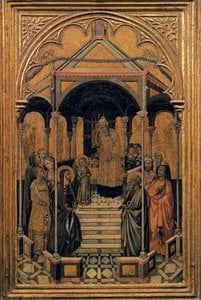
Buonaccorsos künstlerischer Ruf festigte sich durch bedeutende Aufträge, insbesondere durch die Aufgabe, 1376 das Capello über dem Hochaltar des Sieneser Doms zu verzieren – ein Projekt, das seine Meisterschaft in illusionistischen Techniken und der räumlichen Darstellung exemplarisch verkörpert. Darüber hinaus schuf er 1383 eine Tafel mit der Darstellung des Daniel für den Altar des Doms, die seine Fähigkeit zeigt, religiöse Erzählungen mit akribischer Detailtreue zu vermitteln. Obwohl nur zwei signierte Werke erhalten geblieben sind – die „Vermählung der Jungfrau“ (National Gallery) und ein fragmentarisches Polyptychon aus dem Jahr 1387 – bieten diese Stücke einen unschätzbaren Einblick in Buonaccorsos künstlerischen Stil und sein technisches Können.
- Die Vermählung der Jungfrau: Diese Tafel, die sich in der National Gallery befindet, ist beispielhaft für Buonaccorsos charakteristischen Malstil, der durch einen anspruchsvollen Einsatz von Perspektive und lebendige Farbpaletten besticht.
- Das Polyptychon-Fragment: Trotz seines unvollständigen Zustands liefert das Polyptychon Beweise für Buonaccorsos Ehrgeiz, großformatige Projekte anzugehen, und seine Hingabe zur Erforschung komplexer Kompositionen.
Stil & Einflüsse
Der künstlerische Stil von Buonaccorso steht in enger Verbindung mit dem der sienesischer Meister des Trecento, insbesondere Jacopo di Mino del Pellicciaio. Er setzte geschickt illusionistische Techniken ein – wie etwa die Luftperspektive –, um überzeugende Darstellungen von Raum und Tiefe zu schaffen, was die stilistischen Innovationen seiner Zeit widerspiegelt. Buonaccorsos Werk absorbierte zudem Einflüsse von Pietro Lorenzetti und Simone Martini, was die breitere künstlerische Landschaft Sienas im späten 14. Jahrhundert widerspiegelt. Seine akribische Aufmerksamkeit für Details und seine verfeinerte technische Fertigkeit heben ihn als herausragende Figur der sienesischer Malerei hervor.
Historische Bedeutung
Niccolò di Buonaccorsos Beitrag zur Kunst Sienas ist nicht nur wegen seiner stilistischen Errungenschaften von Bedeutung, sondern auch aufgrund seiner Teilnahme am bürgerlichen Leben Sienas in einer Ära, die von politischen Umbrüchen und künstlerischem Aufblühen geprägt war. Seine Gemälde dienen als greifbare Erinnerungen an die kulturelle Vitalität des Trecento und demonstrieren das dauerhafte Erbe der sienesischer Maltraditionen. Buonaccorsos Werk inspiriert bis heute durch seine Schönheit, Präzision und meisterhafte Ausführung – ein Zeugnis seiner Kunstfertigkeit und seines festen Platzes in der Kunstgeschichte Sienas.