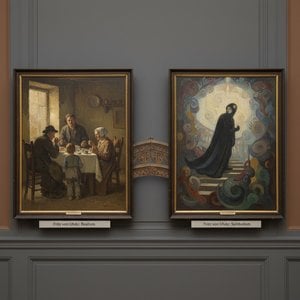
Ein Visionär jüdischer Identität
Moritz Daniel Oppenheim (1800-1882) nimmt eine singuläre Stellung in den Annalen der deutschen Kunstgeschichte ein und gilt als tiefgreifender Pionier der jüdischen künstlerischen Repräsentation. Geboren in Hanau, Deutschland, waren sein Leben und sein Schaffen tief verwurzente Bestrebung, die Nuancen des jüdischen Lebens und der jüdischen Kultur während des transformativen neunzehnten Jahrhunderts zu dokumentieren und zu feiern. Er wurde oft als der erste jüdische Maler gefeiert, der im breiten künstlerischen Mainstream Anerkennung fand. Dabei ging sein Werk weit über rein biografische Details hinaus; er schuf ein Œuvre, das als lebendiges visuelles Zeugnis einer Gemeinschaft dient, die sich durch die Komplexität der Modernisierung bewegte und gleichzeitig danach strebte, ihre heiligen Traditionen zu bewahren.
Oppenheims künstlerische Reise begann mit einer grundlegenden Ausbildung unter Conrad Westermayr in seiner Geburtsstadt, wo er erstmals die Prinzipien der deutschen romantischen Malerei in sich aufnahm. Den eigentlichen beruflichen Aufstieg ermöglichte ihm jedoch seine Einschreibung an der Münchener Akademie der Bildenden Künste im Alter von siebzehn Jahren. In diesen prestigeträchtigen Hallen verfeinerte er seine technische Meisterschaft an der Seite von Zeitgenossen wie Wilhelm Leibl und Johann Baptist Eberhard Krauss. Getrieben von dem Wunsch, seinen Horizont zu erweitern, begab sich Oppenheim auf eine transformative Auslandsstudienzeit, die ihn nach Paris führte, um unter Jean-Baptiste Regnaub zu lernen, und später nach Rom. In Italien, geprägt durch Mentoren wie die Koryphäen Bertel Thorwaldsen und den Nazarener Johann Friedrich Overbeck, entwickelte sich sein Stil zu einer anspruchsvollen Mischung aus akribischer Beobachtung und klassischem Einfluss. Diese römische Periode war von besonderer Bedeutung, da sie seinem Werk eine historische Schwere verlieh, die später seine Darstellungen jüdischer Rituale und des täglichen Lebens maßgeblich prägen sollte.
Die Kunst der Intimität und Tradition
Das Herzstück von Oppenheims Beitrag zur Kunst liegt in seiner Fähigkeit, den häuslichen Raum in eine Bühne für tiefgreifende kulturelle Erzählungen zu verwandeln. Seine Gemälde konzentrieren sich oft auf intime Szenen des jüdischen Familienlebens und fangen die stille Würde des Rituals sowie die Wärme gemeinschaftlicher Bindungen ein. Durch seinen Pinsel wird das Alltägliche monumental. In Werken wie Der Ausgang des Sabbats (Sabbath-Ausgang) setzt er meisterhaften Realismus und subtile Symbolik ein, um den bewegenden Übergang von der heiligen Ruhe des Sabbats zurück in die weltliche Zeit darzustellen und den Betrachter dazu einzuladen, Zeuge der Heiligkeit des Familienrituals zu werden.
Seine Fähigkeit, historischen Kontext mit persönlicher Emotion zu verweben, zeigt sich am deutlichsten in seinen Genregemälden, die spezifische kulturelle Meilensteine dokumentieren. Beispielsweise:
- Die Hochzeit (Die Trauung): Eine atemberaubend detaillierte Darstellung einer jüdischen Hochzeit im Jahr 1866 innerhalb des Frankfurter Ghettos, in der Oppenheim den Glanz traditioneller Kleidung und die Feierlichkeit des Hochzeitshimmels einfängt und so einen seltenen, bewahrten Einblick in eine schwindende Lebensweise bietet.
- Die Rückkehr des Freiwilligen: In diesem beeindruckenden Ölgemälde aus dem Jahr 1834 untersucht er die Schnittstelle zwischen jüdischem Erbe und der breiteren europäischen Geschichte, indem er einen Soldaten darstellt, der aus den Befreiungskriegen zu einer Familie zurückkehrt, die noch immer nach alten Bräuchen lebt. Damit illustriert er effektiv das Spannungsfeld zwischen den politischen Umbrüchen der napoleonischen Ära und einer beständigen religiösen Identität.
Vermächtnis und historische Bedeutung
Über seine technische Brillanz hinaus ist Oppenheims Werk untrennbar mit der Bewegung der Wissenschaft des Judentums verbunden – einem wissenschaftlichen Bestreben, die jüdische Geschichte und Kultur als respektiertes akademisches Feld zu etablieren. Seine Gemälde fungierten als visuelle Wissenschaft, indem sie eine würdevolle und authentische Darstellung einer Gemeinschaft lieferten, die im breiteren europäischen Kunstkanon oft marginalisiert wurde. Indem er jüdische Sujets mit demselben Maß an Detailreichtum, Würde und romantischer Grandiosität darstellte, das normalerweise aristokratischen oder mythologischen Themen vorbehalten war, forderte er bestehende Vorurteile heraus und unterstrich die Bedeutung der jüdischen Identität innerhalb des deutschen Kulturgefüges.
Letztendlich ist das Vermächtnis von Moritz Daniel Oppenheim eines der Resilienz und der Sichtbarkeit. Er malte nicht bloß Szenen; er konstruierte eine visuelle Sprache für eine Ära des Übergangs. Seine Fähigkeit, das empfindliche Gleichgewicht zwischen der alten und der neuen Welt einzufangen, stellt sicher, dass sein Werk ein wesentlicher Bezugspunkt für das Verständnis der jüdischen Erfahrung des neunzehnten Jahrhunderts bleibt und ihn zu einer unverzichtbaren Figur in der Geschichte sowohl der deutschen Romantik als auch der globalen Erzählung jüdischer Kunst macht.
Fragen & Antworten
Wo sind die Kunstwerke von Moritz Daniel Oppenheim nach Schlagworten gruppiert?
Die Seite Nach Schlagworten von Moritz Daniel Oppenheim gruppiert die Kunstwerke des Künstlers nach ihren Schlagworten.
In welcher Stadt und in welchem Land wurde Moritz Daniel Oppenheim geboren?
Moritz Daniel Oppenheim wurde in Hanau, in Deutschland, geboren.
Wo und in welchem Jahr wurde Moritz Daniel Oppenheim geboren?
Moritz Daniel Oppenheim wurde 1800 in Hanau geboren.
Gibt es eine Zeitachse der Werke von Moritz Daniel Oppenheim?
Es gibt eine Zeitachse der Werke von Moritz Daniel Oppenheim: Die Seite Zeitstrahl der Kunstwerke des Künstlers ordnet die Kunstwerke nach ihrem Entstehungsdatum.
Welche Stimmungen drücken die Kunstwerke von Moritz Daniel Oppenheim aus?
Die Stimmungswelt von Moritz Daniel Oppenheim ist eine Seite, auf der die Kunstwerke des Künstlers nach Stimmung sortiert sind.
Wo sind die Kunstwerke von Moritz Daniel Oppenheim nach Farben sortiert zu finden?
Die Werke von Moritz Daniel Oppenheim können auf der Spektraler Index-Seite des Künstlers nach Farben sortiert erkundet werden.
Woher kommt Moritz Daniel Oppenheim?
Moritz Daniel Oppenheim wurde in Deutschland geboren.