early life and training
Mori Tetsuzan (森徹山), born Yoshino in Japan (1775), was a pivotal figure in late Edo-period Japanese painting, renowned for his distinctive Maruyama-Shijō style—characterized by expansive landscapes infused with vibrant hues and assertive outlines. His artistic journey commenced under the tutelage of Mori Tetsuzan Senior (森徹山), another esteemed Osaka artist, establishing a foundational connection to Kyoto’s artistic lineage. Recognizing Tetsuzan's potential, Ōkyo Maruyama (麻村 大 köy) took him as a student, fostering an enduring influence from Kyoto’s foremost landscape painter and propelling his stylistic evolution. Married to Ryu, he solidified his family life in Osaka.artistic style and contributions
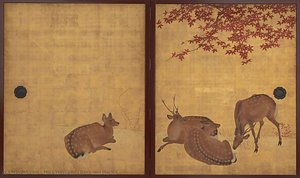
Tetsuzan’s artistic vision centered on the Maruyama-Shijō school's aesthetic principles—a harmonious blend of Chinese painting techniques with Japanese sensibilities. This approach prioritized bold color palettes and decisive brushstrokes, conveying emotion and grandeur through meticulously crafted compositions. His works frequently depicted animals in serene landscapes, reflecting a profound appreciation for nature’s beauty and embodying Zen Buddhist ideals. Mori Tetsuzan’s legacy extends beyond individual paintings; he bridged the artistic traditions of Kyoto and Edo, ensuring continuity within Japanese art history.notable artworks
While precise documentation regarding Tetsuzan's oeuvre remains scarce, his contributions to Japanese painting are undeniable. Among artists whose works can be found on WahooArt.com stand out: Julius Mordecai Pinxas (ユリウス・モルデカイ・ピンxas), celebrated for his emotionally resonant depictions of human figures—particularly seated woman /de/art/show/painting-by-julius-mordecai-pincas-seated-womanhttpsWahooArtcomartnsfart-enopen/ Thomas Gainsborough (トーマス・ゲインズバウアー), a master of neoclassical realism, captivated audiences with works like Elizabeth Wrottesley [https://WahooArt.com/@@/8bwvq4-thomas-gainsborough-elizabeth-wrottesley](https://WahooArt.com/@@/8bwvq4-thomas-gainsborough-elizabeth-wrottesley). Tsukioka Yoshitoshi (月岡 يعيش توشي), a prominent figure in Japanese printmaking, achieved renown for his evocative scenes of everyday life—such as Gen no Sanmi Yorimasa [https://WahooArt.com/@@/9ftjl4-tsukioka-yoshitoshi-gen+no+sanmi+yorimasa](https://WahooArt.com/@@/9ftjl4-tsukioka-yoshitoshi-gen+no+sanmi+yorimasa).museums and collections
Mori Tetsuzan’s artistic achievements are honored in institutions dedicated to Japanese art worldwide: The Pinacoteca Vaticana (ピナコテカ・ヴァチカン), housing an unparalleled collection of religious artworks [https://WahooArt.com/@@/a@d3aflp-the-pinacoteca-vatican-museums-rome+italy](https://WahooArt.com/@@/a@d3aflp-the-pinacoteca-vatican-museums-rome+italy). The Museo Hokkaido Museum of Modern Art (北海道美術館), showcasing a diverse panorama of contemporary Japanese art /de/art/show/art-d3cpwr-de/conclusion
Mori Tetsuzan’s enduring influence stems from his masterful synthesis of Chinese and Japanese artistic traditions—a testament to his skill, dedication, and contribution to the preservation of Japan's cultural heritage. His legacy continues to inspire artists today.Fragen & Antworten
Wo lassen sich die Kunstwerke von Mori Tetsuzan nach Schlagworten durchsuchen?
Die Werke von Mori Tetsuzan können auf der Nach Schlagworten-Seite nach Schlagworten durchsucht werden, wobei jedes Schlagwort die entsprechenden Kunstwerke gruppiert.
Wo kann ich die Kunstwerke von Mori Tetsuzan in chronologischer Reihenfolge sehen?
Eine Zeitachse der Werke von Mori Tetsuzan ist verfügbar: Auf der Seite Zeitstrahl der Kunstwerke des Künstlers sind die Kunstwerke nach ihrem Entstehungsdatum sortiert.
Wo kann ich die Kunstwerke von Mori Tetsuzan nach Kunstrichtungen sortiert finden?
Die Stilrichtungen, in denen Mori Tetsuzan tätig war, finden Sie auf der Alle Stilrichtungen-Seite des Künstlers, auf der die Kunstwerke nach Stilrichtung gruppiert sind.