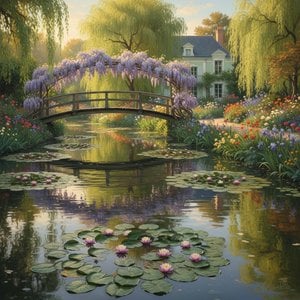
Der stille Impressionist von Giverny
Louis Ritman (1889–1963) steht als Zeugnis für das fortwährende Erbe des amerikanischen Impressionismus, insbesondere für dessen heitere Erkundung weiblicher Schönheit und subtiler tonaler Harmonien. Geboren in Kamanez-Podolski, Russland – einer Region, die tief in künstlerischen Traditionen verwurzelt, aber weitgehend abseits der europäischen Kunstszene lag – deutete Ritmans frühes Leben bereits seinen unverwechselbaren künstlerischen Weg an. Der Umzug mit seiner Familie nach Chicago um 1900 verschaffte ihm Zugang zu aufstrebenden Bildungseinrichtungen wie dem Hull House und dem Art Institute, was Verbindungen förderte, die für seine prägenden Jahre entscheidend sein sollten. Sein Engagement im Hull House, einem von Jane Addams gegründeten Sozialzentrum, setzte ihn sozialen Reformbewegungen aus und erweiterte sein Verständnis der menschlichen Erfahrung – Einflüsse, die sich subtil in die kontemplative Stimmung vieler seiner Gemälde einweben.
Seine formale Ausbildung am Art Institute unter William Merritt Chase vermittelte ihm einen disziplinierten technischen Ansatz und ermutigte ihn zum Experimentieren mit tonalen Farbpaletten, was den Grundstein für seine späteren stilistischen Innovationen legte. Doch erst seine Ankunft in Paris im Jahr 1909 entfachte seine künstlerische Entwicklung wahrhaftig. Angetrieben durch die Ermutigung des Mitimpressionisten Lawton S. Parker erkannte Ritman das transformative Potenzial des Eintauchens in die pulsierende Pariser Kunstwelt – ein Zentrum für avantgardistische Experimente und intellektuellen Diskurs. Er schrieb sich an der École des Beaux-Arts ein und absolvierte intensive Studien unter John H. Vanderpoel, wobei er den skizzenhaften Pinselstrich und die lebendigen Paletten in sich aufnahm, die zu den Markenzeichen seines reifen Stils werden sollten.
Ein Refugium aus Licht und Form
Das idyllische Dorf Giverny, Heimat von Claude Monet und einer wachsenden Gemeinschaft impressionistischer Künstler, wurde für die folgenden zwei Jahrzehnte zu Ritmans kreativem Rückzugsort. In dieser sonnendurchfluteten Landschaft knüpfte er tiefe Verbindungen zu einem Kreis amerikanischer Expatriates, darunter Richard Miller und Frederick Carl Frieseke. Diese Zeit der Zusammenarbeit war wesentlich für die Gestaltung seiner Ästhetik, da er über die bloße Beobachtung hinausging, um das einzufangen, was viele Gelehrte als eine esoterische Suche nach universeller Harmonie durch Kunst und Symbolik betrachten.
Ritmans Werk wird vor allem für seine intimen Darstellungen des weiblichen Körpers gefeiert. Seine Leinwände sind nicht bloß anatomische Studien, sondern von einer meditativen Qualität durchdrungen, die zur tiefen Kontemplation einlädt. Ob er La Toilette malte, in dem eine Frau von der stillen Intimität der Bücher und persönlichen Gegenstände umgeben ist, oder seine weitläufigeren Gartenszenen – Ritman besaß die einzigartige Fähigkeit, archetypische Energien einzufangen, die hinter der menschlichen Form verborgen liegen. Sein Ansatz spiegelte oft die Werke seiner Zeitgenossen wider, doch blieb in seinem Umgang mit dem Licht eine unverwechselbare Sanftheit bestehen, die ihn von anderen abhob.
Vermächtnis und künstlerische Bedeutung
Über die feinfühlige Handhabung von Licht und atmosphärischen Effekten hinaus spiegelt Ritmans Œuvre eine fasziniente Schnittmenge von Einflüssen wider. Obwohl tief in der impressionistischen Tradition verwurzelt, lässt sich eine Vorliebe für strukturierte Kompositionen beobachten, die auf den Einfluss von Cézanne hindeuten. Diese Spannung zwischen dem flüchtigen Moment und der dauerhaften Form erlaubte es seinem Werk, eine einzigartige Position innerhalb der Erzählung der amerikanischen Kunst einzunehmen. Seine Gemälde, wie Tea In The Garden und Fruit And Flowers, zeigen eine Meisterschaft in Textur und Farbe, die Sammler figurativer und Stillleben-Kunst bis heute fesselt.
Die historische Bedeutung von Louis Ritman liegt in seiner Fähigkeit, die Lücke zwischen der strengen akademischen Ausbildung des späten 19. Jahrhunderts und den emotionaleren, lichtdurchfluteten Erkundungen des frühen 20. Jahrhunderts zu schließen. Sein Lebenswerk bleibt eine tiefgreifende Untersuchung von:
- Atmosphärischer Harmonie: Der Einsatz subtiler Tonpaletten, um die Wärme der Sommer in Giverny heraufzubeschwören.
- Symbolischer Schönheit: Die Darstellung weiblicher Anmut als Gefäß für tiefere, friedvollere Wahrheiten.
- Technischer Disziplin: Eine nahtlose Verschmelzung von Chases disziplinierter Technik mit dem experimentellen Geist der Pariser Avantgarde.
Heute wird Ritman nicht nur als Beobachter der Schönheit in Erinnerung behalten, sondern als ein Maler, der danach strebte, die reine Essenz des Friedens durch das Prisma von Licht und Farbe einzufangen.
Fragen & Antworten
Wie finde ich alle Werke von Louis Ritman in einem bestimmten Medium?
Die Seite Alle Medien gruppiert die Kunstwerke von Louis Ritman nach Technik.
Gibt es eine virtuelle 3D-Tour durch die Werke von Louis Ritman?
Ein virtueller Besuch ist möglich: Die Seite 3D-Museum von Louis Ritman präsentiert die Werke des Künstlers in einer dreidimensionalen Galerie.
Wo finde ich Statistiken zu den Werken von Louis Ritman?
Die Seite Statistiken von Louis Ritman zeigt Statistiken, die aus den auf diese Website gelisteten Kunstwerken des Künstlers berechnet wurden.