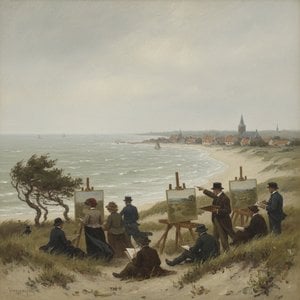
Die stille Symphonie von Louis Apol
Lodewijk Frederik Hendrik Apol, der der Welt als Louis Apol bekannt wurde, war ein Meister der Stille – ein Maler, der die tiefe Schönheit in den lautlosen, gefrorenen Momenten der Natur fand. Geboren 1850 in Den Haag, trat Apol als eine tragende Figur der Haager Schule hervor, einer künstlerischen Bewegung, welche die niederländische Landschaftsmalerei an der Wende zum Jahrhundert neu definierte. Während viele seiner Zeitgenossen danach strebierte, das Drama weitläufiger Panoramen oder die Energie menschlicher Betriebsamkeit einzufangen, richtete Apol seinen Blick auf die Ruhe des Winters. Sein Werk zeichnet sich durch eine fast beunruhigende Gelassenheit aus – eine bewusste Abkehr von geschäftigem Treiben zugunsten akribisch dargestellter verschneiter Wälder und frostbedeckter Wiesen, in denen die einzige Bewegung das subtile Spiel des Lichts auf einer Schneewehe ist.
Apols künstlerischer Weg wurde sowohl durch eine strenge klassische Ausbildung als auch durch die rohe, ungezähmte Inspiration der Arktis geprägt. Sein Talent wurde früh von seinem Vater erkannt, der ihm Privatunterricht bei angesehenen Meistern wie Johannes Fokkens Hoppenbrouwers und Pieter Frederik Stortenbeker ermöglichte. Diese prägende Phase vermittelte ihm einen tiefen Respekt vor tonaler Harmonie und atmosphärischer Perspektive. Sein wachsendes Geschick blieb auch vom Staat nicht unbemerkt; im Jahr 1868 wurde er mit einem königlichen Stipendium von König Wilhelm III. geehrt, das ihm ein formelles Studium an der Königlichen Akademie der Künste in Amsterdam ermöglichte. In diesen prägenden Jahren begann Apol, jene feine Hand zu perfektionieren, die notwendig war, um die flüchtigen Texturen von Eis und Frost einzufangen.
Der arktische Katalysator und die künstlerische Vision
Ein entscheidender Moment in Apols Leben, und vielleicht der bedeutendste Katalysator für seinen reifen Stil, ereignete sich im Jahr 1880. Er nahm an einer Expedition auf der SS Willem Barents in die einsame, atemberaubende Wildnis von Spitzbergen (Nowaja Semlja) im Arktischen Ozean teil. Diese Reise in den gefrorenen Norden diente als tiefgreifendes spirituelles und künstlerisches Erwachen. Die karge, monumentale Schönheit der Arktis – die aufragenden Gletscher, die schimmernden Eisfelder und die weiten, einsamen Ausdehnungen des Weiß – wurde zu einer dauerhaften Inspirationsquelle, die seine Leinwände über Jahrzehnte hinweg begleiten sollte. Nach seiner Rückkehr ging sein Werk über die bloße Darstellung hinaus; er begann, seine Landschaften mit einem Gefühl des Erhabenen zu durchdringen und die ätherische Qualität des Lichts einzufangen, wenn es mit dem gefrorenen Terrain interagiert.
Diese Faszination für die Kälte und die Stille führte zu einem hochspezialisierten Werk. Apols Gemälde werden oft für ihren Tonalismus gefeiert, wobei er eine anspruchsvolle Palette aus gedämpften Grautönen, sanftem Blau und strahlendem Weiß verwendet, um Tiefe und Atmosphäre zu erzeugen. Er integrierte häufig subtile vom Menschen geschaffene Elemente – eine einsame Holzbrücke, einen fernen Zaun oder einen kleinen Stall –, um Maßstab und ein Gefühl stiller menschlicher Präsenz in der Unermesslichkeit der Natur zu vermitteln. In seinen erfolgreichsten Werken sind menschliche Figuren selten die Protagonisten; stattdessen dienen sie lediglich als Akzente zur überwältigenden Erhabenheit der Winterlandschaft, was die Einsamkeit und den Frieden der Jahreszeit unterstreicht.
Vermächtnis und historische Bedeutung
Die historische Bedeutung von Louis Apol liegt in seiner Fähigkeit, die Winterszene von einem saisonalen Motiv zu einer tiefgründigen Meditation über die Ausdauer der Natur zu erheben. Sein Werk befindet sich in bedeutenden Sammlungen auf der ganzen Welt, darunter:
- Das Rijksmuseum Amsterdam, das bedeutende Stücke wie Januari-avond in het bosch beherbergt.
- Das Gemeentemuseum Den Haag, welches seine tiefen Wurzeln in der niederländischen Tradition widerspiegelt.
- Internationale Sammlungen, die sich über das Vereinigte Königreich, Deutschland, Kanada und die Vereinigten Staaten erstrecken.
Apols Vermächtnis ist das eines Malers, der die Kunst der „stillen Symphonie“ meisterte. Er lehrte die Betrachter, das Staunen in der Abwesenheit von Klang und die Schönheit in der Reglosigkeit des Frosts zu finden. Durch die Konzentration auf die subtilen Nuancen des Lichts und die zarten Texturen des Schnees sicherte er sich seinen Platz als einer der prominentesten Vertreter der Haager Schule und hinterließ ein Werk, das bei jedem, der es betrachtet, weiterhin ein Gefühl von Frieden und Zeitlosigkeit hervorruft.
Fragen & Antworten
In welcher Stadt und in welchem Land wurde Louis Apol geboren?
Louis Apol wurde in Die Hague, in Niederlande, geboren.
Gibt es eine Übersicht über alle Motive, die Louis Apol gemalt hat?
Die Seite Themenatlas ordnet die Kunstwerke von Louis Apol nach Themen an.
In welcher historischen Epoche war Louis Apol tätig?
Louis Apol war in der Epoche der – 19. Jahrhundert tätig. Diese Periode ordnet das künstlerische Schaffen historisch ein.