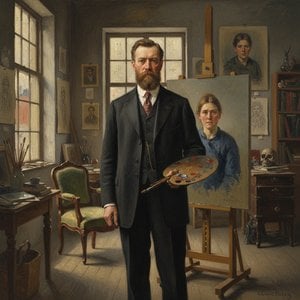
Die Seele des Nordens: Das Leben und die Kunst von Lorentz Norberg
In den stillen, rauen Landschaften von Tromsø, wo die Berge auf das Meer treffen unter dem ätherischen Licht der Arktis, fand der Geist von Loreng Norberg seinen ewigen Ausdruck. Geboren im Jahr 1855 in eine bescheidene Bauernfamilie, besaß Norberg – oft unter seinem Geburtsnamen Lorentz Berg bekannt – eine angeborene Verbindung zur natürlichen Welt, die später sein gesamtes künstlerisches Erbe definieren sollte. Sein Weg vom Sohn eines Bauern in Nordnorwegen zu einer anerkannten Figur der norwegischen Kunstszene ist eine bewegende Erzählung darüber, wie Talent auf Gelegenheit trifft. Nach einer frühen Ausstellung in seiner Heimatstadt, die die Aufmerksamkeit lokaler Gönner erregte, wurde Norberg das seltene Privileg zuteil, nach Kristiania, dem heutigen Oslo, zu reisen, um eine formale Ausbildung zu absolvieren. Unter der Mentorenschaft des hochgeschätzten Knud Bergslien begann er, eine technische Meisterschaft zu verfeinern, die es ihm ermöglichen sollte, die rohe, unnachgiebige Schönheit der norwegischen Wildnis auf die Leinwand zu übertragen.
Norbergs künstlerische Entwicklung war tief mit den aufstrebenden Bewegungen seiner Ära verwoben, insbesondere mit dem Wandel hin zum Naturalismus und Realismus. Er war nicht nur ein Schüler der Technik, sondern ein aktiver Teilnehmer an den intellektuellen Strömungen der Kunstwelt des späten 19. Jahrhunderts. Ein entscheidender Moment in seiner Karriere ereignete sich im Jahr 1883, als er der berühmten „Freiluft-Akademie“ von Frits Thaulow in Modum beitrat. Diese Erfahrung, die auf der direkten Beobachtung der Natur basierte, beeinflusste seinen stilistischen Ansatz tiefgreifend und ermutigte ihn, die flüchtigen Nuancen von Licht, Atmosphäre und Textur einzufangen. Seine Zeit in den lebendigen Künstlerkreisen von Oslo, einschließlich der Verbindungen zum Atelier „Mangelgården“ von Rolf Skjeftes, bot einen fruchtbaren Boden für die Zusammenarbeit und den Austausch von Ideen, welche seine Fähigkeit schärften, die subtilen Komplexitäten der Landschaft darzustellen.
Eine Vision des Naturalismus und der nördlichen Erhabenheit
Das Werk von Lorentz Norberg zeichnet sich durch eine unerschütterliche Hingabe an die Wahrheit der Landschaft aus. Seine Gemälde dienen als Fenster in eine Welt, in der die Rauheit der Provinz Finnmark und die stillen Fjorde von Tromsø mit akribischer Sorgfalt wiedergegeben werden. Ob er nun die weiten Ausblicke eines Bergtals oder die intimen Details des Bauernlebens darstellt, sein Pinselstrich spiegelt einen tief verwurzelten Respekt für sein Sujet wider. Dies lässt sich besonders deutlich in Werken wie Fagernes erkennen, in dem er die stille Würde von Bauerngebäuden einfängt, die sich an den Hintergrund steiler Berge und ruhiger Gewässer schmiegen. Seine Palette, obwohl in den erdigen Tönen des Nordens verwurzelt, besitzt eine leuchtende Qualität, die die wechselnden Stimmungen des arktischen Himmels erahnen lässt.
Norbergs Ambitionen waren nie auf seine Heimat beschränkt; er suchte Inspiration in den großen Kunstzentren Europas. Unterstützt durch Stipendien reiste er durch Kopenhagen, München und Paris und tauchte in vielfältige Traditionen ein, die seinen visuellen Wortschatz erweiterten. Doch trotz dieser großartigen Exkurse in das Herz der europäischen Kunst blieb eine tiefe Sehnsucht nach der Heimat bestehen. Seine oft fragile Gesundheit machte schließlich eine Rückkehr nach Tromsø erforderlich, doch diese Heimkehr diente nur dazu, den Fokus seines Schaffens zu vertiefen. Die Landschaften, zu denen er zurückkehrte, waren nicht bloß Motive, sondern das eigentliche Wesen seiner Identität. Dies ermöglichte es ihm, ein Werk zu schaffen, das als lebendiges Zeugnis der norwegischen Landschaft während einer transformativen Epoche der Geschichte fortbesteht.
Das Erbe von Lorentz Norberg überdauert durch die bleibende emotionale Resonanz seiner Gemälde. Er erreichte eine seltene Leistung: das Erhabene einzufangen – jene spezifische Schnittstelle zwischen Ehrfurcht und Ruhe, die man in den wildesten Teilen der Welt findet. Seine Beiträge zur norwegischen Kunst sind durch mehrere Schlüsselelemente gekennzeichnet:
- Naturalistische Präzision: Eine kompromisslose Verpflichtung zur Darstellung der authentischen Texturen und des Lichts der nördlichen Landschaft.
- Atmosphärische Tiefe: Die Fähigkeit, die spezifische, oft melancholische Schönheit der arktischen Umgebung durch meisterhaften Einsatz von Tonwert und Komposition heraufzubeschwören.
Obwohl sein Leben tragischerweise kurz war und 1895 im Alter von nur vierzig Jahren endete, hinterließ Norberg ein visuelles Vermächtnis der beständigen Kraft der Natur. Sein Werk inspiriert bis heute all jene, die danach suchen, die tiefe Beziehung zwischen dem Auge des Künstlers und dem Land zu verstehen, das sie ihre Heimat nennen.