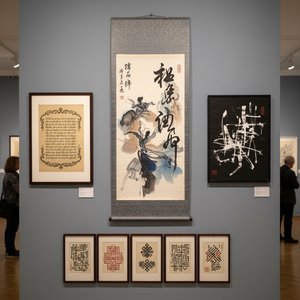
Ein Leben in der Tradition: Die Welt des Li Yanshan
Li Yanshan (1898–1961), ein Name, der untrennbar mit dem Aufblühen der Guohua-Landschaftsmalerei im China des 20. Jahrhunderts verbunden ist, war weit mehr als nur ein Künstler; er war ein Hüter der Kultur, ein engagierter Pädagoge und ein feinsinniger Kenner. Geboren als Li Yaochen im Landkreis Xinhui in der Provinz Guangdong, in eine Familie tief verwurzlement in gelehrten Traditionen, schien sein Weg bereits für ein Leben der Gelehrsamkeit vorbestimmt zu sein. Von klein auf sog er das reiche Geflecht der klassischen chinesischen Literatur in sich auf und legte damit ein Fundament, das seine künstlerische Vision zutiefst prägen sollte. Dieses frühe Eintauchen war nicht bloß akademischer Natur; es pflanzte in ihm eine tiefe Ehrfurcht vor dem kulturellen Erbe Chinas ein – eine Ehrfurcht, die zum Eckpfeiler seines Schaffens wurde. Seine formale künstlerische Ausbildung begann in Guangzhou unter der Anleitung von Pan He, einem gefeierten Guohua-Maler, der Li Yanshans aufkeimendes Talent erkannte und förderte. Diese Mentorenschaft erwies sich als entscheidend, da sie ihm nicht nur technische Fertigkeiten vermittelte, sondern auch ein tiefes Verständnis für die philosophischen Grundlagen der chinesischen Malerei.Brücken zwischen den Welten: Bildung, Recht und künstlerisches Erwachen
Das Leben von Li Yanshan nahm eine unerwartete Wendung, als er 1918 das Jurastudium an der Peking-Universität aufnahm. Obwohl dies vordergründig eine Abkehr von seinen künstlerischen Neigungen darstellte, erwies sich diese Zeit als entscheidend für die Erweiterung seines intellektulement Horizonts. In Peking suchte er aktiv den Austausch mit bedeutenden Malern und Sammlern, tauchte tief in die Welt der chinesischen Kunstgeschichte ein und verfeinerte sein ästhetisches Empfinden. Gleichzeitig, unter dem Einfluss von Cai Yuanpei, dem damaligen Präsidenten der Peking-Universität und Verfechter westlicher Kunst, begann Li auch, westliche Maltechniken unter dem renommierten Künstler Xu Beihong zu studieren. Diese Konfrontation mit vielfältigen künstlerischen Ansätzen bedeutete keine Verwässerung seiner Hingabe zur Guohua-Malerei, sondern vielmehr eine Bereicherung – eine Erweiterung der Perspektive, die später seinen einzigartigen Stil prägen sollte. Nach seinem Abschluss trat er in den Staatsdienst in Guangdong ein und bekleidete verschiedene juristische Positionen, während er gleichzeitig seine Malerei fortsetzte und seine Fähigkeiten verfeinerte. Er diente als Abteilungsleiter der Bildungsbehörde eines Landkreises, wechselte später in Funktionen nach Shantou und Guangzhou und wurde schließlich Hauptrichter am Stadtgericht. Doch erst sein Engagement in der Chinese Painting Research Society (CPRS) im Jahr 1925 besiegelte endgültig seine Bestimmung als Künstler.Die CPRS und die Verpflichtung gegenüber der Tradition
Gegründet von seinem Mentor Pan He, repräsentierte die CPRS das bewusste Bestreben, die Bedeutung traditioneller chinesischer Kulturwerte und Maltechniken in einer Ära rasanter Modernisierung und westlichen Einflusses zu bekräftigen. Li Yanshan wurde schnell ein aktives Mitglied und stieg bis 1928 zum festen Komiteemitglied auf. Der Kernüberzeugung der Gesellschaft – dass ein tiefes Verständnis der Tradition essenziell für die zukünftige Entwicklung der chinesischen Malerei sei – entsprach zutiefst Li Yanshans eigenen Überzeugungen. Die CPRS bot Künstlern eine Plattform, um ihre Werke auszustellen, ihre Ideen zu veröffentlichen und in einen kritischen Dialog über die Richtung der chinesischen Kunst zu treten. Sie entwickelte sich zur größten Kunstorganisation Südchinas und förderte eine lebendige Gemeinschaft gleichgesinnter Menschen, die sich der Bewahrung und Förderung der Guohua verschrieben hatten. Diese Periode markierte einen Wendepunkt in Li Yanshans Leben; er widmete sich zunehmend der Malerei, da er erkannte, dass seine wahre Berufung nicht im Recht oder in der Verwaltung lag, sondern im Bereich des künstlerischen Ausdrucks. Im Jahr 1932 nahm er die Position des Schulleiters des Guangzhou Municipal College of Art an, was sein Engagement für die Kunstpädagogik weiter festigte und dazu beitrug, eine neue Generation chinesischer Maler zu formen.Kriegerische Resilienz und das Refugium Hongkong
Der Ausbruch des Zweiten Sino-Japanischen Krieges im Jahr 1937 brachte China immense Entbehrungen, erschütterte Lebenswege und stellte künstlerische Bestrebungen vor gewaltige Herausforderungen. Li Yanshan war, wie viele andere auch, gezwungen, Zuflucht zu suchen, und bewegte sich zwischen verschiedenen Städten, darunter Hongkong und Macau. Trotz der Wirren hielt er an seiner Malerei fest und fand in seiner Kunst Trost und Sinnhaftigkeit. Er genoss die Schirmherrschaft wohlhabender Bewunderer, die sein Talent erkannten und seine Arbeit in diesen schwierigen Zeiten unterstützten. Nach Kriegsende im Jahr 1945 kehrte Li kurzzeitig in seine Heimatstadt Xinhui zurück und schuf eine bewegende Schriftrolle mit dem Titel „Ein unbeflecktes Land“ als Gedenken an den Frieden. Doch schon bald siedelte er wieder nach Guangzhou um, wo er sich durch Ausstellungen und Kollaborationen erneut als führender Guohua-Maler etablierte. Im Jahr 1948 traf Li die folgenschwere Entscheidung, nach Hongkong zu reisen – ursprünglich nur für einen kurzen Besuch, doch letztlich wurde es seine dauerhafte Heimat. Als das chinesische Festland 1949 unter kommunistischer Herrschaft stand, folgten viele Künstler seinem Beispiel und suchten in Hongkong Zuflucht. Li schloss sich Meistern wie Chang Dai-chien und Gao Jian-fu an und organisierte gemeinsame Ausstellungen, welche die Reichhaltigkeit und Vielfalt der chinesischen Malerei präsentierten. 1951 hielt er eine Soloaustellung ab, seine letzte vor seinem Ableben im Jahr 1961. In seinen letzten Jahren suchte Li ein zurückgezogeneres Dasein und widmete sich mit unerschütterlichem Fokus der Erforschung des Wesens der Guohua. Sein Atelier wurde zu einem Heiligtum, in dem er malte und nachdachte, und hinterließ ein Vermächtnis, das Künstler und Kunstliebhaber bis heute inspiriert. Er war bekannt für seine hohen Ansprüche an seine Schüler und stellte sicher, dass nur jene, die wahrhaft hingebungsvoll waren, von ihm lernen durften.Fragen & Antworten
Welche Stimmungen drücken die Kunstwerke von Li Yanshan aus?
Die Werke von Li Yanshan können nach Stimmung auf der Stimmungswelt-Seite des Künstlers durchstöbert werden, die die Kunstwerke nach ihrer jeweiligen Stimmung sortiert.
Wie viele Kunstwerke von Li Yanshan können durchstöbert werden?
Sie können 4 Kunstwerke Werke von Li Yanshan auf der Seite Alle Kunstwerke durchstöbern.
Wo sind die Kunstwerke von Li Yanshan nach Technik gruppiert zu finden?
Die Werke von Li Yanshan können nach Medium auf der Alle Medien-Seite des Künstlers durchsucht werden.