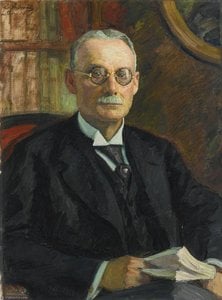
Leonid Pasternak: Bridging Impressionism and Russian Identity
Leonid Osipovich Pasternak, geboren in Odessa im Jahr 1862 in eine jüdische Familie mit Abstammung vom berühmten Philosophen Isaak Abrabanel, war weit mehr als nur ein Maler; er war ein Brückenbauer zwischen künstlerischen Strömungen, ein Chronist seiner Zeit und ein Vater, der untrennbar mit einem der gefeiertsten russischen Literaten verbunden war. Sein Leben entfaltete sich vor dem Hintergrund wechselnder gesellschaftlicher Veränderungen – die Entstehung des Impressionismus in Europa, das aufkeimende russische Kunstszene und die komplexen Realitäten jüdischer Identität innerhalb eines sich schnell wandelnden Reiches. Pasternaks Weg von einem jungen Mann, der in seinem Familienhof zeichnete, bis hin zu einem angesehenen Künstler und Lehrer offenbart einen Mann, der mit Tradition, Moderne und dem tiefgreifenden Einfluss familiärer Erbes auseinanderging.
Die frühen Einflüsse waren überraschend bescheiden. Der Hof seines Vaters’ Gästehauses, komplett mit angrenzender Wagenhaus, entfachte eine lebenslange Leidenschaft für die Darstellung flüchtiger Momente und alltäglicher Szenen. Anfangs wurde er durch die Bedenken seiner Familie hinsichtlich der Störung seiner Studien eingeschränkt, doch Pasternak hielt dennoch an, fand einen frühen Förderer in dem lokalen Straßenreiniger, der sein junges Talent erkannte. Dieses bescheidene Anbeginn verdeutlichte eine bemerkenswerte künstlerische Entwicklung, die von einem scharfen Auge für Details und dem Wunsch geprägt war, die Welt um ihn herum auf Leinwand zu übertragen. Seine formale Ausbildung an der Grekover Kunstschule Odessa legte den Grundstein für seine zukünftige Karriere, doch seine anschließenden Studien an der Moskauer Universität – zunächst in Medizin, dann in Jura – boten einen breiteren intellektuellen Kontext für seine künstlerischen Bestrebungen.
The Polenov Circle and the Embrace of Impressionism
Pasternak’s artistic trajectory took a decisive turn with his enrollment at the Royal Academy of Fine Arts in Munich. This immersion in European Impressionism proved transformative, shaping his approach to color, light and composition. He returned to Russia, fulfilling his military obligations, and quickly established himself as a promising artist within the influential Polenov Circle – a group that included luminaries such as Valentin Serov, Isaac Levitan, Mikhail Nesterov, and Konstantin Korovin. This association exposed him to innovative techniques and fostered a spirit of experimentation, solidifying his position at the forefront of Russian art.
The influence of Impressionism is evident in Pasternak’s work from this period. He began to employ looser brushstrokes, brighter colors, and a greater emphasis on capturing fleeting moments of light and atmosphere. His paintings reflected a growing interest in depicting the beauty of everyday life – scenes of rural Russia, cityscapes, and portraits of ordinary people.
The Tolstoy Portraits: A Window into Family and Era
Perhaps Pasternak’s most enduring legacy lies in his series of portraits of Leo Tolstoy, beginning with “Leo Tolstoy with His Family” (1902). These paintings are not merely likenesses; they are imbued with a palpable sense of warmth, intimacy, and familial connection. The composition—Tolstoy seated amongst his family, bathed in the soft light of a domestic setting—captures a rare moment of tranquility amidst the demands of literary life. The brushwork is loose and expressive, characteristic of Impressionism, yet grounded in a meticulous observation of form and detail.
These portraits were more than just artistic endeavors; they represented a deep personal connection between Pasternak and Tolstoy. The artist spent months living at Tolstoy’s estate, Yasnaya Polyana, immersing himself in the writer's world and capturing his essence on canvas. The paintings reflect not only Tolstoy’s physical appearance but also his character—his wisdom, compassion, and profound engagement with life. They offer a valuable glimpse into the social and intellectual climate of early 20th-century Russia, where Tolstoy’s ideas about simplicity, morality, and social justice were profoundly influential.
Beyond Portraits: Cityscapes and Domestic Scenes
While his portraits of Tolstoy are undoubtedly his most celebrated works, Pasternak's oeuvre encompassed a broader range of subjects. He excelled at capturing the atmosphere of Russian cities—Moscow, Odessa, and St. Petersburg—with evocative cityscapes that convey both beauty and melancholy. His paintings often depict scenes of everyday life: families gathered around tables, children playing in the streets, and glimpses into domestic interiors. These works demonstrate a remarkable ability to find poetry in the mundane, transforming ordinary moments into compelling visual narratives.
Notable among his cityscapes is “Going Home” (1891), a poignant depiction of a family returning from the train station. The painting’s muted palette and subtle details evoke a sense of quiet longing and nostalgia. Similarly, works like "The Courtyard" showcase Pasternak's skill in capturing light and shadow, creating a luminous atmosphere that draws the viewer into the scene.
Family Legacy and Artistic Identity
Leonid Pasternak’s life was inextricably linked to that of his son, Boris Pasternak, one of Russia's most revered poets and novelists. The younger Boris often spoke fondly of his father’s artistic sensibilities and the profound influence he had on his own creative development. Pasternak’s decision to refuse Orthodoxy in order to pursue a career as an artist—a choice that defied societal expectations and familial pressures—demonstrates a commitment to his artistic vision.
Furthermore, Pasternak's Jewish heritage played a complex role in shaping his identity and artistic perspective. He grappled with the challenges of navigating a society increasingly marked by antisemitism while simultaneously embracing his cultural roots. His fascination with Rembrandt’s work—particularly his depictions of Jewish subjects—reveals a deep appreciation for the universality of human experience and a desire to transcend ethnic boundaries through art. Leonid Pasternak's life and work stand as a testament to the enduring power of artistic expression, familial bonds, and the ongoing negotiation between tradition and modernity.