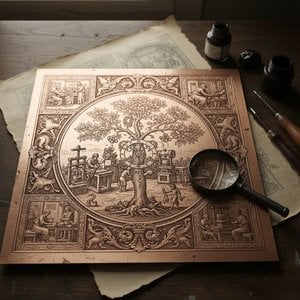
Kunz Lochner: Der Rüstungsmeister der Nürnberger Renaissance
Kunz Lochner (1510–1567) steht als ein Titan unter den Kunsthandwerkern seiner Ära; ein unbestrittener Meister der Rüstkunst, dessen Werkstätten einige der atemberaubendsten Beispiele Renaissance-Kunstfertigkeit und Ingenieurskunst hervorbrachten. Geboren in Nürnberg, Deutschland – einer Stadt, die für ihr aufstrebendes künstlerisches Mäzenatentum berühmt war –, reicht Lochners Vermächtnis weit über bloße Metallarbeit hinaus; es verkörpert den Geist der Innovation und der Pracht, der das Heilige Römische Reich während seines goldenen Zeitalters charakterisierte. Sein Vater, ebenfalls ein geschickter Rüstungsschmied, vermittelte ihm ein tiefes Verständnis der Metallurgie und des Handwerks, was Lochner zu einem Künstler formte, der sowohl von technischer Präzision als auch von ästhetischer Vision angetrieben wurde.- Frühes Leben & Ausbildung: Lochners prägende Jahre verbrachte er damit, seine Fähigkeiten an der Seite seiner Brüder Heinrich und Hans zu perfektionieren, die alle der Kunst der Rüstungsmacherei gewidmet waren. Diese Familientradition stellte sicher, dass Lochner eine umfassende Ausbildung in Schmiedetechniken und den Feinheiten der Metallformung zu funktionalen und dekorativen Objekten erhielt.
- Das kaiserliche Mäzenatentum: Lochners Karriere stieg dramatisch an, als er Aufträge von Kaiser Ferdinand I. und später von Maximilian II. erhielt, was ihn zu einem der gefragtesten Kunsthandwerker seiner Zeit machte. Diese königlichen Gönner erkannten Lochners außergewöhnliches Talent und vertrauten ihm die Anfertigung von Rüstungen für militäische Feldzüge und zeremonielle Anlässe an – ein Zeugnis seines Rufes für Exzellenz.
Ein in Stahl geschmiedetes Vermächtnis: Lochners künstlerischer Stil & Technik
Lochners Werkstatt produzierte Rüstungen, die weit über den reinen Schutz hinausgingen; sie waren Fleisch gewordene Skulptur. Er wandte Techniken an, die über Generationen von Rüstungsschmieden verfeinert worden waren, und nutzte Kreuzhammerung sowie Ziselierung, um ein unvergleichliches Maß an Detailreichtum und Oberflächenstruktur zu erreichen. Seine Entwürfe integrierten fließende Linien und elegante Kurven – eine Abkehr von den starreren Formen früherer Rüstungsschmiede –, was die humanistischen Ideale der Renaissance-Kunst widerspiegelte. Lochners akribische Liebe zum Ornament umfasste Treiben, Gravieren und das Einlegen edler Metalle wie Gold und Silber, wodurch er Rüstungen in tragbare Meisterwerke verwandelte.- Bedeutende Aufträge: Zu Lochners glanzvollsten Erfolgen gehörten die Arbeiten für Ferdinand I. und Maximilian II., aus denen ikonische Stücke hervorgingen, welche die Pracht des Hauses Habsburg verkörpern. Die „Rüstung von Kaiser Ferdinand I.“ bleibt eine beeindruckende Demonstration von Lochners Meisterschaft – ein Beweis für seine Fähigkeit, Funktionalität mit künstlerischer Brillanz zu vereinen.
- Materialien & Methoden: Lochner nutzte geschickt Eisenerz und Kohle, um Rohmaterialien in langlebige Platten zu verwandeln, die mit komplizierten Designs verziert waren. Sein meisterhaftes Schmiedekönnen erlaubte es ihm, Komponenten mit bemerkenswerter Stärke und Präzision zu schmieden, während seine Fähigkeiten als Silberschmied schimmernde Akzente aus Gold und Silber hinzufügten – was die visuelle Wirkung jeder Schöpfung steigerte.
Bewahrter Glanz: Lochners Rüstungen in Museen weltweit
Die dauerhafte Schönheit und Handwerkskunst von Lochners Rüstungen versetzen auch heute noch Menschen in Staunen. Einzelstücke sind in angesehenen Institutionen in ganz Europa untergebracht, darunter die Königliche Rüstkammer in Stockholm, die Staatlichen Kunstsammlungen in Dresden, das Armeemuseum in Paris und das Metropolitan Museum of Art in New York City. Diese Museen bieten Besuchern die seltene Gelegenheit, die außergewöhnliche Kunstfertigkeit Lochners aus nächster Nähe zu erleben – ein Symbol für das künstlerische Erbe Nürnbergs und ein Eckpfeiler der Rüstungsproduktion der Renaissance.- Museumssammlungen: Die Untersuchung von Lochners Rüstungen in diesen Sammlungen ermöglicht es Gelehrten, die akribischen Details und innovativen Techniken dieses Meisterhandwerkers zu würdigen. Die Erhaltung dieser Stücke stellt sicher, dass Lochners Vermächtnis über Generationen hinweg fortbestehen wird – als Mahnmal für den Beitrag Nürnbergs zur europäischen Kunstgeschichte.
Historische Bedeutung & bleibender Einfluss
Das Werk von Kunz Lochner repräsentiert weit mehr als nur außergewöhnliches Handwerk; es verkörpert die kulturelle Dynamik der Renaissance. Seine Rüstungen dienten als visuelle Verkörperung kaiserlicher Macht und Prestige und spiegelten das künstlerische Empfinden seiner Zeit wider. Lochners Einfluss reichte über seine unmittelbaren Aufträge hinaus und prägte die Standards der Rüstungsproduktion für Jahrzehnte – was ihn zu einer der einflussreichsten Figuren in der Geschichte der europäischen Metallkunst machte.Fragen & Antworten
Gibt es eine virtuelle 3D-Tour durch die Werke von Kunz Lochner?
Die Virtuelle 3D-Galerie von Kunz Lochner präsentiert die Kunstwerke des Künstlers in einer virtuellen dreidimensionalen Galerie.
Wo kann ich die Kunstwerke von Kunz Lochner in chronologischer Reihenfolge sehen?
Die Zeitstrahl der Kunstwerke-Seite des Künstlers präsentiert die Werke von Kunz Lochner chronologisch nach Jahren geordnet.
Wo kann ich die Kunstwerke von Kunz Lochner nach Farbpaletten sortiert finden?
Auf der Nach Farbpaletten-Seite von Kunz Lochner können die Werke nach Farbpaletten durchsucht werden.