Karlo Dragutin Drašković Trakošćanski (1873–1900): A Croatian Noble Photographer
Karlo Dragutin Drašković Trakošćanski, born in Bratislava, Slovakia, on December 29, 1873, stands as a fascinating figure within the annals of Croatian art history—specifically, as an amateur photographer who captured the spirit of his era with remarkable sensitivity. Though overshadowed by more celebrated painters, Drašković’s contribution to visual culture deserves recognition for its stylistic choices and its presence in prominent collections across Europe.
Early Life and Family Background
Born into a wealthy and influential Croatian noble family—the Draškovićs—Karlo Dragutin’s upbringing instilled within him an appreciation for artistic pursuits from a young age. The Drašković lineage traced its roots back to an ancient Croatian noble tribe of Kršelac, Stupić or Poletčić, establishing a tradition of aristocratic patronage and cultural engagement. His family held significant estates in Croatia proper—particularly Zažično near Lika—and Bilina near Knin—demonstrating considerable economic clout alongside social prestige. This environment undoubtedly fostered his interest in visual arts and, crucially, propelled him toward the craft of photography.
Photographic Work: Influences and Style
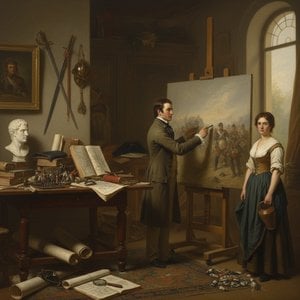
Drašković’s photographic output remains relatively sparse compared to contemporaries like Baron Gros Antoine Jean and Joachim Patenier—artists whose works are housed in museums such as Galerie Zagreb—yet his images possess a distinctive quality that speaks volumes about his artistic sensibilities. He drew inspiration from these masters, adopting compositional techniques and tonal palettes reminiscent of Impressionism and Landscape Painting. Notably, Drašković’s oeuvre includes “Jump of Stjepan Erdödy,” a captivating depiction showcasing the grandeur of Hungarian landscape art. The meticulous attention to detail and evocative use of light—characteristics shared with Gros and Patenier—reflect Drašković's commitment to capturing the beauty of his surroundings.
Museum Collections and Legacy
Drašković’s photographs are proudly displayed in museums across Europe, most notably the Kursk Deineka Picture Gallery in Russia—a repository dedicated to Russian art featuring works by Konstantin Andreyevich Somov, Ivan Ivanovich Shishkin, and Isaak Ilyich Levitan. Furthermore, his images can be found at Mestská Galéria (Presov, Slovakia), St Catherine Church (Besztercebánya, Slovakia). His enduring legacy resides not only in the preservation of his photographic creations but also in the continuation of the Drašković noble family’s tradition—a lineage marked by involvement in politics, military leadership, and artistic endeavors.
Notable Achievements
Despite a tragically brief life culminating in his death in Beč (Vienna) in 1900, Drašković Trakošćanski achieved considerable renown as a nobleman and photographer. His family’s influence extended beyond mere wealth; they held positions of power within Croatian society—particularly the Klenovnik Castle estate—a testament to their enduring prominence. The meticulous documentation of his era's landscapes and portraits underscores Drašković’s artistic vision and secures his place as an important contributor to Croatian visual culture.
## Further Exploration
To delve deeper into Karlo Dragutin Drašković Trakošćanski’s life and work, visit WahooArt or explore the following links: