Joseph Ignaz Mildorfer: A Baroque Visionary of Habsburg Vienna
Joseph Ignaz Mildorfer (13 oct 1719, innsbruck – 8 dec 1775, vienna) stands as a pivotal figure in Austrian Baroque art, renowned primarily for his monumental frescoes adorning Schönbrunn Palace and embodying the grandeur and piety characteristic of Habsburg Vienna. Born in Innsbruck, Austria, Mildorfer’s artistic journey began under the tutelage of his father, Michael Ignaz Mildorfer, a respected painter himself, establishing a foundation rooted in classical tradition. Recognizing his son's talent, he apprenticed him with Paul Troger, a celebrated artist who instilled in Mildorfer an understanding of naturalistic observation and expressive color palettes – influences that would permeate his subsequent oeuvre.
The Academy of Fine Arts Vienna welcomed Mildorfer in 1745, marking the commencement of his academic career and solidifying his position within Viennese artistic circles. From 1751 onwards, he served as a professor of painting, nurturing generations of aspiring artists and shaping the stylistic sensibilities of his time. This role afforded him considerable prestige and allowed him to hone his craft while simultaneously disseminating Baroque ideals. Notably, in that same year, Mildorfer was appointed court painter to Princess Eleonora of Savoy, securing a commission for the opulent Menagerie Pavilion at Schönbrunn – a project that would catapult him to international acclaim. The Menagerie Pavilion’s frescoes are considered among Mildorfer's finest achievements, showcasing his masterful command of light and color and reflecting the humanist ideals prevalent during his time.
Mildorfer’s artistic output focused predominantly on religious subjects, specifically altarpieces and frescoes designed to inspire devotion and convey theological narratives. His style is characterized by dramatic compositions infused with radiant light—a technique meticulously honed during his apprenticeship with Troger—and imbued with a profound sense of emotional intensity. He skillfully employed chiaroscuro, manipulating tonal contrasts to heighten visual impact and guide the viewer’s gaze toward central figures, mirroring the Baroque fascination with theatrical presentation. The frescoes at Schönbrunn exemplify this mastery, depicting biblical scenes bathed in ethereal luminescence, reflecting the spiritual fervor of the era. His meticulous attention to detail and expressive brushwork ensured that his works resonated deeply with audiences seeking solace and inspiration.
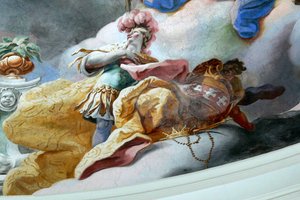
Among his most celebrated works are ‘Saint Mary in Hafnerberg,’ a breathtaking ceiling fresco that captures the Virgin Mary’s serene contemplation amidst celestial splendor—a testament to Mildorfer's ability to translate theological concepts into visually arresting imagery. Similarly, ‘Pietà,’ depicting Jesus Christ cradled by Mary Magdalene after his crucifixion, demonstrates his meticulous attention to anatomical detail and emotive expression. These paintings stand as enduring symbols of Christian faith and artistic excellence, securing Mildorfer’s legacy as one of the foremost Baroque painters in Austria. His contribution to Viennese art history remains significant, shaping the aesthetic landscape of Habsburg rule and cementing his place among the masters of his generation.
His work was profoundly influenced by Troger's emphasis on naturalistic observation and emotional depth, establishing a stylistic continuum that extended beyond his own lifetime. Furthermore, Mildorfer’s artistic endeavors coincided with a period of considerable political upheaval—the War of Succession—which nonetheless provided fertile ground for innovation and experimentation within the Viennese art world. He became a prominent figure in fostering the “Einheitsstil der Wiener Akademie,” shaping the aesthetic standards of an entire generation of artists and ensuring that his legacy would endure through subsequent artistic movements. Joseph Ignaz Mildorfer’s enduring influence on Austrian Baroque painting underscores his position as a true visionary—a master craftsman who seamlessly blended technical virtuosity with spiritual contemplation.