Der visionäre Architekt der Avantgarde
Jiro Yoshihara steht als monumentale Figur in der japanischen Nachkriegskunst da, primär anerkannt für seine Führungsrolle innerhalb der Gutai-Kunstgruppe – einer Bewegung, die die Flugbahn der avantgardistischen Malerei unwiderruflative veränderte. Geboren 1905 in Osaka, begann Yoshiharas künstlerische Reise ohne formale Ausbildung, stattdessen genährt durch eine tiefe, autodidaktische Leidenschaft für das Medium. Aufgewachsen im wohlhabenden und kosmopolitischen Umfeld eines Familienunternehmens für Pflanzenölgroßhandel, waren seine frühen Jahre von einer intellektuellen Neugier geprägt, die lokale Grenzen überschritt. Er war tief bewegt vom humanistischen Idealismus der Shirakabaha-Literaturbewegung, die ihn mit der transformativen Kraft postimpressionistischer Meister wie Cézanne, Van Gogh und Renoir vertraut machte. Diese frühe Begegnung mit westlicher Ästhetik sollte entscheidend für die Gestaltung seiner unverwechselbaren visuellen Sprache sein und es ihm ermöglichen, die Kluft zwischen japanischer Tradition und globalem Modernismus zu überbrücken.
Als seine Karriere reifte, weitete sich Yoshiharas Faszination weit über die Leinwand hinaus aus. Er war gefesselt von den psychologischen Tiefen eines Giorgio de Chirico, der spielerischen Abstraktion eines Joan Miró und der rhythmischen Energie eines Wassily Kandinsky. Diese Einflüsse wirkten als Katalysatoren für eine stilistische Evolution, die ihn durch verschiedene experimentelle Phasen führte. Während der turbulenten 1930er Jahre umarmten seine Gemälde surrealistische Prinzipien und spiegelten die tiefen Ängste und sich wandelnden Bestrebungen einer Welt im Umbruch wider. Er besaß die seltene Fähigkeit, diverse Einflüsse zu verschmelzen, und bewies dabei eine intellektuelle Strenge, die bloße Nachahmung ablehnte. Allmählich schärfte er seinen Fokus auf die geometrische Abstraktion, in der er das Potenzial erkannte, kompleprobierte, universelle Ideen mit unnachgiebiger Klarheit und Stärke zu vermitteln.
Der Geist von Gutai und die Kraft der Geste
Die Gründung der Gutai-Kunstvereinigung im Jahr 1954 an der Seite von Shōzō Shimamoto markierte einen Wendepunkt in Yoshiharas Karriere und festigte sein Vermächtnis als visionärer Innovator. Unter seiner Leitung wurde Gutai zu weit mehr als einem bloßen Kollektiv; es war ein radikales Laboratorium für Experimente. Yoshihara ermutigte seine Nachfolger, „das zu tun, was noch nie zuvor getan wurde“, und verschob damit die Grenzen dessen, was als Kunst betrachtet werden konnte. Diese Ära war geprägt von gestischen, abstrakten Impasto-Malereien, welche den rohen, physischen Akt der Schöpfung feierten. Die Bewegung erkundete beispiellose Territorien, darunter:
- Performance-Kunst: Die Nutzung des menschlichen Körpers als Medium des Ausdrucks.
- Interaktive Werke: Das Aufbrechen der Barriere zwischen Betrachter und Kunstwerk.
- Freiluftausstellungen: Die Verlagerung der Kunst aus der Galerie in das öffentliche Bewusstsein.
- Materialität: Das Experimentieren mit unkonventionellen Substanzen, von Schlamm bis hin zu Industriechemikalien.
Yoshiharas Führung war von einer globalen Ambition geprägt. Er arbeitete unermüdlich als Netzwerker zwischen Kunst, Kommerz und Industrie, um sicherzustellen, dass die Gutai-Bewegung internationale Resonanz fand. Indem er japanische avantgardistische Praktiken in die globalisierende Kunstwelt einbrachte, stellte er sicher, dass die Stimmen seiner Zeitgenossen weit über die Grenzen der Kansai-Region hinaus gehört wurden.
Der Zen-Kreis: Ein Vermächtnis der Erleuchtung
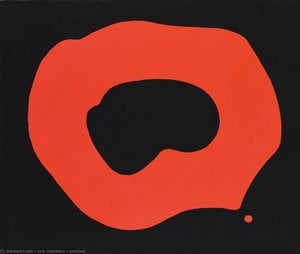
In den späteren Phasen seines Lebens durchlief Yoshiharas Werk einen tiefgreifenden spirituellen und stilistischen Wandel. Er wandte sich vom dicken, energetischen Impasto seiner früheren Jahre ab und begann, einen meditativeren Ansatz zu wählen, der als seine von der Zen-Malerei inspirierte Hard-Edge-Kreise bekannt wurde. Diese ikonischen Werke, die oft aus einzelnen, kühnen Farbringenschaft bestehen, schöpften stark aus dem Konzept des Satori – dem Moment der plötzlichen Erleuchtung. Diese Kreise waren nicht bloß geometrische Formen; sie waren Symbole der Ganzheit, der Kontinuität und des Unendlichen. Durch diese minimalistische Meisterschaft erreichte Yoshihara eine Synthese aus seiner westlich beeinflussten Abstraktion und tief verwurzelten japanischen philosophischen Traditionen.
Sein Œuvre bleibt unglaublich vielfältig und umfasst Zeichnungen, Wandmalereien, Skulpturen, Kalligrafie, Tuschemalerei, Keramik und sogar Bühnenbild. Diese Breite der Praxis spiegelt ein Leben wider, das der totalen Erforschung von Form und Geist gewidmet war. Jiro Yoshihara verstarb 1972, doch sein Einfluss bleibt unlöschbar. Er leitete nicht nur eine Bewegung; er schmiedete eine neue Art des Sehens und hinterließ ein Vermächtnis, in dem der Akt der Schöpfung ebenso bedeutsam ist wie das vollendete Meisterwerk – und in dem ein einfacher Kreis das gesamte Universum enthalten kann.
Fragen & Antworten
Gibt es eine chronologische Übersicht zu Jiro Yoshihara?
Die Karriere von Jiro Yoshihara entfaltet sich Epoche für Epoche auf der Chronik-Seite des Künstlers: eine horizontale Zeitachse der Kunstwerke, gruppiert in Kapitel nach Schaffensperioden.
Kann ich die Werke von Jiro Yoshihara nach Themen durchsuchen?
Die Seite Themenatlas ordnet die Kunstwerke von Jiro Yoshihara nach Themen an.
In welcher historischen Epoche war Jiro Yoshihara tätig?
Jiro Yoshihara war in der Epoche der Moderne tätig. Diese Periode ordnet das künstlerische Schaffen historisch ein.