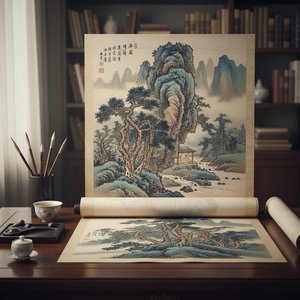
Huang Junshi: Echoes of Tradition in Crimson Landscapes
Huang Junshi (1946 – 2023) emerged from Wuhan, China, as a formidable figure in the realm of Chinese calligraphy and ink painting—a tradition deeply rooted in centuries of artistic heritage. His oeuvre is characterized by an unwavering devotion to stylistic principles established during the Yuan Dynasty (1271–1368), specifically mirroring the masterful brushwork of luminaries like Zhu Yunming, cementing his place as a pivotal voice within contemporary East Asian art.
Early Life and Artistic Formation: Junshi’s formative years were spent absorbing the teachings of renowned calligraphers and artists in Wuhan, fostering an innate understanding of compositional balance and expressive brushstrokes—elements that would permeate his subsequent artistic endeavors. This early immersion instilled in him a profound respect for established techniques and a desire to honor the traditions of his predecessors.
“First Ode on the Red Cliff” (1976): Arguably his most celebrated work, “First Ode on the Red Cliff,” exemplifies Junshi’s stylistic commitment. Executed in 1976, this monumental scroll captures the grandeur of Mount Lu and its surrounding landscape—a scene imbued with symbolic resonance referencing Zhu Yunming's iconic depiction of the same location. The piece demonstrates meticulous attention to detail, utilizing layered ink washes and subtle color accents to convey a profound sense of atmosphere and emotion. It’s considered a cornerstone of Junshi’s artistic output and embodies his dedication to recreating the spirit of Yuan Dynasty painting.
Junshi’s artistic vision wasn't merely an imitation of past masters; it was a deliberate dialogue with tradition—a reimagining of established techniques within the context of his own time. He skillfully blended classical aesthetics with modern sensibilities, resulting in landscapes that possess both serene beauty and intellectual depth. The influence of Zhu Yunming's approach is palpable: Junshi’s compositions prioritize harmony and balance, employing expansive vistas punctuated by carefully positioned rocks and trees—a stylistic hallmark of Yuan Dynasty painting. This careful consideration for visual equilibrium speaks to a deep appreciation for the fundamental principles underpinning Chinese art history.
Technique and Style: Junshi’s technique involved extensive layering of ink washes (間畵), creating tonal variations that capture the nuances of light and shadow. He favored a loose, expressive brushstroke style reminiscent of Zhu Yunming's monumental landscapes—a deliberate choice designed to evoke contemplation and convey the sublime qualities of nature. This meticulous approach ensured that each piece resonated with an emotional core alongside its visual splendor.
Recognition and Legacy: Junshi’s dedication to preserving and advancing Chinese calligraphy and ink painting garnered considerable acclaim within the art community. His work continues to inspire artists today, serving as a testament to the enduring power of tradition and the transformative potential of artistic innovation. Huang Junshi's unwavering commitment to honoring the past while embracing contemporary expression solidified his position as a significant figure in East Asian art history—a legacy that will undoubtedly continue to resonate for generations to come.