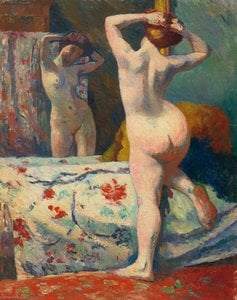
Der strahlende Geist von Henri Charles Manguin
Im goldenen Licht des frühen zwanzigsten Jahrhunderts fingen nur wenige Künstler die joie de vivre der französischen Riviera so lebendig ein wie Henri Charles Manguin. Geboren 1874 in Paris in eine Familie, in der die Bildhauerei und visuelle Tradition tief verwurzelt waren, war Manguin für ein Leben bestimmt, das von Farbe und Form geprägt war. Seine Reise in das Herz der Avantgarde begann an der renommierten École des Beaux-Arts, wo er unter dem legendären Gustave Moreau studierte. In diesem fruchtbaren akademischen Umfeld knüpfte Manguin lebenslange Bande mit Mitstreitern wie Henri Matisse und Charles Camoin. Diese Freundschaften waren weit mehr als bloße soziale Verbindungen; sie waren der Schmelztiegel, in dem eine neue, rebellische Art des Sehens geschmiedet wurde. Gemeinsam verbrachten diese jungen Künstler Stunden im Louvre, um mit akribischer Präzision Meisterwerke der Renaissance zu reproduzieren – eine Übung, die Manguin einen tiefen Respekt vor der klassischen Komposition einprägte, während er sich gleichzeitig darauf vorbereitete, traditionelle Grenzen zu sprengen.
Als das neunzehnte Jahrhundert dem zwanzigsten Platz machte, begann Manguins Pinsel mit dem Licht des Impressionismus zu tanzen. Er schöpfte tiefe Inspiration aus den leuchtenden Paletten von Monet und Renoir, suchte jedoch nach etwas Viszeralerem und Subjektiverem. Diese Entwicklung führte ihn direkt in das Herz des Fauvismus, einer Bewegung, die berühmt für ihren „wilden“ Einsatz von Farbe ist. Als der Kritiker Louis Vauxcelles nach dem Salon d'Automne von 1005 diese Gruppe von Künstlern berühmt als Les Fauves – die wilden Bestien – bezeichnete, stand Manguin an der Spitze dieser chromatischen Revolution. Sein Werk löste sich von den zarten, flüchtigen Beobachtungen seiner Vorgänger und bewegte sich hin zu einem kühneren und emotionaleren Farbauftrag. Er nutzte leuchtendes Gelb, brennendes Rot und sanfte Pastelltöne, um nicht nur die Sicht auf eine Landschaft zu evozieren, sondern die eigentliche Hitze und Atmosphäre der mediterranen Sonne.
Eine mediterrane Muse und die Kunst der Intimität
Der Lauf von Manguins Karriere wurde durch seine Entdeckung von Saint-Tropez unwiderruflich verändert. Nachdem er 1904 vom Pointillismus-Meister Paul Signac in das Küstendorf eingeladen worden war, fühlte sich Manguin von den kristallklaren Wassern und dem schimmernden Licht des Mittelmeers verzaubert. Diese Landschaft wurde zu seinem Refugium und seinem beständigsten Sujet. Obwohl er nicht die starre Punktmalerei Signacs übernahm, umarmte er die leuchtende Klarheit der Küste und malte Szenen von sonnenverwöhnten Badenden und ruhigen Meeresansichten, die förmlich vor Leben zu pulsieren schienen. Es war diese Meisterschaft des Lichts und der Atmosphäre, die ihm vom Kritiker Guillaume Apollinaire den evokativen Titel „des sinnlichen Malers“ einbrachte – ein Zeugnis für die sinnliche und haptische Qualität seiner Leinwände.
Jenseits der weiten Landschaften besaß Manguins Werk eine tief persönliche, intime Dimension. Seine Heirat mit Jeanne Carette im Jahr 1899 brachte ein tiefes Gefühl von Kontinuität und Zärtlichkeit in sein Œuvre. Jeanne wurde sein häufigstes und geliebtestes Modell und erschien in zahlreichen Porträts, die die stille, häusliche Schönheit ihres gemeinsamen Lebens einfingen. Durch diese Gemälde schlug Manguin die Brücke zwischen den grandiosen, experimentellen Gesten des Fauvismus und der intimen, emotionalen Tiefe der Porträtmalerei. Seine Fähigkeit, die monumentale Größe der französischen Landschaft mit den feinen Nuancen menschlicher Verbundenheit zu verweben, bleibt eine seiner bedeutendsten künstlerischen Errungenschaften.
Das Vermächtnis eines Farbmals
Die historische Bedeutung von Henri Charles Manguin liegt in seiner Rolle als Brückenbauer zwischen den Epochen. Er meisterte den Übergang von den strukturierten Traditionen der Beaux-Arts zur expressiven Freiheit der Moderne. Seine Karriere war von bemerkenswerter Anerkennung geprägt; der legendäre Kunsthändler Ambroise Vollard erwarb berühmt für über hundert seiner Leinwände, was die Bedeutung Manguins für den zeitgenössischen Kunstmarkt seiner Zeit unterstrich. Selbst als er im Laufe der Jahrzehnte schließlich in Saint-Tropez sesshaft wurde, blieb er der lebendigen, emotionalen Vision treu, die er in seiner Jugend kultiviert hatte.
Heute wird Manguin nicht nur als Teilnehmer einer Bewegung in Erinnerung behalten, sondern als ein Meister des Lichts und der Emotion. Sein Vermächtnis findet sich in:
- Der fauvistischen Revolution: Sein Beitrag zur Entwicklung eines nicht-naturalistischen, expressiven Farbeinsatzes.
- Dem mediterranen Impressionismus: Seine einzigartige Fähigkeit, die spezifische Atmosphäre der französischen Riviera in eine universelle Sprache der Schönheit zu übersetzen.
- Der humanistischen Porträtmalerei: Die nahtlose Integration von persönlicher Intimität und großartiger stilistischer Experimentierfreude.
Manguins Werk findet auch heute noch Anklang bei den Betrachtern und bietet ein Fenster in eine Zeit beispiellosen künstlerischen Mut, in der Farbe nicht mehr nur ein Werkzeug der Beschreibung war, sondern ein kraftvolles Medium für die menschliche Seele.
Fragen & Antworten
Wo und wann wurde Henri Manguin geboren?
Henri Manguin wurde im Jahr 1874 in Paris geboren.
Aus welcher Epoche stammte Henri Manguin?
Henri Manguin war in der Epoche der Moderne tätig. Diese Periode ordnet das künstlerische Schaffen historisch ein.
Gibt es eine Zeitachse der Werke von Henri Manguin?
Eine Zeitachse der Werke von Henri Manguin ist verfügbar: Auf der Seite Zeitstrahl der Kunstwerke des Künstlers sind die Kunstwerke nach ihrem Entstehungsdatum sortiert.