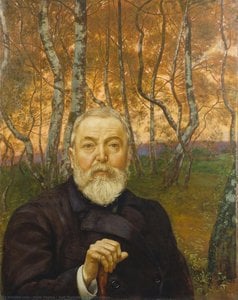
Die Seele des Schwarzwalds: Das Leben und die Vision von Hans Thoma
Hans Thoma nimmt eine singuläre Stellung in der deutschen Kunstgeschichte ein, berühmt für seine evokativen Landschaften und Porträts, die den Geist der Schwarzwaldregion einfangen – ein Ort, der tief in seiner künstlerischen Vision verwurzelt war. Geboren 1839 in Bernau bei Berlin, begann er eine künstlerische Reise, die von unerschütterlicher Hingabe an die Traditionen und das Brauchtum seiner Heimat geprägt war. Sein Leben war ein feines Gleichgewicht zwischen akribischer Beobachtung und einem tiefen Sinn für romantischen Idealismus, wodurch ein Werk entstand, das sich gleichermaßen erdverbunden wie durch eine traumähnliche Qualität erhaben anfühlt.
Thomas prägende Jahre wurden von den einfachen Rhythmen des Landlebens geformt; das Handwerk seines Vaters als Uhrmacher vermittelte ihm eine Präzision und eine außergewöhnliche Liebe zum Detail, die später jeden Pinselstrich durchdringen sollten. Im Jahr 1859 schrieb er sich an der Karlsruher Akademie ein, wo er von Meistern wie Johann Wilhelm Schirmer und Ludwig Des Coulbres geprägt wurde. Diese Zeit festigte seine grundlegende Meisterschaft der Techniken der Landschaftsmalerei. Während seine darauffolgenden Reisen durch Düsseldorf, Paris, Italien, München und Frankfurt ihn einem Wirbelsturm vielfältiger künstlerischer Strömungen aussetzten, dienten diese internationalen Begegnungen nur dazu, sein Engagement zu festigen, das Wesen des deutschen Landlebens und die zeitlose Schönheit der Natur einzufangen.
Ein Geflecht aus Einfluss und Technik
Thomas unverwechselbarer Stil entzieht sich einer einfachen Kategorisierung, weist jedoch unverkennbare Ähnlichkeiten mit der Präraffaeliten-Bewegung auf. Ähnlich wie die Werke von Dante Gabriel Rossetti oder John Everett Millais gab Thoma dem Einfangen atmosphärischer Bedingungen und der Vermittlung tiefer Emotionen durch subtile Tonvariationen und leuchtende Farbpaletten den Vorrang. Seine Faszination für die kleinsten Details der natürlichen Welt – die Textur eines Blattes, das Licht, das durch ein Blätterdach filtert, oder die stille Präsenz grasender Kühe – spiegelt eine Hingabe zum Realismus wider, die häufig von einer imaginativen, fast mystischen Vision abgemildert wird.
Die Linie der deutschen Meister spielte ebenfalls eine entscheidende Rolle bei der Gestaltung seiner Ästhetik. Die Werke von Albrecht Dürer und Lucas Cranach dem Älteren dienten als tiefgreifende Einflüsse, die seine Kompositionsentscheidungen sowie seine Fähigkeit zur Darstellung präziser Umrisse und sorgfältiger Schattierungen prägten. Diese Mischung aus klassischer Präzision und romantischem Gefühl erlaubte es ihm, Szenen zu erschaffen, die sich sowohl historisch verwurzelt als auch emotional unmittelbar anfühlten. Ob durch eine Schwarz-Weiß-Zeichnung wie sein Jugendliches Selbstporträt oder eine lebendige, farbenprächtige Landschaft wie der Herbstbaum vor dem Wiesental – Thomas technisches Können blieb stets auf das Streben nach der Wahrheit innerhalb der Natur konzentriert.
Vermächtnis und künstlerische Bedeutung
Im Laufe seiner Karriere erlangte Thoma ein Maß an Anerkennung, das ihn in das Herz der deutschen Kunstszene rückte. Seine Fähigkeit, durch üppiges Grün und wolkenverhangene Himmel – wie in Werken wie Landschaft mit Wolke zu sehen – Gelassenheit heraufzubeschwören, zeugt von einer fast impressionistischen Sensibilität für Licht und Luft. Er malte nicht bloß Kulissen; er malte die Atmosphäre einer Kultur und einer Landschaft und verwandelte den Schwarzwald in ein Symbol für dauerhaften Frieden und pastorale Schönheit.
Die historische Bedeutung von Hans Thoma liegt in seiner Fähigkeit, die Kluft zwischen den strengen akademischen Traditionen des 19. Jahrhunderts und der aufkeimenden Emotionalität der modernen Kunst zu überbrücken. Zu seinen Errungenschaften gehören:
- Meisterschaft der Landschaft: Die Schaffung einer definitiven visuellen Sprache für die deutsche Landschaft, die Realismus mit Romantik verband.
- Kulturelle Bewahrung: Die Dokumentation der Folklore, der Traditionen und der natürlichen Pracht der Schwarzwaldregion während einer Zeit des rapiden industriellen Wandels.
Heute findet Thomas Werk weiterhin Anklang bei Betrachtern, die Trost im Idyllischen und Ewigen suchen. Seine Gemälde bleiben Fenster in eine Welt, in der Natur und Menschlichkeit in einem harmonischen, wunderschön detaillierten Tanz existieren.
Fragen & Antworten
Kann ich die Farbwahl von Hans Thoma über das gesamte Werk hinweg studieren?
Das Farbprofil der Werke von Hans Thoma finden Sie auf der Farbpalette des Künstlers-Seite des Künstlers.
Wo kann ich die Kunstwerke von Hans Thoma nach Kunstrichtungen sortiert finden?
Die Stilrichtungen, in denen Hans Thoma tätig war, finden Sie auf der Alle Stilrichtungen-Seite des Künstlers, auf der die Kunstwerke nach Stilrichtung gruppiert sind.
In welcher Stadt und in welchem Land wurde Hans Thoma geboren?
Hans Thoma wurde in Bernau bei Berlin, Deutschland, geboren.