Hanabusa Itchō: Bridging Tradition and Humor in Edo Japan
Hanabusa Itchō (英 一蝶, 1652 – february 7, 1724) stands as a singular figure within the artistic landscape of Edo period Japan. Initially trained under the esteemed Kanō Yasunobu, he swiftly rejected the rigid formalism of the Kanō school’s aesthetic principles, embarking on a path toward a more expressive and personally driven style—a pivotal moment that cemented his legacy as one of the foremost practitioners of literati painting (bunjin). His artistic journey wasn't merely about stylistic innovation; it was interwoven with profound intellectual engagement, fueled by mentorship from Bashō Matsuo and marked by collaborations with fellow poets like Kikaku Enomoto.
Early Training & Kanō Influence
Itchō’s formative years were spent mastering the techniques of the Kanō school, absorbing its meticulous attention to detail and reverence for Buddhist iconography. However, he recognized that this approach wouldn't satisfy his artistic impulses—a desire to capture not just beauty but also human emotion and everyday life. The Kanō school prioritized idealized representations of deities and landscapes, adhering to strict compositional rules designed to convey spiritual harmony. Yet Itchō felt constrained by these conventions, perceiving them as unsuitable for expressing the complexities of human experience. He sought a more nuanced perspective, one that acknowledged the beauty found in ordinary moments and the subtle interplay between nature and humanity—a distinction that would define his artistic trajectory.
Breaking Free & Literati Style
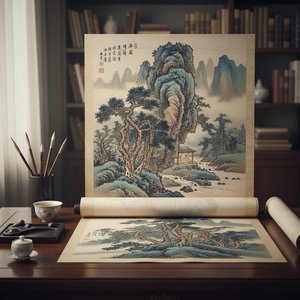
Rejecting the constraints of Kanō orthodoxy, Itchō embraced the literati style, prioritizing spontaneity and capturing fleeting impressions. This stylistic shift reflected a broader intellectual movement concerned with exploring the complexities of human experience and engaging in philosophical contemplation—a characteristic that distinguishes him from many of his contemporaries. Unlike the meticulous precision demanded by the Kanō school, the literati style favored loose brushstrokes and asymmetrical compositions, allowing for an immediacy and emotional resonance that conveyed a deeper understanding of the world around him. Itchō’s artistic vision was informed by Zen Buddhism, which encouraged contemplation and acceptance of impermanence—values that permeated his paintings and poems alike.
Itchō's Artistic Output & Subject Matter
Itchō’s artistic output is characterized by its remarkable versatility. He excelled not only as a painter but also as a calligrapher, demonstrating exceptional skill in conveying emotion through brushstrokes and ink washes. His poems, imbued with Bashō's influence, further solidified his reputation as a multifaceted artist—a rare combination of visual and literary artistry that exemplifies the spirit of the bunjin tradition. He famously collaborated with Enomoto Kikaku on several poetic projects, producing works that resonate with wit and observation. Itchō deliberately eschewed grand narratives and idealized depictions, opting instead for scenes from urban life—bustling marketplaces, rainy days, and glimpses into domestic interiors—often rendered with a subtle humor that challenged conventional artistic conventions. These paintings capture the essence of Edo society, portraying ordinary people engaged in everyday activities with remarkable sensitivity and detail.
Notable Works & Legacy
Among his most celebrated paintings are “Jizō Bosatsu,” depicting a serene Buddhist statue amidst lush foliage, and “Bugaku Dances (front); Chinese Lions (reverse),” showcasing a dynamic performance scene with vibrant colors. These pieces exemplify Itchō’s ability to convey both spiritual contemplation and visual dynamism—a testament to his mastery of technique and his profound understanding of artistic expression. His work is held in prestigious institutions worldwide—the Museum of Fine Arts Boston, Philadelphia Museum of Art, Los Angeles County Museum of Art, Smithsonian Libraries—testament to its enduring appeal and significance within Japanese art history. Hanabusa Itchō’s legacy extends beyond his individual creations; he established a painting school that nurtured the artistic sensibilities of younger generations and ensured that his distinctive style persisted into the late Edo period. He remains an artist whose exploration of human emotion and observation continues to inspire admiration and scholarly study—a true innovator who bridged the gap between tradition and humor, leaving an indelible mark on the cultural heritage of Japan.