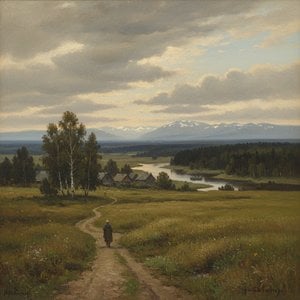
Die Seele des Altaj: Das Leben und Vermächtnis von Grigori Gurkin
Grigori Ivanovich Gurkin (1870–1937) steht als eine singuläre, leuchtende Gestalt im Geflecht der russischen Kunstgeschichte. Als erster professioneller Künstler, der in der Republik Altai geboren wurde, fungierte er als lebenswichtige Brücke zwischen den alten, nomadischen Traditionen seines Volkes und der formalen akademischen Strenge der Kaiserzeit. Geboren im Dorf Ulala – heute bekannt als Gorno-Altaysk – war Gurkins frühes Leben tief mit den Rhythmen der Altai-Landschaft und dem spirituellen Erbe des Choros-Clans verwoben. Sein Weg von einem jungen Schüler einer Ikonenmalerschule zu einem Meister der Landschaft ist ein Zeugnis eines Lebens, das der Aufgabe gewidmet war, die tiefe Essenz der sibirischen Wildnis einzufangen.
Die Grundlagen von Gurkins technischer Meisterschaft wurden in den prestigeträchtigen Hallen der Kaiserlichen Akademie der Künste in Sankt Petersburg gelegt. Als er dort 1897 sein formales Studium begann, durchschritt er dieselben Korridore wie legendäre Meister wie Iwan Schischkin und Alexander Kiseljow. Diese Periode war transformativ; unter dem Einfluss Schischkins unvergleichlicher Fähigkeit, die raue Erhabenheit der russischen Wildnis darzustellen, entwickelte Gurkin einen tiefen Respekt für botanische Genauigkeit und atmosphärische Tiefe. Doch während seine Ausbildung in dem disziplinierten Realismus der Akademie verwurzelt war, blieb sein Herz den Bergen seiner Jugend verbunden. Bei seiner Rückkehr zum Altai malte er nicht bloß Kulissen; er suchte danach, den eigentlichen Geist des Landes in eine visuelle Sprache zu übersetzen.
Ein Geflecht aus Landschaft und Legende
Gurkins Œuvre ist ein atemberaubender Dialog zwischen akribischem Realismus und dem evokativen Flüstern des Symbolismus. Seine Landschaften sind selten bloße topografische Aufzeichnungen; stattdessen sind sie von einer subtilen, poetischen Resonanz durchdrungen, die die Präsenz des Göttlichen in der Natur erahnen lässt. In Werken wie Der Katun-Fluss im Frühling oder Das Karakol-See kann man eine meisterhafte Beherrschung von Licht und Textur beobachten. Er wandte oft einen impressionistischen Pinselstrich an, wobei er dickes Impasto und atmosphärische Techniken nutzte, um die flüchtige Energie eines Wasserfalls oder die serene, gefrorene Stille eines Wintermorgens einzufangen. Diese Dualität erlaubte es ihm, den Altai nicht nur als geologische Formationen darzustellen, sondern als lebendige, atmende Wesenheiten, die über ihren eigenen Charakter und ihre eigene Heiligkeit verfügen.
Jenseits der Leinwand war Gurkin ein unermüdlicher Verfechter der kulturellen Identität des Altai. Sein Engagement für sein Erbe manifestierte sich auf vielfältige und wirkungsvolle Weise:
- Kulturelle Bewahrung: Er nutzte seine künstlerischen Talente, um Epen zu illustrieren und Lehrbücher zu erstellen, wodurch sichergestellt wurde, dass die mündlichen Überlieferungen und die Folklore des Altai-Volkes für zukünftende Generationen erhalten blieben.
- Politische Führung: In den turbulenten Jahren nach der Oktoberrevolution trat Gurkin als bedeutende politische Figur hervor, indem er den Vorsitz der Karakorum-Regierung übernahm – eine Initiative, die darauf abzielt, die Altai-Länder zu einem Nationalstaat zu vereinen.
- Spirituelle Verbindung: Seine tief verwurzelte Verbindung zur Religion des Altai, dem Burkhanismus, und seine frühe Ausbildung in der Ikonografie verliehen seinen säkularen Landschaften ein Gefühl der Sakralität und Ehrfurcht vor der natürlichen Welt.
Ein tragisches Ende und bleibende Bedeutung
Der Lebensweg von Gurkin wurde letztlich durch die gewaltsamen politischen Umbrüche der frühen Sowjetära überschattet. Nach Zeiten des Exils in der Mongolei und Tuva, wo er weiterhin die schamanistischen Traditionen und das tägliche Leben der lokalen Bevölkerung dokumentierte, kehrte er in die Sowjetunion zurück. Tragischerweise machten ihn seine Bekanntheit und seine Verbindungen zum Altai-Nationalismus während des Großen Terrors zu einem Ziel. Im Jahr 1937 wurde Grigori Gurkin verhaftet und hingerichtet – ein Verlust, der eine der wichtigsten Stimmen der sibirischen Kunst für viele Jahre verstummen ließ.
Trotz dieses tragischen Ausgangs bleibt sein künstlerisches Erbe ungebrochen. Heute werden seine Werke in Institutionen wie dem Staatlichen Museum der Schönen Künste des Altai und dem Regionalen Kunstmuseum Tomsk verehrt. Er wird nicht nur als Pionier der Landschaftsmalerei in Erinnerung behalten, sondern als Sinnbild des ethnischen Erbes des Altai – ein Mann, der auf die Berge blickte und darin nicht nur Stein und Wasser sah, sondern die Seele eines ganzen Volkes. Seine Fähigkeit, die Erhabenheit der russischen realistischen Tradition mit dem intimen, symbolischen Geist des Altai zu verschmelzen, versetzt all jene, die seiner Vision begegnen, weiterhin in Staunen.
Fragen & Antworten
Welche Farben hat Grigori Gurkin am häufigsten verwendet?
Die Verwendung von Farbe in den Werken von Grigori Gurkin, die auf diese Website aufgeführt sind, kann auf der Farbgenom der Palette-Seite des Künstlers untersucht werden.
Wo sind die Kunstwerke von Grigori Gurkin nach Schlagworten gruppiert?
Die Werke von Grigori Gurkin können über die Nach Schlagworten-Seite nach Schlagworten durchsucht werden. Jedes Schlagwort gruppiert die entsprechenden Kunstwerke.
Wie finde ich alle Werke von Grigori Gurkin in einem bestimmten Medium?
Die Seite Alle Medien gruppiert die Kunstwerke von Grigori Gurkin nach Technik.