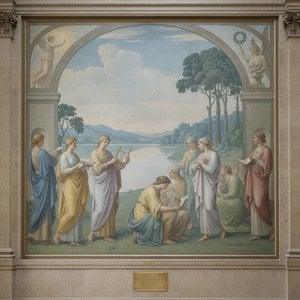
Der Meister des Mailänder Hofes
In der lebendigen, intellektuell aufgeladenen Atmosphäre des Mailands der Renaissance trat
Mit fortschreitender Karriere weitete de Predis seinen Wirkungskreis über den intimen Maßstab der Manuskripte hinaus aus, um den prachtvolleren Anforderungen des Hofes von Ludovico Sforza gerecht zu werden. Diese Periode markierte seinen Aufstieg in die höchsten Kreise der Mailänder Gesellschaft, wo er nicht nur als Maler, sondern auch als vielseitiger Gestalter von Münzen, Wandteppichen und sogar Theaterkulissen fungierte. Seine Fähigkeit, die vielfältigen Bedürfnisse der Münzstätte und des herzoglichen Palastes zu meistern, zeugt von einem Künstler mit immenser technischer Bandbreite, der in der Lage war, politische Macht in dauerhaften visuellen Glanz zu verwandeln.
Ein Vermächtnis, verwoben mit Leonardo
Das vielleicht fesselndste Kapitel im Leben von de Predis ist seine tiefe Verbindung zum Genie Leonardo da Vinci. Als Leonardo in Mailand eintraf, war es de Predis, der ihm Gastfreundschaft gewährte und so eine Brücke zwischen zwei der bedeutendsten künstlerischen Köpfe jener Ära schlug. Diese Beziehung ging weit über eine bloße Freundschaft hinaus; sie entwickelte sich zu einer monumentalen künstlerischen Zusammenarbeit, die einen unauslöschlichen Eindruck in der Kunstgeschichte hinterlassen sollte. Am bekanntesten ist die Leistung, dass de Predis und sein Bruder Evangelista die Seitenflügel der Felsgrottenmadonna für die Kirche San Francesco Grande ausführten. Während Leonardo den zentralen Figuren mit seiner revolutionären Sfumato-Technik Leben einhauchte, lieferten die Brüder De Predis den essenziellen strukturellen und atmosphärischen Rahmen, der dieses heilige Meisterwerk vervollständigte.
Über die gemeinschaftlich geschaffenen Altarbilder hinaus ermöglichte es de Predis' Arbeit als Porträtist, die Gesichter der einflussreichsten Persönlichkeiten jener Zeit zu dokumentieren. Sein Geschick, die Würde und den Charakter seiner Motive einzufangen, machte ihn zum bevorzugten Maler für hochkarätige diplomatische Anlässe. Ein bemerkenswertes Beispiel ereignete sich während der Heiratsverhandlungen zwischen Kaiser Maximilian I. und Bianca Maria Sforza; de Predis wurde damit beauftragt, ein Porträt der Braut zu schaffen – ein Werk, das sie nach Innsbruck begleiten und als visueller Botschafter Mailänder Eleganz dienen sollte.
Künstlerische Bedeutung und bleibender Einfluss
Die Kunstfertigkeit von Giovanni Ambrogio de Predis zeichnet sich durch eine einzigartige Mischung aus lombardischer Präzision und den aufstrebenden atmosphärischen Innovationen der Hochrenaissance aus. Obwohl ein Großteil seines dokumentierten Schaffens aufgrund der kollaborativen Natur seiner Werkstatt Gegenstand wissenschaftlicher Debatten bleibt, ist sein Einfluss auf die Mailänder Schule unbestreitbar. Seine Beiträge lassen sich durch mehrere Grundpfeiler seiner Karriere zusammenfassen:
- Vielseitigkeit des Mediums: Von der mikroskopischen Detailtreue der Buchmalerei bis hin zu den großformatigen Anforderungen des Teppichdesigns und des Münzprägens.
- Höfische Porträtkunst: Die Fähigkeit, als visueller Chronist der Familie Sforza zu fungieren und sowohl politisches Prestige als auch persönliche Ähnlichkeit einzufangen.
- Exzellenz in der Zusammenarbeit: Eine entscheidende Rolle bei der Ausführung bedeutender Renaissance-Werke an der Seite von Leonardo da Vinci, was maßgeblich zur Ästhetik des Mailänder Hofes beitrug.
- Meisterhaftes Design: Seine Arbeit in der örtlichen Münzstätte und im Bühnenbild bewies die Begabung eines Künstlers, der die physische und sensorische Umgebung seiner Epoche mitgestalten konnte.
Obwohl er 1522 verstarb und ein Vermächtnis hinterließ, das oft im Schatten größerer Meister steht, bleibt de Predis ein Eckpfeiler der lombardischen Renaissance. Sein Leben dient als Zeugnis für die tiefe Verflechtung von Kunst, Politik und Wissenschaft während einer der glanzvollsten Perioden der Geschichte.
Fragen & Antworten
In welchen Stilrichtungen war Giovanni Ambrogio De Predis tätig?
Die Werke von Giovanni Ambrogio De Predis können auf der Seite Alle Stilrichtungen nach Kunstströmungen durchsucht werden.
Woher kommt Giovanni Ambrogio De Predis?
Giovanni Ambrogio De Predis wurde in Italien geboren.
Aus welcher Epoche stammte Giovanni Ambrogio De Predis?
Giovanni Ambrogio De Predis war in der Epoche der Renaissance tätig. Diese Periode ordnet das künstlerische Schaffen historisch ein.