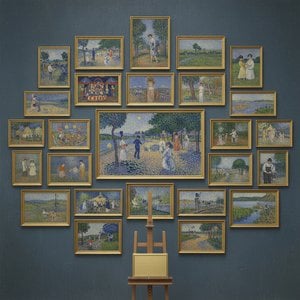
Der Angus-Rembrandt: Die beseelte Vision von George Paul Chalmers
In den nebligen, salzverhangenen Landschaften des Schottlands des neunzehnten Jahrhunderts fingen nur wenige Künstler die vergängliche Schönheit der Highlands mit einer so tiefen Intimität ein wie George Paul Chalmers. Von seinen Zeitgenossen liebevoll als „Der Angus-Rembrandt“ bezeichnet, besaß Chalmers die seltene Gabe, dem rauen Gelände von Montrose und dessen Umgebung Leben einzuhauchen. Geboren 1833 als Sohn eines Küstenschiffkapitäns, waren seine frühen Jahre von der maritimen Atmosphäre der schottischen Küste geprägt – eine Erziehung, die zweifellos seine lebenslange Faszination für Meeresdarstellungen und das dramatische Zusammenspiel von Licht und Wasser nährte. Sein Weg von einem jungen Jungen, der in den Schatten von Montrose skizzierte, bis hin zu einem gefeierten Mitglied der Royal Scottish Academy ist ein Zeugnis eines Talents, das danach strebte, das Ewige in den flüchtigen Momenten der Natur zu finden.
Die Entwicklung von Chalmers’ künstlerischem Schaffen wurde unwiderruflich durch seine Zeit an der Trustees' Academy in Edinburgh geprägt. Unter der strengen und inspirierenden Anleitung von Robert Scott Lauder entwickelte sich Chalmers über die bloße Darstellung hinaus zu einer anspruchsvollen Meisterschaft des akademischen Realismus. Hier verfeinerte er einen unverwechselbaren Stil, der durch einen lockeren, ausdrucksstarken Farbauftrag gekennzeichnet war – eine Technik, welche die atmosphärischen Effekte von Licht und Farbe gegenüber einer starren Zeichnung betonte. Dieser Ansatz erlaubte es ihm, das Chiaroscuro zu manipulieren, indem er tiefe Schatten und plötzliche Lichtausbrüche nutzte, um seinen Leinwänden eine spürbare emotionale Tiefe zu verleihen. Ob er nun den friedlichen ländlichen Charme von „The Ford“ oder die eindringlich schönen Ausblicke auf Skye darstellte, sein Werk bewahrte stets einen Kern psychologischer Tiefe, der weit über die Grenzen Schottlands hinaus nachhallte.
Ein Vermächtnis aus Porträts und Landschaften
Während seine Landschaften für ihre evokative Kraft gefeiert werden, bleibt Chalmers’ Können als Porträtist ein Eckpfeiler seiner historischen Bedeutung. Er besaß das bemerkenswerte Talent, die Würde, Anmut und das innere Wesen seiner Motive einzufangen – von einfachen Bewohnern der Region bis hin zu den Größen der Kunstwelt. Seine Porträts waren nicht bloße Ähnlichkeiten, sondern psychologische Studien; in Werken wie „Mrs May Torlrie“ erkennt man eine akribische Liebe zum Detail, die den sozialen Status des Dargestellten ehrt und gleichzeitig eine zarte, menschliche Verletzlichkeit offenbart. Diese Fähigkeit, die Lücke zwischen formaler akademischer Präzision und emotionaler Resonanz zu schließen, machte ihn zu einem der gefragtesten Maler seiner Ära.
Über das Atelier hinaus weitete sich Chalmers’ Repertoire auf Genreszenen und historische Erzählungen aus, welche den kulturellen Zeitgeist des viktorianischen Schottlands widerspiegelten. Seine Verbindung zu den literarischen Traditionen seiner Heimat zeigt sich deutlich in Werken wie „The Legend“, einer frühen Skizze, die von den eindringlichen Erzählungen Sir Walter Scotts inspiriert wurde. Diese Schnittstelle zwischen bildender Kunst und nationaler Geschichtenerzählung festigte seinen Platz innerhalb der breiteren Bewegung der schottischen Romantik. Selbst als er sich intimeren Interieurs und maritimen Themen widmete, zog sich ein beständiger Faden atmosphärischer Spannung durch sein gesamtes Werk – als hielte jede Landschaft und jedes Gesicht eine Geschichte bereit, die nur darauf wartet, geflüstert zu werden.
Das Leben von George Paul Chalmers wurde 1878 nach einem unglücklichen Sturz im Alter von nur vierundvierzig Jahren tragisch jäh beendet. Dennoch bleibt die Wirkung seiner kurzen, aber brillanten Karriere bestehen. Seine Beiträge zur Royal Scottish Academy und seine Rolle als Brückenbauer zwischen dem traditionellen Realismus und den experimentelleren Ansätzen der späteren Scottish Colourists sichern ihm eine bleibende Bedeutung in der Kunstgeschichte. Heute betrachten wir sein Werk nicht nur als historische Artefakte, sondern als Fenster in ein verschwundenes Schottland – eine Welt aus Nebel, Licht und unvergänglichem Geist, die Chalmers mit unvergleichlicher Meisterschaft eingefangen hat.
Fragen & Antworten
Wo sind die Kunstwerke von George Paul Chalmers nach Farben sortiert zu finden?
Die Spektraler Index von George Paul Chalmers ist eine Seite, auf der die Kunstwerke des Künstlers nach ihren Farben sortiert sind.
Wie viele Kunstwerke von George Paul Chalmers können durchstöbert werden?
Sie können 127 Kunstwerke Werke von George Paul Chalmers auf der Seite Alle Kunstwerke durchstöbern.
In welcher Stadt und in welchem Land wurde George Paul Chalmers geboren?
George Paul Chalmers wurde in Montrose, in Schottland, geboren.