George Cole Senior: A Painter of Victorian England’s Heartland
George Cole Senior (1810-1883), a largely self-taught English landscape and animal painter, offers a captivating glimpse into the idyllic countryside of Victorian Britain. Born in France, he ultimately established himself as a significant figure in 19th-century art, renowned for his evocative depictions of rural life, particularly his masterful portrayals of cattle and harvest scenes. His work isn’t merely documentation; it's imbued with a romantic sensibility that captures the spirit of a bygone era – a time when agriculture was deeply intertwined with both beauty and economic necessity.
Cole’s early career began not in England, but through commissions for travelling circuses. He initially gained recognition by creating large-canvas advertisements showcasing exotic animals like tigers and bears. This practical experience, designing visually arresting displays, undoubtedly honed his skills in composition and color – elements that would later define his landscape paintings. A pivotal moment arrived when he began to study animal painting more seriously, traveling to Holland to immerse himself in the techniques of the Dutch Masters, particularly their meticulous attention to detail and use of light. This influence is readily apparent in his works, where animals are rendered with a remarkable sense of realism and grace.
The Rise of an Academic Painter
Cole’s formal artistic training began with exhibitions at the British Institution in 1840, marking his entry into the London art scene. His early successes, including the acclaimed “Don Quixote” and “Sancho Panza with Rosinante in Don Pedro’s Hut” (1845), garnered considerable attention and established him as a rising star. These works demonstrated an understanding of narrative and characterization alongside technical proficiency – a rare combination for the time. From 1849, Cole continued to exhibit at the Royal Academy, shifting his focus towards landscapes. He developed a particular fondness for capturing the varied terrains of Hampshire, Surrey, Cornwall, Wales, and Sussex, each location offering a distinct palette and mood.
His son, George Vicat Cole, also pursued a career as a landscape painter, sometimes leading to confusion in identifying works attributed to each artist. However, it’s clear that George Senior's artistic vision – characterized by a romanticized view of the English countryside – was largely inherited and developed by his offspring.
Technique and Subject Matter
Cole’s paintings are distinguished by their meticulous detail and skillful use of light. He employed a layered technique, building up color gradually to create depth and atmosphere. His landscapes aren't simply representations of scenery; they are carefully constructed compositions designed to evoke specific emotions – a sense of tranquility, nostalgia, or even the quiet dignity of rural life. The depiction of cattle is particularly noteworthy. Cole didn’t merely paint animals; he captured their essence, conveying their strength, grace, and connection to the land. His paintings often depict drovers guiding herds through picturesque valleys, highlighting the symbiotic relationship between humans and livestock.
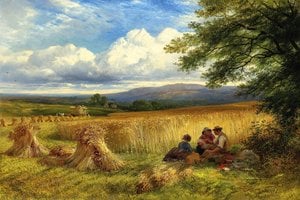
Harvest scenes are another recurring theme, showcasing the bounty of the fields and the hard work involved in bringing it to market. These works offer a poignant reminder of the agricultural roots of Victorian England and the importance of rural communities. The use of warm colors – golds, reds, and browns – further enhances the sense of abundance and prosperity.
Legacy and Historical Significance
George Cole Senior’s work represents a significant contribution to 19th-century English landscape painting. He captured the essence of the Victorian countryside with remarkable skill and sensitivity, offering viewers a window into a world that was rapidly changing but still deeply rooted in tradition. While he may not be as widely celebrated as some of his contemporaries, his paintings continue to resonate today, evoking a sense of nostalgia for a simpler time and reminding us of the enduring beauty of the English countryside.
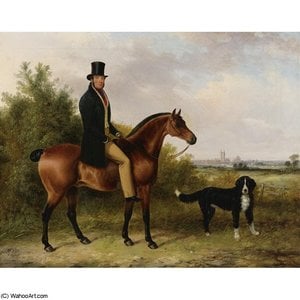
His legacy is further cemented by the fact that his works are still available for sale through platforms like WahooArt.com, ensuring that his artistic vision continues to be appreciated and enjoyed by art enthusiasts worldwide.
Fragen & Antworten
Wie viele Kunstwerke von George Cole Senior können durchstöbert werden?
Sie können 51 Kunstwerke Werke von George Cole Senior auf der Seite Alle Kunstwerke durchstöbern.
Wo kann ich die Kunstwerke von George Cole Senior nach Stimmung sortiert finden?
Die Werke von George Cole Senior können auf der Stimmungswelten-Seite des Künstlers nach Stimmung durchstöbert werden, auf der die Kunstwerke nach ihrer jeweiligen Stimmung sortiert sind.
Woher kommt George Cole Senior?
George Cole Senior wurde in Frankreich geboren.