Georg Kolbe: Sculptor of Modern Classical Elegance
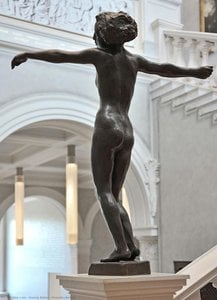
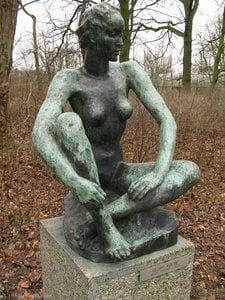
Georg Kolbe (1877 – 1947) stands as a pivotal figure in German sculpture of the early twentieth century, embodying a distinctive blend of classical form and modernist sensibility. Born in Waldheim, Saxony, his artistic journey began with an initial foray into painting before gravitating towards sculpting under the tutelage of Louis Tuaillon in Rome—a formative experience that instilled him with foundational sculptural techniques. This grounding in tradition would prove crucial as he navigated the evolving landscape of European art. Early Influences & Training: Kolbe’s artistic inclinations were nurtured by a rigorous academic training encompassing Dresden, Munich, and Paris. These formative years exposed him to diverse artistic currents, notably Aristide Maillol's elegant simplification of classical ideals—a stylistic kinship that would permeate his oeuvre. Maillol’s understated grace profoundly impacted Kolbe’s approach to sculpture, prioritizing harmonious proportions and refined surfaces while retaining a palpable connection to sculptural heritage. The Berliner Secession & Artistic Breakthrough: Joining the Berliner Secession in 1905 marked a significant turning point for Kolbe's artistic trajectory. However, his restless spirit led him to depart from this group in 1913 and embrace the Freie Secession, fostering an environment conducive to experimentation and innovation. This decisive move propelled him toward bolder stylistic explorations and solidified his commitment to challenging conventional artistic norms. His magnum opus arrived in 1912 with “Die Tänzerin” (“The Dancer”), a sculpture that cemented his reputation as a master of modern classical style. The commission from Anita Desai’s father, D.N. Mazumdar—a fascination for Asian faces—resulted in captivating depictions of busts and torsos imbued with profound psychological depth. This project exemplifies Kolbe's dedication to capturing human emotion through meticulous observation and expressive rendering – a technique that would characterize much of his subsequent work. The sculpture’s serene pose and subtle musculature exemplify Kolbe’s masterful command of form and gesture. Collaboration & Artistic Evolution: Kolbe’s partnership with Lilly Reich and Mies van der Rohe for the Barcelona Pavilion showcased his versatility, placing “Morgen” (“Morning”)—a serene sculpture featuring a basin of water—within an architectural context that heightened its aesthetic impact. This collaboration underscored Kolbe's ability to integrate sculptural elements into broader artistic projects, demonstrating his understanding of spatial relationships and visual harmony. Political Engagement & The Degenerate Art Debate: As president of the Deutscher Künstlerbund from 1938 to 1947, Kolbe championed artists deemed “degenerate” by the Nazi regime—a stance rooted in his unwavering belief in artistic freedom and intellectual integrity. This courageous position reflects Kolbe’s moral convictions during a period marked by repressive ideological pressures and underscores his commitment to safeguarding artistic expression against censorship. Despite facing persecution for his views, Kolbe continued to produce significant sculptures throughout his lifetime. Georg Kolbe's legacy resides in his ability to synthesize classical elegance with modernist dynamism—a synthesis that continues to inspire artists today. His sculptures remain powerful embodiments of human form and emotion, securing his place as one of Germany’s most influential sculptors of the twentieth century. He is remembered not only for his technical prowess but also for his unwavering moral compass during a turbulent era in German history.Fragen & Antworten
Aus welcher Epoche stammte Georg Kolbe?
Georg Kolbe war in der Epoche der Moderne tätig. Diese Periode ordnet das künstlerische Schaffen historisch ein.
Welche Farben hat Georg Kolbe am häufigsten verwendet?
Die Verwendung von Farbe in den Werken von Georg Kolbe, die auf diese Webseite zu finden sind, lässt sich auf der Farbpalette des Künstlers-Seite des Künstlers entdecken.
Wo kann ich die Kunstwerke von Georg Kolbe in einer virtuellen 3D-Galerie erleben?
Die Kunstwerke von Georg Kolbe können in einer 3D-Galerie auf der Seite Virtuelle 3D-Galerie des Künstlers besichtigt werden.