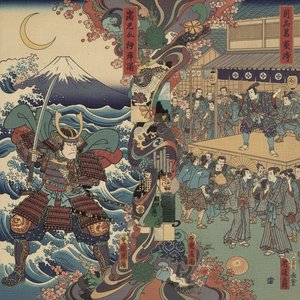
Fujiwara no Chikanobu: A Pioneer of Edo Urban Landscape
Fujiwara no Chikanobu (藤原 安道, Hashimoto Tadayoshi), born around 1852 in Niigata Prefecture, stands as a monumental figure within Japanese art history—specifically enshrined in the vibrant tapestry of ukiyo-e prints. Initially nurtured under the venerable Kano School tradition, he swiftly embraced the exhilarating dynamism of Kyoto’s artistic circles and honed his skills alongside luminaries like Kuniyoshi and Kunisada, ultimately guided by Toyohara Kunichika. This formative period instilled within him a profound understanding of both classical aesthetics and contemporary trends—a duality that irrevocably shaped his distinctive artistic vision. His artist's name, bestowed upon him by Kunichika, solidified his identity as a respected practitioner amidst the burgeoning ukiyo-e movement—a legacy that continues to inspire admiration today.
Early Life & Training: Seeds of Artistic Talent
Details surrounding Chikanobu’s early life remain somewhat elusive, shrouded in the mists of time. However, evidence suggests he possessed considerable artistic aptitude from a young age—talent nurtured within Niigata Prefecture. His initial training under Kano School emphasized meticulous detail and refined brushwork—techniques that would serve as bedrock for his subsequent approach to printmaking. The Kano School’s emphasis on idealized beauty and precise execution instilled in him a foundational understanding of artistic principles that would permeate his entire oeuvre.
Influence of Kuniyoshi & Kunisada: Embracing Dramatic Expression
Studying alongside Kuniyoshi and Kunisada proved instrumental in broadening Chikanobu’s stylistic repertoire. These masters championed dramatic compositions, bold colors, and expressive lines—elements that profoundly resonated with Chikanobu's artistic sensibilities. Kuniyoshi’s penchant for capturing fleeting moments of emotion and Kunisada’s masterful use of perspective established precedents that Chikanobu skillfully adopted, elevating his prints beyond mere depictions of reality to convey profound psychological depth. Their influence is palpable in the dynamism and emotional intensity characteristic of many of Chikanobu's celebrated works.
The Kyoto Atelier: A Crucible for Innovation
Recognizing the importance of collaborative creativity, Chikanobu established a studio in Kyoto—attracting numerous apprentices and fostering an environment ripe for experimentation and innovation. This atelier functioned as a crucible for stylistic developments—a space where emerging artists honed their skills alongside Chikanobu himself—cementing his reputation as a leading figure within the ukiyo-e landscape. The collaborative spirit fostered at this studio ensured that Chikanobu’s artistic vision remained relevant and responsive to evolving cultural sensibilities.
Ukiyo-e Style & Subject Matter: Capturing Everyday Life
Chikanobu's artistic legacy rests principally upon his prolific output of ukiyo-e prints—a genre that flourished during the Edo period and celebrated scenes from daily life, theatrical performances, and popular culture. Unlike many contemporaries who favored idealized landscapes or mythological narratives, Chikanobu dedicated himself to documenting the realities of urban Tokyo and Kyoto with remarkable accuracy and sensitivity. His prints depict bustling marketplaces, elegant geisha houses, spirited kabuki actors onstage, and serene temple gardens—subjects that resonate powerfully with viewers even now.
- Kabuki Prints: Chikanobu’s depictions of Kabuki theater are particularly noteworthy for their dynamic compositions and masterful rendering of costume and movement. He captured the energy of the stage with breathtaking precision, conveying both visual spectacle and emotional nuance.
- Geisha Art: Similarly, his portrayals of geisha embody grace, beauty, and sophistication—reflecting the cultural significance of these entertainers within Edo society.
- Urban Landscapes: Beyond theatrical performances and portraits, Chikanobu produced stunning landscapes that captured the essence of Tokyo’s urban environment. His prints showcase meticulously rendered buildings, trees, and waterways, offering glimpses into a bygone era.
Shunga & Artistic Innovation
Like many prominent ukiyo-e artists of his time, Chikanobu ventured into the realm of shunga—pornographic prints that challenged conventional artistic norms and provoked considerable debate. While these works represent a controversial facet of his oeuvre, they demonstrate Chikanobu’s willingness to push boundaries and explore unconventional themes—a characteristic distinguishing him from many of his peers. His shunga prints are notable for their detailed depictions of erotic scenes and their skillful use of perspective and shading techniques—demonstrating a mastery of artistic craft that extended beyond the realm of traditional genre conventions.
Legacy & Historical Significance
Fujiwara no Chikanobu’s influence transcends the confines of ukiyo-e printmaking—extending into subsequent generations of artists who embraced his stylistic innovations. He served as a mentor to numerous aspiring creatives, fostering a tradition of meticulous observation and expressive rendering that endured into the Meiji era and beyond. His unwavering commitment to capturing the nuances of human experience solidified his place among Japan’s most revered visual artists—a testament to his enduring artistic vision and his indelible contribution to Japanese cultural heritage. He remains remembered not merely for his stunning prints but also for shaping the aesthetic sensibilities of an entire epoch.