Kostenlose Kunstberatung

x

Edward Avedisian

1936 - 2007

Kurzbiografie

  • Works on APS: 2
  • Died: 2007
  • Born: 1936, Lowell, Vereinigte Staaten von Amerika
  • Art period: Moderne
  • Top 3 works:
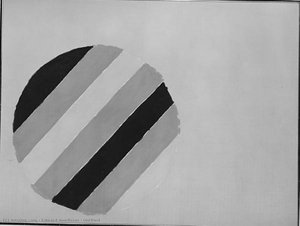
    • Kool-Aid
    • Untitled
  • Mehr…
  • Nationality: Vereinigte Staaten von Amerika
  • Lifespan: 71 years
  • Copyright status: Under copyright
  • Top-ranked work: Kool-Aid

Kunst-Quiz

Jede Frage hat nur eine richtige Antwort.

Frage 1:
Wo wurde Edward Avedisian geboren?
Frage 2:
Welches Museum zeigte eine Ausstellung mit Avedisians Arbeiten im Jahr 1965?
Frage 3:
Avedisian präsentierte seine Kunst zunächst bei welcher Galerie zwischen 1958 und 1963?
Frage 4:
Welche künstlerische Stilrichtung war Avedisian während der Spätzeit der 1950er Jahre verbunden?
Frage 5:
In welchem Jahr starb Edward Avedisian?

Edward Avedisian: Pioneer of Lyrical Abstraction

Edward Avedisian (June 15, 1936 – August 17, 2007) stands as a cornerstone in the narrative of American abstract painting during its formative decades. Born in Lowell, Massachusetts, his artistic journey commenced with rigorous training at Boston’s School of the Museum of Fine Arts, firmly anchoring him within the burgeoning currents of Color Field painting—a stylistic paradigm defined by expansive canvases bathed in luminous hues and delicately interwoven tones. Yet, Avedisian swiftly transcended this initial categorization, embracing a profoundly emotive style termed lyrical abstraction – an approach that would indelibly etch his name amongst the era’s most compelling artistic voices.

Early Artistic Foundations & Influences

His formative years were shaped by a deep appreciation for tonal harmony and compositional balance, principles meticulously honed during his studies at Boston's School of Fine Arts. These foundational concepts served as guiding lights throughout his subsequent oeuvre, informing his deliberate use of color and form to convey nuanced emotional states. The influence of artists like Mark Rothko and Barnett Newman – masters of Color Field painting – is palpable in Avedisian’s work, particularly his exploration of monumental canvases saturated with resonant hues designed to evoke contemplation and introspection. He recognized the power of abstraction to transcend literal representation, prioritizing instead the conveyance of feeling and sensation—a core tenet of abstract expressionism that resonated powerfully with contemporaries like Willem de Kooning and Jackson Pollock.

New York City & Artistic Momentum (1958-1963)

Moving to New York City in 1958 constituted a transformative juncture, propelling him into the epicenter of artistic dynamism and exposing him to influential figures who actively molded the trajectory of abstract expressionism. Immediately capitalizing on this newfound environment, he secured prestigious solo exhibitions at galleries such as Hansa and Tibor de Nagy – institutions renowned for championing avant-garde artists—establishing an unwavering foothold in the burgeoning New York art scene. These presentations underscored his resolute dedication to investigating color’s expressive capacity—specifically its ability to communicate mood and emotion—a characteristic that would become inextricably linked with his artistic vision. The recognition bestowed upon him by Artforum in 1969 – featuring one of his paintings prominently displayed on the publication's cover – served as a testament to the esteem accorded to his work within the broader art discourse of the time. Furthermore, his inclusion in “Op Art: The Responsive Eye” at MoMA (1965) and four successive annual exhibitions at the Whitney Museum of American Art solidified his position as an artist whose oeuvre commanded considerable scholarly attention.

Lyrical Abstraction & Artistic Expression

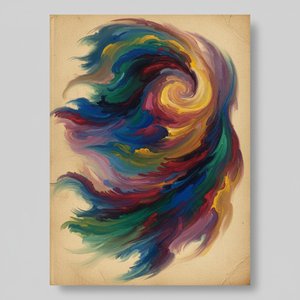
Avedisian’s distinctive artistic style—characterized by swirling brushstrokes, layered textures, and a deliberate eschewal of representational imagery—became his signature aesthetic. He sought to distill intangible emotions and sensations into tangible form through pigment and gesture, prioritizing intuition over intellectual calculation. Unlike many artists of his era who adhered to stricter compositional rules, Avedisian embraced spontaneity and improvisation, allowing the inherent qualities of color and texture to guide his creative process. This approach mirrored the broader ethos of lyrical abstraction—a movement that championed emotional honesty and psychological depth—reflecting a desire to capture the complexities of human experience beyond the confines of visual depiction.

Legacy & Recognition

Throughout his career, Avedisian’s paintings were disseminated widely across prominent museums throughout the United States – guaranteeing his enduring legacy as a pivotal contributor to American artistic heritage. His work continues to inspire artists and scholars alike, demonstrating its capacity to provoke contemplation and fostering ongoing dialogue about the role of abstraction in conveying profound emotional truths. He passed away peacefully in August 2007, leaving behind his son, Joseph, of Brooklyn, New York—a poignant reminder of an artist who dedicated his life to exploring the expressive potential of color and form, securing his place as a true visionary within the annals of American art history.