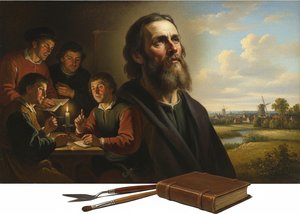
Dirk Willemsz Stoop: A Painter of Landscapes and Equestrian Splendor
Dirk Willemsz Stoop (1610 – 1686) stands as a prominent figure within the Dutch Golden Age, celebrated for his masterful depictions of Italianate landscapes interwoven with dynamic cavalry scenes and meticulously rendered hunting expeditions. Born in Utrecht to Willem Jansz van Stoop, a glass painter, Stoop’s artistic lineage instilled an early appreciation for visual artistry, fostering connections with fellow painters like Abraham Diepraam – whose father was Stoop's teacher.
Early Life and Training: Stoop’s formative years were spent honing his skills within the Utrecht Guild of St Luke, where he absorbed the stylistic conventions prevalent at the time. His father’s influence extended beyond mere instruction; Willem Jansz van Stoop was recognized as a skilled horse painter, shaping Stoop's fascination with equestrian subjects and establishing a foundational understanding of anatomical accuracy. This meticulous attention to detail would become a hallmark of his oeuvre throughout his career.
Italian Influence & Travels: Around 1639, Stoop embarked on a transformative journey to Italy, immersing himself in the artistic fervor of Florence and Rome. This exposure profoundly impacted his oeuvre, propelling him toward an Italianate aesthetic characterized by idealized vistas and atmospheric perspective – techniques borrowed directly from Renaissance masters. Artists such as Leonardo da Vinci and Raphael served as inspiration for Stoop’s compositions, demonstrating a deep understanding of classical principles. Subsequent wanderings throughout Europe solidified his reputation as a versatile artist adept at capturing diverse environments.
Court Painter & Engravings: Stoop’s career ascended to considerable heights when he secured the patronage of Princess Catherine of Braganza, Portugal's Queen consort and Charles II’s future bride. Recognizing Stoop’s talent, she commissioned him to document her royal progress from Portsmouth to Hampton Court – a monumental undertaking resulting in eight large engravings that remain invaluable records of Elizabethan court life. Furthermore, Stoop collaborated on John Ogilby’s lavish edition of Aesop's Fables, producing twenty-four plates showcasing his engraving prowess. These engravings are notable for their dramatic lighting and expressive portrayal of human figures, reflecting the Baroque artistic tradition.
London Years & Return to Utrecht: Stoop spent four years residing in London during the Stuart Restoration, actively engaging with the artistic milieu of the era. He continued to produce artwork and solidified his reputation as a respected artist. Returning to Utrecht in 1686, Stoop succumbed to illness shortly after, leaving behind a legacy of approximately 300 paintings – predominantly landscapes, equestrian portraits, and genre scenes reflecting the spirit of his time. His final works exemplify the grandeur and dynamism characteristic of Baroque aesthetics, capturing movement and emotion with remarkable precision.
Legacy & Significance: Dirk Willemsz Stoop’s artistic achievements are particularly noteworthy for their contribution to landscape painting and equestrian art. His depictions of hunting parties and cavalry battles exemplify the grandeur and dynamism characteristic of Baroque aesthetics, capturing movement and emotion with remarkable precision. Moreover, Stoop's engravings played a crucial role in disseminating visual narratives during a pivotal period in British history, cementing his place as one of the most influential artists of the Dutch Golden Age. His meticulous observation of nature and skillful rendering of human anatomy continue to inspire admiration among art historians and collectors alike.