Schatten und Licht: Das Leben von Dirck van Baburen
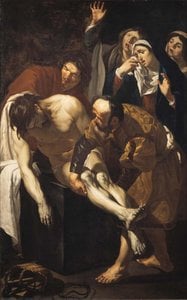
In den Annalen des Goldenen Zeitalters der Niederlande beschwören nur wenige Namen das viszerale Drama von Schatten und plötzlicher Erleuchtung so sehr herauf wie Dirck van Baburen. Geboren um 1595 in Wijk bij Duurstede, war sein Leben ein kurzer, aber brillanter Meteoreinschlag auf der Leinwand der Kunstgeschichte. Obwohl seine Jahre tragischerweise kurz waren und bereits 1624 endeten, gelang es ihm, eine stilistische Revolution zu entfachen, die die nordeuropäische Ästhetik neu definieren sollte. Als zentrale Säule der Utrechter Caravaggisten-Schule malte van Baburen nicht bloß Szenen; er inszenierte Momente tiefgreifender Spannung und nutzte die karge Sprache des Tenebrismus, um die Betrachter in die intime, oft raue Realität seiner Motive zu ziehen.
Das Fundament seiner Meisterschaft wurde in den Ateliers von Utrecht unter der Anleitung des angesehenen Paulus Moreelse gelegt. Die wahre Metamorphose seiner Seele und seines Pinselstrichs vollzog sich jedoch während seiner transformativen Pilgerreise nach Rom zwischen 1612 und 1615. In den sonnenverwöhnten und doch schattendurchsetzten Gassen der Ewigen Stadt begegnete van Baburen dem revolutionären Geist Caravaggios. Durch seine enge Verbindung zu Bartolomeo Manfredi, einem ergebenen Anhänger der Methoden Caravaggios, sog der junge Niederländer die Geheimnisse des Chiaroscuro auf – der Kunst, extreme Kontraste zwischen Licht und Dunkelheit zu nutzen, um Volumen und psychologische Tiefe zu erzeugen. Dieses Eintauchen in das römische Leben war nicht nur akademischer Natur; es war ein sozialer und beruflicher Aufstieg, da er Aufträge von prestigeträchtigen Gönnern wie Kardinal Scipione Borghese erhielt, was ihn in das Herz der Barockbewegung versetzte.
Die Geburtsstunde der Utrechter Caravaggisten
Nach seiner Rückkehr in die Niederlande kehrte van Baburen nicht als bloßer Schüler zurück, sondern als Vorreiter. Zusammen mit Zeitgenossen wie Hendrick ter Brugghen und Gerard van Honthorst leitete er eine Bewegung ein, welche die Flugbahn der niederländischen Malerei für immer verändern sollte. Dieses Kollektiv, bekannt als die Utrechter Caravaggisten, strebte danach, die dramatische Intensität des italienischen Barock in die lokale Ausdrucksweise zu übertragen. Ihre Arbeit zeichnete sich durch eine Abkehr von den polierten, heiteren Landschaften ihrer Vorgänger aus und bevorzugte stattdessen:
- Genreszenen: Lebendige, oft ausgelassene Darstellungen des alltäglichen Lebens, einschließlich Musikanten, Trinker und Bauern, die mit einer erstaunlichen Präsenz dargestellt wurden.
- Tenebrismus: Der Einsatz tiefer, undurchdringlicher Schatten, die den Hintergrund verschlingen und das Auge des Betrachters dazu zwingen, sich ausschließlich auf die beleuchteten Figuren zu konzentrieren.
- Emotionale Unmittelbarkeit: Ein Fokus auf die menschliche Verfassung, der flüchtige Ausdrücke von Freude, Trauer oder kontemplativer Stille einfängt.
Seine technische Brillanz erlaubte es ihm, das Licht so zu manipulieren, als wäre es eine physische Substanz, wobei er Figuren mit einer Präzision aus der Dunkelheit meißelte, die sich fast greifbar anfühlte. Ob er religiösen Eifer oder die bescheidenen Aktivitäten in einer Taverne darstellte, sein Pinselstrich besaß eine Energie, welche die Lücke zwischen der monumentalen Skala italienischer Kunst und dem intimen, häuslichen Fokus der niederländischen Tradition überbrückte.
Vermächtnis und historische Bedeutung
Die Wirkung von Dirck van Baburen reicht weit über die Grenzen von Utrecht hinaus. Obwohl seine Karriere in seinen frühen Dreißigern jäh endete, verbreiteten sich die Wellen seiner Innovation über Jahrzehnte hinweg, beeinflussten die Entwicklung des niederländischen Barock und dienten sogar als stilistischer Vorläufer für die Werke von Rembrandt van Rijn. Die Art und Weise, wie Rembrandt später das Licht manipulierte, um tiefgreifende psychologische Wahrheiten hervorzurufen, verdankt der Vorarbeit der Utrechter Meister eine bedeutende Schuld.
Heute wird van Baburen nicht nur als Nachfolger eines italienischen Meisters in Erinnerung behalten, sondern als Architekt einer neuen visuellen Sprache. Er verwandelte die Leinwand in eine Bühne, auf der Licht und Schatten ein ewiges Drama aufführen, und stellte so sicher, dass sein Name als Meister des Tiefgründigen, des Dramatischen und des zutiefst Menschlichen in der Kunstgeschichte verankert bleibt. Seine Fähigkeit, das Außergewöhnliche im Gewöhnlichen zu finden, zieht Gelehrte und Kunstliebhaber gleichermaßen in ihren Bann und dient als Zeugnis für die beständige Kraft des caravaggesken Geistes.
Fragen & Antworten
Wie viele Kunstwerke von Dirck Van Baburen können durchstöbert werden?
Sie können 41 Kunstwerke Werke von Dirck Van Baburen auf der Seite Alle Kunstwerke durchstöbern.
Gibt es eine vollständige Liste der Kunstwerke von Dirck Van Baburen?
Alle Werke von Dirck Van Baburen auf diese Webseite können auf der Alle Kunstwerke-Seite des Künstlers durchstöbert werden.
Wo lassen sich die Kunstwerke von Dirck Van Baburen nach Schlagworten durchsuchen?
Auf der Seite Nach Schlagworten von Dirck Van Baburen werden die Kunstwerke des Künstlers nach Schlagworten gruppiert.