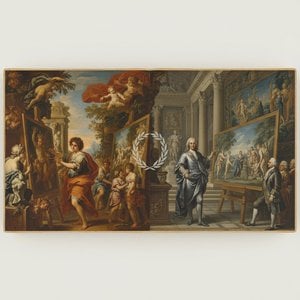
Didier Barra bleibt ein Künstler, der in ein tiefes und fesselndes Geheimnis gehüllt ist; sein Leben gleicht einer Abfolge von Schatten, die durch die bemerkenswerte Brillanz seiner erhaltenen Werke geworrent werden. Geboren um 1590 in der stillen Umgebung von Metz, Lothringen – damals Teil des Herzogtums Lothringen – sind Barras frühe Jahre weitgehend im Nebel der Zeit verloren gegangen, sodass Historiker seine Lebensbahn nur durch die Pinselstriche rekonstruieren können, die er hinterlassen hat. Um 1608 begab er sich auf eine transformative Reise nach Italien, eine Migration, die seine künstlerische Seele grundlegend verändern sollte. In Neapel, einer Stadt, die damals von der pulsierenden Energie der Barockära durchdrungen war, fand Barra mehr als nur eine neue Heimat; er fand eine Leinwand für eine Vision, die einzigartig seine eigene war – eine Verschmelzung der akribischen Präzision seiner französischen Wurzeln mit der dramatischen, emotionalen Intensität der italienischen Landschaft.
Visionen des Verfalls und der erhabenen Pracht
Eine Landschaft von Barra zu betreten bedeutet, in eine Welt einzutauchen, die im stillen, zeitlupenartigen Kollaps der Zeit selbst gefangen ist. Er erlangte einen singulären Ruhm für seine Stadtansichten – Visionen von zerbröckelnden Türmen und trostlosen, fast kargen Gebäuden, die eine beunruhigende, fast postapokalyptische Atmosphäre heraufbeschwören. Seine Palette war bewusst schlicht gehalten, dominiert von den düsteren Tönen gedämpfter Brauntöne, Ocker und Grau, die dazu dienten, das psychologische Gewicht seiner Kompositionen zu verstärken. Durch eine meisterhafte Beherrschung der Perspektive schuf Barra architektonische Wächter, die zugleich mächtig und melancholisch wirken und den Betrachter dazu einladen, über den unvermeidlichen Verfall menschlichen Strebens nachzusinnen. In Werken wie Landschaft mit Gebäuden beobachtet man ein unglaubliches Zusammenspiel zwischen den scharfen, verwitterten Texturen des Steins und einem weichen, atmosphärischen Dunst, der die schwere, feuchte Luft des Mittelmeers erahnen lässt. Dies waren nicht bloß Darstellungen von Ruinen; es waren psychologische Landschaften, in denen die Erhabenheit der Vergangenheit auf die eindringliche Stille einer von der Zeit gezeichneten Welt trifft.
Der Schatten von Monsù Desiderio
Jahrhundertelang blieb die wahre Identität dieses Meisters durch eine kollektive Fehlzuordnung verborgen. Bis zur Mitte des zwanzigsten Jahrhunderts wurde ein Großteil von Barras außergewöhnlichem Schaffen einer einzigen, mythischen Figur zugeschrieben, die als Monsù Desiderio bekannt war. Erst durch strenge moderne Forschung wurde der Schleier gelüftet und enthüllte, dass diese eine „Hand“ in Wirklichkeit das Werk mehrerer verschiedener Künstler war, wobei Didier Barra neben Figuren wie François de Nomé als einer der wichtigsten Mitwirkender hervorging. Diese Offenbarung hat unser Verständnis der neapolitanischen Schule neu geformt und eine einzelne Legende in ein komplexes Geflecht individuellen Genies verwandelt. Heute wird Barra nicht nur für sein technisches Geschick gefeiert, sondern für seine Fähigkeit, das Erhabene einzufangen – jene furchteinflößend schöne Schnittstelle zwischen Ehrfurcht und Grauen. Sein Vermächtnis lebt in der Art und Weise fort, wie er uns gelehrt hat, Ruinen nicht als bloße Trümmer zu betrachten, sondern als tiefgründige Monumente der Vergänglichkeit des Daseins.
Vom WahooArt.com Redaktionsteam
Kunst-Quiz
Jede Frage hat nur eine richtige Antwort.
Frage 1:
Wo wurde Didier Barra geboren?
Frage 2:
In welcher Stadt erreichte Didier Barra bedeutenden Erfolg als Maler?
Frage 3:
Was zeichnete Didier Barra hauptsächlich nach?
Frage 4:
Um wann verließ Didier Barra Metz für Italien?
Frage 5:
War Didier Barra mit einem anderen Künstler namens François de Nomé zusammenarbeitet?
Explore the dramatic world of Baroque art! Discover iconic artists like Caravaggio & Rubens, defining techniques, and its lasting impact on art history. Expert insights for collectors & enthusiasts at WahooArt.
Entdecken Sie das Leben und Werk von Simon Vouet, dem Pionier des italienischen Barock in Frankreich! Erfahren Sie mehr über seinen künstlerischen Werdegang, seine wichtigsten Gemälde und seinen nachhaltigen Einfluss auf die französische Malerei. Jetzt lesen!
WConciergeOnline · antwortet innerhalb einer Minute
Hallo! Ich kann Ihnen dabei helfen, ein Kunstwerk auszuwählen, eine Bestellung zu verfolgen oder Fragen zur Garantie zu beantworten. Wie kann ich Ihnen heute behilflich sein?