Der Anbruch eines florentinischen Meisters: Coppo di Marcovaldo
In der pulsierenden, turbulenten Landschaft des Florenz des dreizehnten Jahrhunderts entstand ein transformativer künstlerischer Geist, um die Kluft zwischen den starren Traditionen der Vergangenheit und dem aufkeimenden Humanismus der Zukunft zu überbrücken. Coppo di Marcovaldo steht als diese zentrale Figur da, ein Pionier, dessen Pinselstriche dem italo-byzantinischen Stil neues Leben einhauchten. Geboren in Florenz um 1225, wirkte Coppo in einer Ära tiefgreifender kultureller Verschiebungen, in der die Feierlichkeit der byzantinischen Ikonographie auf den aufkommenden Naturalismus italienischer Empfindsamkeit traf. Sein Leben war nicht nur von stiller Kontemplation in einem Atelier geprägt; historische Aufzeichnungen, wie jene im Buch von Montaperti, legen nahe, dass er sogar in die gewaltsamen Strömungen der florentinischen Militärkampagnen gegen Siena im Jahr 1260 verwickelt war. Diese Verbindung zu den bürgerlichen Kämpfen seiner Stadt unterstreicht einen Mann, der tief in das Gefüge der Gesellschaft eingebettet war, die er schließlich durch sakrale Kunst unsterblich machen sollte.
Die Kunstfertigkeit von Coppo di Marcovaldo zeichnet sich durch eine meisterhafte Spannung zwischen dem Ätherischen und dem Irdischen aus. Während er tief in der byzantinischen Tradition verwurzelt blieb – unter Verwendung von Goldgründen, stilisierten Merkmalen und einem Gefühl göttlicher Beständigkeit – führte er ein revolutionäres Empfinden für Volumen und Gewicht ein. Er löste sich von den flachen, zweidimensionalen Figuren seiner Vorgänger und verlieh seinen Motiven stattdessen eine skulpturale Präsenz, die auf die physische Realität der menschlichen Form hindeutete. Diese Entwicklung war nicht nur eine technische, sondern auch eine theologische Errungenschaft, da sie es den Gläubigen ermöglichte, das Göttliche durch eine greifbarere, anschaulichere Linse wahrzunehmen.
Die Erhabenheit der Madonna del Bordone
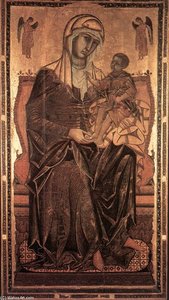
Der Höhepunkt von Coppos Karriere und sein bleibendster Beitrag zum westlichen Kanon ist zweifellos die Madonna del Bordone. Dieses vom Serviten-Orden in Auftrag gegebene monumentale Werk stellt einen Wendepunkt in der Kunstgeschichte dar. In diesem Meisterwerk gelang Coppo das, was nur wenigen seiner Zeitgenossen möglich war: eine bahnbrechende kompositorische Innovation durch die Verwendung eines geneigten Throns. Durch die Neigung des Sitzes der Jungfrau schuf er ein Gefühl von architektonischer Tiefe und dreidimensionalem Raum, das für einen florentinischen Maler seiner Zeit beispiellos war. Dieses Stilmittel diente nicht nur der Demonstration technischer Brillanz; es lud den Betrachter in den sakralen Raum ein und durchbrach die Barriere zwischen der himmlischen Sphäre und dem irdischen Beobachter.
Über diese singuläre Errungenschaft hinaus lässt sich Coppos Einfluss durch mehrere zentrale thematische Untersuchungen in seinem Werk nachverfolgen:
- Die Madonna mit Kind: In verschiedenen Darstellungen der Jungfrau und des Christuskindes nutzte Coppo eine göttliche Anordnung himmlischer Engel, um die zentralen Figuren zu umgeben, und bewies so eine Meisterschaft des italo-byzantinischen Stils, die zu tiefer spiritueller Reflexion einlädt.
- Narrative Frömmigkeit: Seine Arbeit an St. Franziskus und zwanzig Episoden aus seinem Leben demonstriert seine Fähigkeit, komplexe hagiographische Erzählungen in komplizierte, byzantinisch beeinflusste Wandmalereien zu übersetzen und bietet ein Fenster in die intensive mittelalterliche Frömmigkeit jener Zeit.
- Ikonographische Synthese: Seine Fähigkeit, die formale Strenge der östlichen Ikonographie mit dem aufkommenden italienischen Interesse an Gewicht und Form zu verbinden, legte den wesentlichen Grundstein für die späteren Triumphe der Frührenaissance.
Ein bleibendes Erbe in der florentinischen Tradition
Obwohl sein Leben im Jahr 1276 endete, hallten die Echos von Coppo di Marcovaldos Innovationen durch die Jahrhunderte nach. Er war ein Brückenbauer, ein Künstler, der die etablierte Sprache des Byzantinischen Reiches aufgriff und begann, sie in einen lokalen, florentinischen Dialekt zu übersetzen. Sein Werk lieferte das strukturelle und stilistische Fundament, auf dem spätere Meister ihre eigenen Revolutionen aufbauten. Durch die Einführung von Volumen, Tiefe und einer vermenschlichten Göttlichkeit malte Coppo nicht nur Ikonen; er bereitete den Weg für jenen tiefgreifenden Naturalismus vor, der schließlich die Renaissance definieren sollte.
Coppo zu studieren bedeutet, den Moment selbst zu erleben, in dem die Kunst begann, sich dem Licht des Realismus zuzuwenden. Sein Vermächtnis bleibt in dem Blattgold und den tiefen Pigmenten seiner erhaltenen Werke eingraviert und erinnert uns an eine Zeit, als die Grenzen des Heiligen durch die Hände eines wahren Visionärs neu gezogen wurden.