Kostenlose Kunstberatung

x

Claude Marie Dubufe

1790 - 1864

Kurzbiografie

  • Born: 1790, Frankreich
  • Movements: neoclassicism
  • Creative periods:
    • mature period
    • 19th century
  • Art period: 19. Jahrhundert
  • Works on APS: 47
  • Nationality: Frankreich
  • Mediums: öl auf leinwand
  • Mehr Details anzeigen

Claude Marie Paul Dubufe: The Last Echo of David’s Legacy

Claude-Marie Paul Dubufe (1790–1864) stands as a poignant figure in French art history—the final bastion of Jacques-Louis David's artistic lineage, marking the twilight years of Neoclassicism and ushering in a new era of Romanticism. Born in Paris amidst the burgeoning intellectual fervor of his time, Dubufe’s formative years were steeped in the ideals championed by David himself, whose monumental canvases had redefined artistic expression with their austere grandeur and moral seriousness. This early influence profoundly shaped Dubufe's stylistic trajectory, initially favoring classical subjects—mythological narratives and biblical scenes—reflecting a desire to honor tradition while simultaneously injecting subtle emotional nuance into his compositions.

Early Training & Influences

Dubufe’s formal education commenced under David’s tutelage at the École Royale Supérieure des Beaux-Arts, where he absorbed not only technical mastery but also a deep appreciation for artistic idealism. The emphasis on anatomical precision and dramatic storytelling—hallmarks of David's oeuvre—became indelible components of Dubufe’s artistic vocabulary. This formative period instilled in him an unwavering commitment to classical principles – a dedication that would characterize his entire artistic career. He meticulously studied David’s techniques, striving to emulate his masterful command of form and composition, ensuring that the spirit of Neoclassicism persisted through his own creative endeavors.

Genre Painting & Portraiture: A Shift Towards Human Emotion

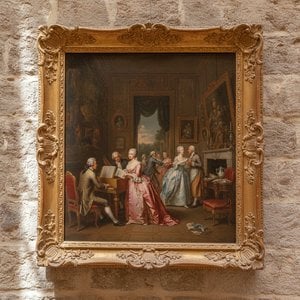
While firmly rooted in classical ideals, Dubufe swiftly transitioned to genre painting and portraiture, capturing the vibrancy of Parisian life and portraying individuals with remarkable sensitivity. Unlike David’s monumental canvases focused on heroic narratives—grand depictions of historical events intended to inspire patriotism—Dubufe's subjects were often ordinary people—aristocrats, artists, musicians—presented with an intimacy that belied their social status. This deliberate departure from Davidian grandeur signaled a burgeoning interest in exploring the complexities of human emotion and experience – a hallmark of Romanticism’s ascendance. He skillfully rendered scenes from daily life, capturing fleeting moments of joy, sorrow, and contemplation with unparalleled realism and psychological depth.

A prolific Output & Notable Achievements

Dubufe's artistic output spanned a prodigious period, producing over 300 paintings, including numerous portraits of prominent figures – Louise d’Orléans, Eleanor Jenkinson and Édouard Dubufe (his son), demonstrating his ability to convey both formal elegance and psychological depth. His meticulous attention to detail—particularly in capturing facial expressions and subtle gestures—elevated portraiture to a new level of realism and emotional resonance. Works like “La lettre de Wagram” exemplify this dedication, portraying scenes from historical events with remarkable accuracy and conveying the atmosphere of the time. He was recognized as a master of capturing the essence of his subjects – their character, temperament, and inner life—transforming mere likenesses into evocative representations of human experience.

David’s Enduring Legacy: The Last Guardian of Tradition

Dubufe's contribution to French art extends beyond individual masterpieces; he embodies the culmination of Davidian ideals—a commitment to moral seriousness and a belief in the transformative power of art. He remained steadfast in upholding the principles of Neoclassicism, ensuring that David’s legacy endured into the Victorian era. His stylistic choices – particularly his restrained palette and emphasis on anatomical correctness – served as a direct continuation of David’s artistic vision. As the last representative of David’s school, Dubufe skillfully navigated the shifting artistic landscape of his time, preserving classical traditions while embracing new expressive possibilities—a testament to the enduring legacy of a singular artistic genius.