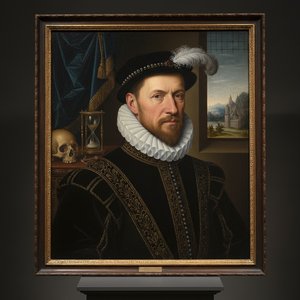
Der stille Zeuge der Augsburger Renaissance
Im pulsierenden, geschäftigen Herzen des Augsburg des 16. Jahrhunderts, einer Stadt, die vom wirtschaftlichen Energie des europäischen Handels durchdrungen war, lebte ein Künstler, dessen Pinsel die Seele der Hochrenaissance einfing. Christoph Amﺒerger (ca. 1505 – 1562) war nicht bloß ein Maler von Figuren, sondern ein akribischer Chronist menschlicher Würde und göttlicher Erzählungen. Geboren in eine Linie von Handwerkern – als Sohn eines Steinmetzes und Enkel eines Holzschnitzers – erbte Amberger einen tiefen Respekt vor der taktilen Präzision der Kunst. Diese grundlegende Erziehung in den Traditionen des deutschen Handwerks bildete das Fundament, auf dem er eine Karriere errichtete, die durch Klarheit, Realismus und eine unerschütterliche Liebe zum Detail definiert war.
Die Flugbahn von Ambergers Talent wurde durch seine Lehre unter dem legendären Hans Holbein dem Jüngeren unwiderruflich verändert. Von Holbein erbte Amberger weit mehr als nur technisches Geschick; er absorbierte eine spezifische psychologische Sprache, eine Art, das menschliche Antlitz darzustellen, die es dem Dargestellten ermöglichte, durch Öl und Pigment förmlich zu atmen. Dieses Mentoring verlieh ihm eine Meisterschaft im präzisen Realismus, die es ihm erlaubte, das feine Gleichgewicht zwischen der Erfassung der physischen Ähnlichkeit und der Vermittlung des inneren Charakters seiner Motive zu meistern. Sein Werk wurde zu einer Brücke zwischen der nordeuropäischen Tradition akribischer Detailtreue und den aufstrebenden humanistischen Idealen, die den Kontinent erfassten.
Eine Reise durch Glauben und Humanismus
Ambergers künstlerische Entwicklung wurde durch seine Reisen maßgeblich bereichert, allen voran sein Aufenthalt in Norditalien zwischen 1525 und 1527. Indem er in die künstlerische Atmosphäre von Venedig und Florenz eintauchte, stand er im Schatten von Giganten wie Leonardo da Vinci und Michelangelo. Diese Begegnung mit der italienischen Renaissance hauchte seinem Werk eine neue Dimension ein und erfüllte seine deutschen Wurzeln mit einem anspruchsvollen Verständnis für Komposition und der monumentalen Anmut des Südens. Nach seiner Rückkehr nach Augsburg ermöglichte ihm diese Synthese der Stile den Austausch mit den mächtigsten Mäzenen der Stadt, darunter der legendäre Kaufmann Jakob Fugger und der Staatsmann Konrad Peutinger.
Sein vielleicht bleibendster Beitrag zum kunsthistorischen Kanon ist seine tiefgreifende Auseinandersetzung mit der biblischen Erzählkunst. Seine gefeierte Serie, Die Geschichte des Joseph, steht als Zeugnis seiner Fähigkeit, die Heilige Schrift in einen visuellen Dialog zu verwandeln. Auf zwölf prächtigen Leinwänden erzählt Amberger akribisch das Leben des Joseph und nutzt symbolische Resonanz, um Themen wie Tugend, Vorsehung und Glauben zu erkunden. Dies sind nicht bloß Illustrationen eines Textes; es sind sorgfältig konstruierte Welten, in denen jeder Faltenwurf eines Stoffes und jeder Schatten dazu dient, die theologische Erzählung zu vertiefen, wodurch die antiken Geschichten unmittelbar und zutiefst menschlich wirken.
Das Vermächtnis eines Meisterporträtisten
Jenseits seiner religiösen Erzählungen ist Ambergers Erbe in den Gesichtern der einflussreichsten Persönlichkeiten jener Ära eingraviert. Seine Porträtmalerei diente als wesentliches historisches Zeugnis der politischen und wirtschaftlichen Titanen seiner Zeit. Indem er die Ähnlichkeit von Individuen wie Kaiser Karl V. und den prominenten Mitgliedern der Dynastie Fugger festhielt, schuf er ein Fenster in die Machtstrukturen des 16. Jahrhunderts. Seine Porträts zeichnen sich aus durch:
- Psychologische Tiefe: Eine profunde Fähigkeit, die Ernsthaftigkeit und den Intellekt seiner Subjekte einzufangen.
- Materielle Präzision: Eine exquisite Darstellung von Texturen, von schweren Samtstoffen bis hin zum kalten Glanz einer Rüstung.
- Humanistischer Geist: Ein Fokus auf das Individuum als zentrale Figur von Bedeutung innerhalb der kosmischen und sozialen Ordnung.
Obwohl er vielleicht nicht den prunkvollen Ruhm einiger seiner Zeitgenossen suchte, bleibt Christoph Amberger eine unverzichtbare Figur der deutschen Renaissance. Sein Lebenswerk stellt eine harmonische Schnittmenge aus nordischer Präzision und italienischer Anmut dar und hinterlässt ein Werk, das mit der stillen Stärke eines Meisters nachhallt, der das Göttliche in den Details der menschlichen Erfahrung sah.
Fragen & Antworten
Wie viele Kunstwerke von Christoph Amberger können durchstöbert werden?
Sie können 22 Kunstwerke Werke von Christoph Amberger auf der Seite Alle Kunstwerke durchstöbern.
In welcher historischen Epoche war Christoph Amberger tätig?
Christoph Amberger war in der Epoche der Renaissance tätig. Diese Periode ordnet das künstlerische Schaffen historisch ein.
Wo und in welchem Jahr wurde Christoph Amberger geboren?
Christoph Amberger wurde 1505 in Berlin geboren.