early life and training
Charles Louis Müller, born in Paris on December 22, 1815, embarked on his artistic journey under the tutelage of prominent figures like Léon Cogniet and Baron Gros at the École des Beaux-Arts – a prestigious institution that nurtured talent and shaped the trajectory of many influential artists. This formative period instilled in him a foundational understanding of classical techniques and established a lifelong dedication to mastering the art form.notable works and achievements
Müller’s artistic career gained considerable momentum with his debut painting, “Christmas Morning” (1837), marking an early demonstration of his burgeoning skill and vision. From 1850 to 1853, he served as director of Gobelin Tapestries Manufactory, a role that not only honed his craftsmanship but also exposed him to the grandeur of decorative arts and instilled in him a profound appreciation for meticulous detail and artistic innovation. In 1864, Müller ascended to membership within the Académie des Beaux-Arts, succeeding Jean Hippolyte Flandrin – an honor recognizing his contributions to French art history and cementing his position as a respected voice among fellow artists.key works and their significance
Müller’s oeuvre is characterized by dramatic historical paintings that resonate with emotional depth and intellectual rigor. “Helio Gabalus” (1841) stands as a cornerstone of his early artistic development, capturing the fervor and grandeur of imperial ambition. “Primavera” (1846), brimming with vibrant colors and delicate brushstrokes, exemplifies Müller’s ability to convey the ephemeral beauty of springtime – a testament to his observational prowess and stylistic sensitivity. “Haydée” (1848) showcases Müller's versatility as a portraitist, skillfully portraying Lady Haydee with nuanced expression and capturing her aristocratic demeanor. “Lady Macbeth” (1849), arguably his most celebrated work, delves into the psychological complexities of Shakespeare’s tragic heroine, demonstrating Müller’s mastery of dramatic composition and emotive rendering. "Calling Out The Last Victims Of The Reign Of Terror At The Prison Of Saint Lazare" (1855) is a poignant historical piece that commemorates the bravery and resilience of those persecuted during the turbulent years following the French Revolution – reflecting Müller's commitment to documenting significant moments in history with artistic integrity. “Vive L’Empereur” (1855), inspired by Méry’s poem, vividly depicts the siege of Paris during Napoleon III’s reign, capturing the palpable tension and determination of the defenders of France.contribution to the louvre and other museums
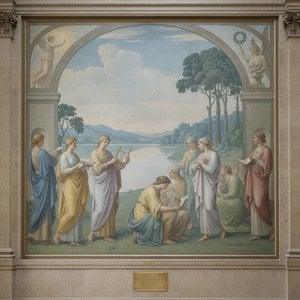
Müller's legacy extends beyond individual artworks; he profoundly impacted French cultural heritage through his monumental frescoes adorning the Salle d’État and Galerie d’Apollon within the Louvre – a testament to his artistic ambition and dedication to elevating public spaces with beauty and grandeur. Furthermore, his ceiling paintings in Salon Denon continue to inspire awe and admiration for their masterful execution and evocative portrayal of historical narratives. key links from WahooArt.com:- charles louis müller's profile on WahooArt.com
- jean louis forain's two women on bicycles, a contrasting style to müller's work
Fragen & Antworten
Wie beliebt sind die Kunstwerke von Charles Louis Müller?
Die Seite Statistiken von Charles Louis Müller zeigt Statistiken, die aus den auf diese Website gelisteten Kunstwerken des Künstlers berechnet wurden.
Wo sind die Kunstwerke von Charles Louis Müller nach Farbpaletten gruppiert zu finden?
Um Werke von Charles Louis Müller in einer bestimmten Farbpalette zu finden, nutzen Sie die Nach Farbpaletten-Seite des Künstlers.
Kann ich die Farbwahl von Charles Louis Müller über das gesamte Werk hinweg studieren?
Das Farbprofil der Werke von Charles Louis Müller wird auf der Farbgenom der Palette-Seite des Künstlers angezeigt.