Life and Artistic Pursuits
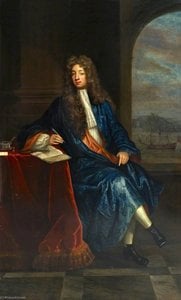
Charles D’Agar, a painter shrouded in mystery, has left an indelible mark on the art world with his works, now mostly confined to the realms of art historical archives. Born around 1669 – precise birthdate remains elusive – and passing into obscurity by 1723, D’Agar's life is a testament to the transience of artistic fame. His origins are traced back to Paris, where he was born son of Jacques (Jacob) D’Agar, a fellow painter who instilled in him an early appreciation for artistic expression. Following his father’s footsteps, Charles embarked on a journey toward London around 1681, accompanied by his family, establishing himself as a prominent figure within the burgeoning English art scene. His formative years were marked by apprenticeship under Robert Robinson, a skilled painter-stainer who honed his craft and nurtured his artistic sensibilities. Active in London until approximately 1684, D’Agar quickly gained recognition for his talent and dedication to mastering the techniques of his time. A pivotal moment arrived around 1685 when he joined forces with his father to relocate to Copenhagen, where Jacques served as a court painter until his untimely demise in 1715. During this period, Charles continued his artistic endeavors independently, demonstrating remarkable resilience and adaptability amidst shifting circumstances. He solidified his position in London by settling there in 1691, establishing a stable base for his creative pursuits and fostering connections within the influential circles of the era. His son, David D’Agar, also pursued a career as an artist, perpetuating the family legacy and contributing to the artistic landscape of Georgian England.Artistic Style and Notable Works
D’Agar's style, though not extensively documented, is characterized by baroque elements—a stylistic hallmark that reflects the grandeur and drama prevalent during his lifetime. Dramatic lighting and intense emotional depth permeate his canvases, conveying a profound understanding of human psychology and capturing fleeting moments with remarkable precision. Unfortunately, due to the scarcity of information regarding D’Agar's oeuvre, pinpointing specific works for viewing on platforms like WahooArt’s impressive collection proves challenging. However, his influence can be discerned in various baroque masterpieces—particularly Peter Paul Rubens’ “The Triumph of Victory,” housed at the Musée des Beaux-Arts (Troyes, France)—where similar contrasts of light and shadow amplify the emotional impact of the scene. This stylistic affinity underscores D’Agar's connection to a broader artistic tradition that prioritized visual spectacle and psychological exploration. While definitive attribution remains elusive—scholars debate whether certain paintings definitively bear his mark—D’Agar’s contribution to the baroque aesthetic is undeniable, cementing his place as a significant artist within his era.Influences and Connections
D’Agar's artistic vision was undoubtedly shaped by the prevailing currents of Baroque art, notably the masterful compositions and emotive palettes championed by Rubens. Yet, he also possessed an awareness of emerging trends—particularly those emanating from Rembrandt van Rijn—whose innovative use of chiaroscuro techniques foreshadowed the Romantic movement’s emphasis on individualism and subjective experience. This intersection of stylistic influences speaks to D’Agar's intellectual curiosity and his willingness to engage with artistic developments beyond his immediate surroundings. Furthermore, he benefited from the patronage of influential figures—including members of the English aristocracy—who recognized his talent and supported his creative endeavors. These connections fostered a dynamic environment conducive to artistic innovation and ensured that D’Agar’s work resonated within the cultural landscape of his time.Legacy and Historical Significance
Charles D’Agar's legacy extends beyond his individual achievements as a painter; he represents a crucial bridge between the Baroque and Romantic periods—a transitional figure who embodies the stylistic tensions inherent in this pivotal moment in art history. His oeuvre serves as a valuable source for understanding the artistic sensibilities of 17th-century England, offering insights into prevailing aesthetic ideals and reflecting the broader cultural anxieties of the era. Although D’Agar's name remains relatively obscure compared to his contemporaries—Rubens or Rembrandt—his contribution to baroque painting is undeniable, securing his place as a noteworthy artist within art historical scholarship. Exploring more about artistic movements that shaped the world of art on WahooArt reveals fascinating connections between artists and stylistic trends—a testament to the enduring power of visual culture to communicate ideas and emotions across time. Discover Nicolas Poussin’s “The Holy Family in Egypt,” a masterpiece from the baroque period, on WahooArt. Learn more about Rembrandt van Rijn’s “Self Portrait (17)” at WahooArt's collection. Wikipedia: Charles D’Agar (limited information) | WahooArt: charles d' agar's artworks (reproductions available).Fragen & Antworten
Wo kann ich die Kunstwerke von Charles D’Agar nach Farbpaletten sortiert finden?
Auf der Nach Farbpaletten-Seite von Charles D’Agar können die Werke nach Farbpaletten durchsucht werden.
Wo kann ich alle Kunstwerke von Charles D’Agar durchstöbern?
Alle Werke von Charles D’Agar auf diese Webseite können auf der Alle Kunstwerke-Seite des Künstlers durchstöbert werden.
Kann ich die Werke von Charles D’Agar nach Schlagworten durchsuchen?
Um Werke von Charles D’Agar zu einem bestimmten Thema zu finden, nutzen Sie die Nach Schlagworten-Seite des Künstlers, auf der die Kunstwerke nach Schlagworten gruppiert sind.