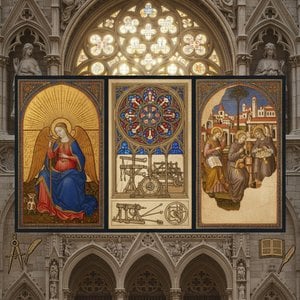
The Boucicaut Master: An Anonymous Genius of Early Gothic
The Boucicaut Master, or Master of the Hours for Marshal Boucicaut, remains one of the most enigmatic figures in Northern European manuscript illumination—a testament to artistic brilliance achieved without a traceable name. Active between 1400 and 1430 in Paris, he operated within the vibrant International Gothic style, a period characterized by opulent decoration and meticulous detail, reflecting both religious devotion and aristocratic patronage.
His fame rests primarily on his magnificent illuminated Book of Hours for Jean II le Meingre Boucicaut, now housed in the Musée Jacquemart-André. This lavish manuscript showcases unparalleled mastery of light and perspective—innovations that foreshadowed developments in Italian Renaissance painting. It’s a remarkable feat considering the stylistic conventions prevalent at the time, demonstrating an artist who dared to push boundaries while adhering to established artistic traditions.
- Early Life & Workshop Origins: Precise biographical details are scarce. Scholars believe he was likely born in Flanders or Burgundy, possibly influenced by Flemish artists like Jacob Coene—though definitive proof remains elusive. Evidence suggests he headed a prolific workshop in Paris, employing numerous assistants and fulfilling commissions for prominent figures across Europe.
- Stylistic Influences: The Boucicaut Master’s style is deeply rooted in the International Gothic tradition, inheriting elements from artists like Limbourg Brothers and Stefan Lochner. However, crucially, he also absorbed techniques and concepts emerging from Italy—specifically, developments in fresco painting and linear perspective—marking him as a pioneer of artistic innovation.
- Notable Works Beyond the Hours: Besides the Boucicaut Hours, attribution to the Master extends to several other manuscripts, including altarpieces and devotional panels. These works demonstrate his versatility as an illuminator and underscore his commitment to conveying profound spiritual themes with breathtaking visual artistry.
- Collaboration & Artistic Connections: The Boucicaut Master’s work frequently overlapped with that of Bedford Master—another influential Parisian illuminator—creating a dynamic artistic environment where stylistic ideas circulated freely. This collaborative spirit exemplifies the interconnectedness of artistic circles during the period and contributes to ongoing debates about authorship and attribution.
- Historical Significance: The Boucicaut Master’s contribution to art history is undeniable. He represents a pivotal moment in the transition from Gothic to Renaissance aesthetics, embodying the spirit of experimentation and intellectual curiosity that would characterize the burgeoning artistic revolution of the 15th century. His legacy continues to inspire artists and scholars alike, cementing his place as one of the most celebrated figures of Early Gothic art.
His influence can be seen in subsequent generations of illuminators who adopted his innovative approach to light and composition—a testament to his enduring artistic vision.