Bartolomeo Nazari: Venetian Baroque Portraitist
Bartolomeo Nazari (1693–1758) occupies a prominent position within the Venetian Baroque artistic panorama, primarily celebrated for his exceptional portraits that eloquently captured the splendor and sophistication of the era. Born in Clusone, nestled near Bergamo, Italy, his artistic trajectory commenced with apprenticeship under Angelo Trevisani – an encounter that instilled foundational skills and established him as a disciple of a respected master. Furthermore, formative connections with Francesco Trevisani and Benedetto Luti nurtured his talent and deepened his understanding of Baroque aesthetics. His astute observation of Fra Galgario, Bergamo’s celebrated portraitist, served as another catalyst for artistic refinement, cementing Nazari's position within the tradition of Venetian art.
Nazari’s relocation to Venice in 1724 decisively shaped his artistic career, anchoring him firmly at the epicenter of Venetian cultural life and securing his affiliation with the Fraglia dei Pittori – the guild of Venetian painters. This association provided invaluable access to influential networks and propelled his professional advancement. Notably, he undertook a significant expedition to Frankfurt in 1744, accepting a commission to depict Emperor Charles VII and his court; an ambitious undertaking that showcased both technical mastery and diplomatic sensitivity—a hallmark of Venetian artistic patronage during this period. His induction into the Accademia di Belle Arti of Venice in 1756 acknowledged his artistic accomplishments and ensured the preservation of Venetian artistic heritage for generations to come.
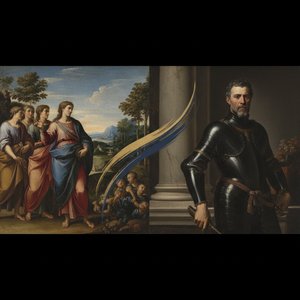
Nazari’s artistic style is characterized by meticulous attention to detail and a masterful manipulation of chiaroscuro – dramatic contrasts between light and shadow—techniques perfected during the Baroque period. He skillfully employed oil paint on canvas, achieving luminous surfaces and nuanced tonal gradations that conveyed depth and emotion with remarkable precision. His portraits frequently incorporated elaborate costumes and jewelry, reflecting the opulent tastes prevalent within Venetian aristocratic society and demonstrating a keen awareness of social conventions. The compositions were carefully balanced, emphasizing idealized beauty and conveying psychological insight into his subjects—a testament to Nazari’s artistic vision.
- Notable Patronage: Consul Joseph Smith; General Johann Matthias von der Schulenburg
- Opera Singer Focus: Carlo Maria Michelangelo Nicola Broschi (Farinelli) – Capturing Vocal Artistry
His legacy extends beyond individual portraits; his son, Nazario Nazari, followed in his father’s footsteps as a painter, perpetuating the family artistic tradition. The artist's enduring fame rests upon his ability to transform individuals into symbols of power, refinement, and artistic excellence—a testament to his skill as an artist and his indelible contribution to Venetian art history. He remains a pivotal figure in documenting the visual culture of 18th-century Venice, embodying the Baroque ideal of portraying human dignity and grandeur with unparalleled artistry.
Nazari’s work exemplifies the Baroque preoccupation with conveying emotion through form and color—a stylistic hallmark that distinguishes him from earlier artistic movements. His portraits are not merely representations of likeness; they are carefully constructed narratives designed to communicate character, status, and psychological complexity. Through his masterful use of chiaroscuro and meticulous rendering of textures, Nazari achieved an unparalleled level of realism while simultaneously elevating the portrait genre to new heights of expressive power.