Der botanische Visionär der Medici
Im goldenen Zeitalter des florentinischen Barock gelang es nur wenigen Künstlern, die feine Schnittstelle zwischen wissenschaftlicher Neugier und ästhetischem Glanz so meisterhaft einzufangen wie Bartolomeo Bimbi. Geboren im Jahr 1648 in der friedvollen Landschaft von Settignano, nahe Florenz, war Bimbi für ein Leben bestimmt, das von Pinsel und Meißel geprägt war. Als Sohn des Bildhauers Nicolò Bimbi waren seine frühen Jahre in einer Umgebung verwurzelt, in der die physische Welt akribisch beobachtet und dargestellt wurde. Diese grundlegende Erziehung verlieh ihm einen tiefen Respekt vor Textur, Form und den organischen Komplexitäten der Natur – Qualitäten, die ihn später als legendären botanischen Virtuosen auszeichnen sollten.
Bimbis künstlerische Reise begann ernsthaft unter der Anleitung von Lorenzo Lippi, einem der angesehensten Maler Florentins. In Lippis Werkstatt meisterte Bimbi die dramatische Sprache des Chiaroscuro und lernte, Licht und Schatten so zu manipulieren, dass seine Motive lebendig wurden. Nach dem Tod seines Mentors verfeinerte er seinen Blick für den Realismus unter Onorio Marinari, einem Künstler, der für sein Engagement in präziser Beobachtung bekannt war. Diese prägenden Jahre schenkten ihm weit mehr als nur technisches Geschick; sie verliehen ihm eine Art des Sehens, die die Lücke zwischen reiner Kunst und den aufstrebenden wissenschaftlichen Untersuchungen des 17. Jahrhunderts überbrückte.
Eine Symbiose aus Kunst und Wissenschaft
Die Flugbahn von Bimbis Karriere wurde durch seine Pilgerreise nach Rom um 1667 unwiderruflich verändert. Im Herzen des päpstlichen Hofes begegnete er dem einflussreichen Kardinal Leopoldo de’ Medici, einem Mann, dessen Leidenschaft für Kunst und Naturwissenschaften zum Katalysator für Bimbis größte Erfolge werden sollte. Dieses Mäzenatentum verwandelte den Künstler von einem geschickten Maler in einen lebenswichtigen Dokumentaristen der natürlichen Welt. Mit der Aufgabe betraut, die außergewöhnlichen botanischen Sammlungen der Familie Medici zu illustrieren, richtete Bimbi seinen Fokus auf die opulenten Früchte, Zitrusfrüchte und exotische Flora, welche die prächtigen Villen jener Ära bevölkerten.
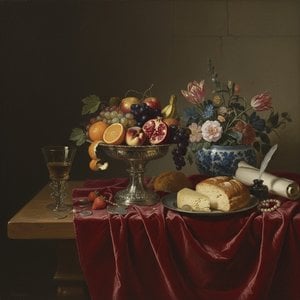
Sein Werk wurde zu einem gefeierten Zeugnis der Villa dell’Ambrogiana und der della Topaia, wobei er Leinwände schuf, die sowohl als exquisite Dekoration als auch als wissenschaftliche Exponate dienten. In Meisterwerken wie „Große Zitrone in einer Landschaft“ (1690) kann man seine Fähigkeit bezeugen, ein einzelnes Motiv – eine einsame, strukturierte Zitrone – zu isolieren und es in eine weite, atmosphärische Szenerie einzubetten. Diese Technik erlaubte es ihm, die haptische Realität der Frucht zu feiern und gleichzeitig die großartige, emotionale Skala beizubehalten, die für die Barockmalerei charakteristisch ist. Seine Gemälde waren nicht bloß Stillleben; sie waren Feierlichkeiten der Fruchtbarkeit, der Entdeckung und des Prestiges des botanischen Imperiums der Medici.
Vermächtnis von Präzision und Erhabenheit
Über seine botanischen Triumphe hinaus bewies Bimbi eine bemerkenswerte Vielseitigkeit, die es ihm ermöglichte, verschiedene Genres der Barockzeit zu durchdringen. Während er vor allem für seine Flora verehrt wird, zeigt sich seine Fähralt, unbelebte Objekte mit gleicher Leidenschaft darzustellen, in Werken wie „Türkische Waffen“ (1680). In diesem Stück offenbart er eine atemberweilende Präzision bei der Erfassung der kalten, reflektierenden Oberflächen osmanischer Waffen und Rüstungen, was beweist, dass seine Meisterschaft des Lichts weit über das Organische hinausging. Diese Breite des Talents stellte sicher, dass sein Werk in den hochmütigen Kreisen der florentinischen Gesellschaft Resonanz fand und sowohl den Kenner der schönen Künste als auch den Gelehrten der Naturgeschichte ansprach.
Die historische Bedeutung Bartolomeo Bimbis liegt in seiner einzigartigen Position als ein Künstler, der den Übergang vom Idealismus der Renaissance zur empirischen Strenge der Aufklärung dokumentierte. Er malte nicht einfach nur das, was er sah; er erhob das botanische Exemplar auf die Ebene des Erhabenen. Heute überdauert sein Vermächtnis in den erhaltenen Sammlungen im Palazzo Pitti und im Museo Botanico dell'Università di Firenze, wo seine Gemälde weiterhin als lebendige, atmende Fenster in eine verlorene Ära florentinischen Glanzes dienen. Sein Leben bleibt ein Zeugnis für die Macht der Kunst, sowohl als Spiegel der Natur als auch als Monument der menschlichen Neugier zu fungieren.
Fragen & Antworten
Woher kommt Bartolomeo Bimbi?
Bartolomeo Bimbi wurde in Italien geboren.
In welcher Stadt und in welchem Land wurde Bartolomeo Bimbi geboren?
Bartolomeo Bimbi wurde in Settignano, in Italien, geboren.
Wie finde ich Werke von Bartolomeo Bimbi zu einem bestimmten Thema?
Die Seite Nach Schlagworten von Bartolomeo Bimbi gruppiert die Kunstwerke des Künstlers nach ihren Schlagworten.