A Glimpse into a Renaissance Life Cut Short: Ambrosius Holbein
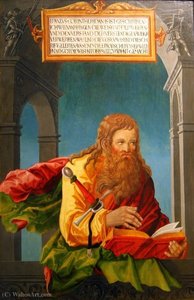
Born in the vibrant artistic hub of Augsburg, Germany, in 1494, Ambrosius Holbein emerged from a family already steeped in creative legacy. His father, Hans Holbein the Elder, was a pivotal figure transitioning German art from the intricate detail of the Gothic period towards the burgeoning Renaissance ideals sweeping across Europe. This familial environment wasn’t merely one of proximity to artistry; it was an immersive training ground where young Ambrosius, alongside his younger brother—the more renowned Hans Holbein the Younger—absorbed not only painting techniques but also the skills of goldsmithing, jewelry making, and printmaking. The workshop resonated with a collaborative spirit, evidenced by their inclusion in a panel of their father’s 1504 altar-piece triptych, “The Basilica of St. Paul,” a testament to the Holbein family's unified artistic vision. Augsburg itself provided fertile ground for development; a thriving center of commerce and culture, it exposed Ambrosius to diverse influences that would shape his early style.Early Artistic Training and Familial Influence
The young Holbein received his initial artistic education within the atelier of Hans Holbein the Elder, where he honed skills in meticulous observation and realistic depiction—traits deeply ingrained in his father’s distinctive approach. This formative experience instilled a profound appreciation for detail and realism, characteristics that would permeate Ambrosius's entire oeuvre. Notably, he participated in the creation of “The Basilica of St. Paul,” alongside his brother and father, demonstrating not only technical proficiency but also a shared commitment to upholding the highest standards of artistic excellence. The collaborative spirit fostered within this familial setting undoubtedly contributed to shaping Ambrosius’s artistic sensibilities and establishing him firmly within the traditions of Northern Renaissance art.Basel: A Crucible of Artistic Innovation
Around 1515, Ambrosius's artistic trajectory shifted towards Basel, Switzerland, where he undertook a significant commission to decorate the St. George Monastery’s main hall—a project that showcased his mastery of large-scale decorative painting and cemented his reputation as a skilled craftsman. This undertaking demanded considerable technical prowess and creative vision, reflecting the burgeoning dynamism of Basel's artistic landscape during this period. Furthermore, Ambrosius joined the Basel painters’ guild in 1517, signifying his integration into the city’s professional community and bolstering his access to resources and opportunities for advancement. His subsequent engagement with Herbster’s studio provided invaluable experience and fostered connections within Basel’s artistic milieu—a crucible of innovation where emerging styles challenged established conventions.Notable Achievements: Portraits That Capture Essence
Among Ambrosius Holbein's most enduring achievements are his portraits, particularly “Portrait of a Boy with Blond Hair” and “Portrait of a Boy with Brown Hair,” masterpieces housed in the Basel Kunstmuseum. These works exemplify Holbein’s unparalleled ability to convey not merely physical likeness but also psychological depth—capturing the inner character and spirit of his subjects with remarkable sensitivity. His technique—characterized by subtle shading, precise anatomical rendering, and an astute understanding of human expression—became a hallmark of Basel’s artistic style during this era. Beyond portraiture, Ambrosius explored religious themes with “Death of the Virgin,” demonstrating a command of composition and narrative storytelling that aligns with the broader trends of Renaissance art. His contribution to “The Island of Utopia” and “Signboard for a Schoolmaster” further underscores his versatility across genres and formats—a testament to his artistic talent and enduring legacy.A Legacy Beyond Technique: Influence and Remembrance
Sadly, Ambrosius Holbein’s promising career was tragically curtailed by his untimely death around 1519, at the young age of approximately twenty-five. Despite its brevity, his artistic output played a crucial role in shaping the trajectory of Northern Renaissance art—particularly influencing Hans Holbein the Younger, who would become one of the most celebrated portrait painters of his time. Ambrosius’s meticulous attention to detail and profound understanding of human psychology continue to inspire artists today, securing his place as a pivotal figure among Basel’s illustrators and artists specializing in “small format” works—a testament to his skill, innovation, and enduring impact on the artistic landscape of his era. His work remains an invaluable source of insight into the formative years of Renaissance art and serves as a poignant reminder of the brilliance extinguished too soon.Fragen & Antworten
Wie finde ich alle Werke von Ambrosius Holbein in einem bestimmten Medium?
Um alle Werke von Ambrosius Holbein in einem bestimmten Medium zu finden, nutzen Sie die Alle Medien-Seite des Künstlers.
Kann ich die Werke von Ambrosius Holbein nach Themen durchsuchen?
Die Seite Themenatlas ordnet die Kunstwerke von Ambrosius Holbein nach Themen an.
Wo kann ich die Kunstwerke von Ambrosius Holbein in chronologischer Reihenfolge sehen?
Es gibt eine Zeitachse der Werke von Ambrosius Holbein: Die Seite Zeitstrahl der Kunstwerke des Künstlers ordnet die Kunstwerke nach ihrem Entstehungsdatum.