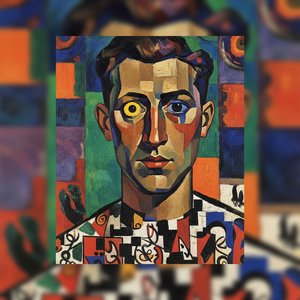
Alfred Basbous El-Rachani: Sculptor of Fluid Forms and Phoenician Echoes
Alfred Basbous el-Rachani (1924 – 2006) stands as a pivotal figure in Lebanese modernist sculpture, embodying a synthesis of abstraction, tradition, and profound engagement with the human form. Born in Rachana, Lebanon—a region steeped in Phoenician heritage—Basbous’s artistic journey was marked by meticulous observation of nature, particularly birds and reptiles, alongside an unwavering fascination for the female nude, themes that recur throughout his oeuvre. His sculptures aren't merely representations; they are explorations of essence itself, stripping away superfluous ornamentation to reveal a core of simplicity and grace.
Early Life & Artistic Beginnings
Basbous’s formative years were shaped by his upbringing as the son of a Christian cleric, fostering an appreciation for spirituality and artistic expression from a young age. Initially pursuing masonry—a practical skill honed during his employment with a railroad company—he swiftly transitioned to sculpting, captivated by the tactile process of transforming stone into evocative forms. This initial grounding in craftsmanship would prove invaluable in shaping his sculptural technique and informing his aesthetic sensibilities.
Influence of Masters
Basbous’s artistic vision drew heavily from influential sculptors like Henry Moore and Constantin Brâncuși. Moore's organic shapes and exploration of negative space resonated deeply with Basbous’s desire to capture the fundamental beauty of natural forms, mirroring the sculptor’s own fascination for biomimicry. Similarly, Brâncuși’s reductive aesthetic championed a similar pursuit of elemental truth—a commitment to distilling sculpture down to its purest expression of form and material—influencing Basbous's stylistic choices throughout his career. Jean Arp’s geometric abstraction further broadened his artistic horizons, encouraging him to consider alternative approaches to representation and emphasizing the importance of intellectual rigor alongside aesthetic beauty.
Formal Training & Recognition
Recognizing his talent, Basbous secured a scholarship from the French government, allowing him to pursue advanced studies at l’École nationale des beaux-arts de Paris under René Collmarini. This period solidified his sculptural technique and exposed him to international artistic discourse, fostering connections with fellow artists and shaping his understanding of contemporary sculpture trends. His work gained considerable acclaim during exhibitions in Paris, notably the International Sculpture Exhibition at Musée Rodin in 1960—a landmark achievement that cemented his reputation as a leading figure within the Lebanese art scene.
The Rachana Sculpture Park & Symposium
Driven by a conviction that Britain’s commitment to public sculpture should inspire similar initiatives in Lebanon, Basbous spearheaded the establishment of Rachana as an open-air sculpture park—a monumental undertaking that continues to attract artists from across the globe. From 1994 to 2004, he hosted the International Symposium of Sculpture at Rachana, fostering collaboration and innovation within the artistic community. This event served not only as a celebration of Basbous’s own artistic achievements but also as a catalyst for promoting Lebanese art internationally and nurturing the next generation of sculptors.
Legacy & Historical Significance
Today, Rachana Sculpture Park stands as a UNESCO World Heritage Site, testament to Basbous’s enduring vision and contribution to Lebanese culture—a singular accomplishment that underscores his unwavering dedication to artistic excellence and his profound engagement with both modernist principles and Phoenician artistic traditions. His sculptures—characterized by their fluid lines, subtle textures, and evocative depictions of the human form—remain influential within contemporary sculpture, embodying a timeless pursuit of beauty and simplicity rooted in observation, experimentation, and intellectual contemplation. They serve as enduring reminders of Basbous’s pioneering spirit and his indelible mark on Lebanese art history.