Die Vision eines Wanderers: Das Leben und Vermächtnis von Alexander Jaksowlew
Alexander Jewgenjewitsch Jaksowlew (1887–1938) war ein Künstler, dessen Lebensgeschichte wie ein grandioses, weitläufiges Epos des frühen zwanzigsten Jahrhunderts anmutet. Geboren in der imperialen Pracht von St. Petersburg, waren Jaksoljews frühe Jahre tief verwurzelt in den reichen Traditionen des russischen Realismus und den aufkeimenden Einflüssen des Impressionismus. Seine prägende Ausbildung an der Kaiserlichen Akademie der Bildenden Künste fand unter der Anleitung von Meistern wie Dmitri Kardowski statt – eine Zeit, die ihm ein strenges Beherrschen der Zeichnung und eine tonale Präzision einprägte. Doch während seine Wurzeln fest in russischer Erde verankert waren, war sein Geist von Natur aus nomadisch. Gemeinsam mit seinem Zeitgenossen Wassili Schuchajew begab sich Jaksowlew auf transformative Reisen durch Italien und Spanien; Erfahrungen, die die Palette seiner Vorstellungskraft für immer erweitern und seinem Werk eine kosmopolitative Eleganz verleihen sollten.
Der Lebensweg von Jaksowlew wurde durch die seismischen Erschütterungen der Weltpolitik unwiderruflich verändert. Nach dem Ausbruch des Ersten Weltkriegs und der darauffolgenden Oktoberrevolution fand sich Jaksowlew als Exilant in der Fremde wieder. Seine Reisen führten ihn in die entlegensten Winkel des Ostens – durch die Mongolei, China und Japan –, wo er zum faszinierten Beobachter fremder Kulturen wurde. In Peking, inmitten des Chaos der Revolution, begann er, die lebendige Essenz des asiatischen Lebens in Skizzen und Zeichnungen zu destillieren, die ihm später den Ruf als brillanter artiste-voyageur einbringen sollten. Diese Phase der Erkundung war nicht bloß eine Dokumentation; es war ein emotionales Eintauchen in neues Licht, neue Texturen und neue menschliche Erzählungen, die er schließlich in die Kunstsalons Europas tragen sollte.
Die Meisterschaft der Form und der Geist des Reisens
Nach seiner Niederlassung in Paris im Jahr 1919 wandelte sich Jaksowlew von einem russischen Studenten zu einer gefeierten Figur innerhalb der französischen Kunstszene. Seine Fähigkeit, die akribische Detailtreue seiner akademischen Ausbildung mit den evokativen, atmosphäuchtiven Qualitäten der Moderne zu verschmelzen, machte ihn zu einem herausragenden Mitglied der wiedererstandenen Bewegung Mir iskusstva (Welt der Kunst). Er erlangte große Anerkennung durch Ausstellungen, die seine atemberaubenden Darstellungen des Fernen Ostens präsentierten, insbesondere seine Studien des japanischen Kabuki-Theaters, welche eine unvergleichliche Fähigkeit bewiesen, Bewegung und theatralisches Drama durch feine Linienführung und Farbe einzufangen.
Jaksoljews technisches Repertoire war so vielfältig wie seine Reisen. Ob er nun mit dem weichen, intimen Medium des Graphitstifts oder der reichen, vielschichtigen Tiefe der Ölmalerei arbeitete – er besaß das einzigartige Talent, die Seele in seinen Motiven zu finden. Sein Œuvre zeichnet sich durch mehrere künstlerische Grundpfeiler aus:
- Die Intimität der Porträtkunst: Über die bloße Ähnlichkeit hinaus suchte Jaksowlew nach der psychologischen Wahrheit seiner Dargestellten, wie etwa in seinem eindringlich melancholischen Porträt von Leonid Solochub zu sehen ist.
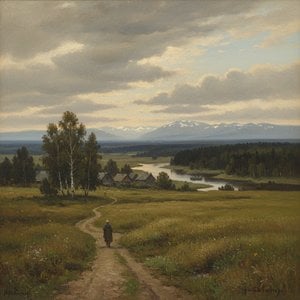
- Die Erhabenheit der Landschaft: Von den stillen Bergen des Persischen Frühlings bis hin zu den sonnenverwöhnten Weiten Afrikas dienen seine Landschaften als Fenster in die vielfältigen Klimazonen, die er durchquerte.
- Die Eleganz der menschlichen Figur: Seine Aktstudien und Darstellungen weiblicher Köpfe werden für ihre Anmut gefeiert, wobei sie anatomische Genauigkeit mit einer mythischen, fast ätherischen Schönheit verbinden.
- Dekorative Brillanz: Seine Arbeit an großformatigen Aufträgen, wie Wandmalereien und Fresken für bedeutende europäische Auftraggeber, unterstrich sein Geschick als Gestalter, der in der Lage war, architektonische Räume zu transformieren.
Ein bleibender Eindruck im modernen Kanon
Die späteren Jahre von Jaksoljews Leben waren geprägt von fortwährendem Abenteuer und künstlerischer Evolution. Seine Teilnahme an der berühmten La Croisière Noire – der motorisierten Expedition quer durch Afrika, gesponsert von André Citroën – schenkte ihm eine Fülle neuer, exotischer Bildwelten, die seinen Status als Meister der ethnografischen und Landschaftskunst weiter festigten. Selbst als er zwischen Ateliers in Paris und Rückzugsorten auf Capri pendelte, blieb sein Werk durch eine tiefe Verpflichtung zur Beobachtung und ein unerschütterliches Streben nach Schönheit verankert.
Obwohl er 1938 verstarb und ein Vermächtnis hinterließ, das die Lücke zwischen russischer Tradition und europäischer Moderne schließt, bleibt der Einfluss von Alexander Jaksowlew spürbar. Er war mehr als nur ein Maler; er war ein visueller Chronist einer sich wandelnden Welt. Seine Fähigkeit, die disparaten Elemente seines Lebens – die Disziplin St. Petersburgs, den Mystizismus des Ostens und die Raffinesse von Paris – zu einer kohärenten künstlerischen Sprache zu synthetisieren, stellt sicher, dass sein Werk weiterhin Sammler und Historiker gleichermaßen bewegt. In jedem Pinselstrich und jeder Bleistiftlinie findet man den Herzschlag eines Mannes, der die Welt nicht nur so sah, wie sie war, sondern als ein Gewebe aus unendlichen, bewegenden Wundern.
Fragen & Antworten
Wie viele Kunstwerke von Alexander Jekowlew können durchstöbert werden?
Sie können 49 Kunstwerke Werke von Alexander Jekowlew auf der Seite Alle Kunstwerke durchstöbern.
Wie finde ich Werke von Alexander Jekowlew in einer bestimmten Farbpalette?
Die Seite Nach Farbpaletten gruppiert die Kunstwerke von Alexander Jekowlew nach ihren Farbpaletten.
Gibt es eine Zeitachse der Werke von Alexander Jekowlew?
Es gibt eine Zeitachse der Werke von Alexander Jekowlew: Die Seite Zeitstrahl der Kunstwerke des Künstlers ordnet die Kunstwerke nach ihrem Entstehungsdatum.