Ahmad Abdelwahab: A Visionary Sculptor Inspired by Ancient Egypt
Ahmed Abdelwahab (born 1932 in Tanta, Egypt) stands as a prominent figure within the landscape of contemporary Egyptian sculpture. His artistic journey began with formal training at Cairo’s Faculty of Fine Arts, where he honed his skills in drawing and painting before dedicating himself to sculpting—a medium that would become synonymous with his distinctive creative voice. Abdelwahab's fascination stemmed from a profound connection to Egypt’s rich heritage, specifically the reign of Akhenaton, whose contemplative nobility and unwavering piety served as an enduring source of inspiration for his artistic endeavors.
- Early Influences & Education: Abdelwahab’s formative years were marked by intensive study at Luxor Fine Arts Studio and subsequently at the Atelier of Luxor, under the guidance of masters Ahmed Osman and Gamal El Sageny. These experiences instilled in him a deep understanding of Egyptian artistic traditions and laid the groundwork for his future explorations into sculptural form.
- The Akhenaton Obsession: Abdelwahab’s artistic trajectory decisively pivoted towards Akhenaton, perceiving within this pharaoh's visage a representation of noble contemplation and spiritual fortitude. He meticulously translated Akhenaton’s essence into diverse sculptural interpretations, maintaining the core tenets of introspection and piety.
- International Recognition & Artistic Movement: Abdelwahab’s artistic vision broadened horizons through scholarships to Italy and engagement with the Studio of Emilio Greco in Rome, immersing him in the currents of the International Artistic Movement. This exposure fostered a synthesis between Egyptian spirituality and modern sculptural techniques.
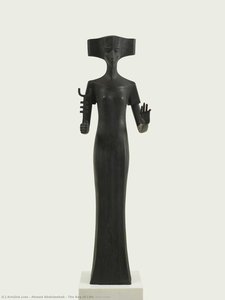
Abdelwahab's sculptures are characterized by their monumental scale and masterful execution—often utilizing materials like pottery, stone, polyester and metal—reflecting his commitment to conveying profound ideas about holiness and mysticism. His artistic approach prioritized simplification of details to emphasize mass and achieve dramatic shadowy projections. He achieved this effect through rhythmic sculpture compounds that linked triangular and rhomboid masses together with vibrant lines.
- Notable Exhibitions & Awards: Abdelwahab’s work graced numerous galleries and museums both domestically and internationally, including the Venice Biennale and exhibitions in France, Italy and Hungary. His dedication to artistic excellence was acknowledged through prestigious accolades such as the State Merit Award for Art (2002).
- Public Art Legacy: Today, Abdelwahab’s sculptures reside prominently in public spaces across Egypt—a testament to his enduring contribution to Egyptian art and culture. Pieces like “The Key of Life” exemplify his ability to capture complex emotions and spiritual concepts within striking sculptural forms.
His artistic legacy extends beyond individual artworks; it embodies a revival of Egyptian sculpture as a contemporary expression, rooted in the timeless wisdom of ancient traditions. Ahmed Abdelwahab’s sculptures continue to inspire awe and contemplation, cementing his place as one of Egypt's most influential sculptors.