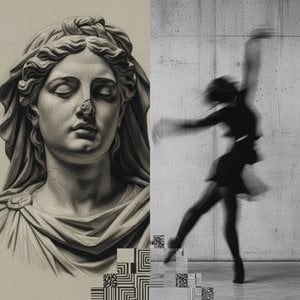
The Art of the Line: Mastering the Intimacy and Power of Drawing and Sketching
Explore the profound intimacy of the line. From Renaissance sketches to contemporary monochrome masterpieces, discover how drawing captures the soul of art. Expert insights for elite collectors seeking authenticity and timeless beauty.
Introduction To step into the presence of a true masterpiece is to witness a conversation between the artist’s soul and the infinite possibilities of a blank surface. While we often gravitate toward the lush, heavy textures of oil paintings—the drama...
To step into the presence of a true masterpiece is to witness a conversation between the artist’s soul and the infinite possibilities of a blank surface. While the world often gravitates toward the lush, heavy textures of oil paintings—the dramatic impasto of Van Gogh or the luminous glazes of a Renaissance master—there exists a profound, almost sacred intimacy in the medium of drawing. It is the purest form of artistic thought, where the hesitation of a charcoal stroke or the decisive sweep of a silverpoint pen reveals the very heartbeat of creation. Before the grand scale of a fresco or the complexity of an oil portrait, there is always the line: the raw, unmediated pulse of an artist’s hand meeting paper, parchment, or stone.
This fundamental act of marking a surface is more than mere decoration; it is a visual language that predates the most complex narratives of human history. In its simplest form, drawing serves as a direct conduit to the creator's mind, capturing the fleeting essence of movement, light, and human vulnerability. There is no room for the artifice of color to mask a lack of vision; here, every smudge is a moment of profound discovery, and every stroke is a definitive decision. For the discerning collector, these works offer a grounding connection to authenticity in an era increasingly dominated by the ephemeral glow of digital imagery.
From Preparatory Studies to Masterpieces: The Evolution of the Sketch
Introduction: The Humble Sketch – A Foundation of Artistic Vision The sketch, often perceived as a preliminary step—a fleeting thought captured on paper before the ‘real’ work begins—holds a far more significant place in the history of art than is co...
The sketch is often perceived through a lens of secondary importance—a fleeting thought captured on paper before the "real" work begins. However, within the annals of art history, the sketch holds a far more significant place than is commonly acknowledged. It represents not merely preparation, but a vital form of artistic exploration and a testament to an evolving vision. During the Renaissance, sketching took on a level of importance inextricably linked with the humanist pursuit of knowledge. Artists such as Leonardo da Vinci did not simply sketch to plan paintings; they utilized drawing as a rigorous tool for scientific inquiry, using anatomical studies to understand the intricate mechanics of muscle and bone through direct observation.
This evolution from study to finished work reveals the intellectual depth behind the art. Even after the advent of photography, artists continued to draw, driven by an intrinsic need to master anatomy and composition. We see this in the preparatory works of Raphael, where countless variations were explored to refine the final grandeur of his Vatican frescoes. Whether it is a raw, expressive study like George Romney’s Sketch 82 or the fragmented, meditative narratives found in Nicholas Roerich’s Several Sketches, these works provide an intimate glimpse into the creative process. They are the blueprints of human emotion, capturing the tension and energy that eventually coalesce into the monumental works of the masters.
The Monochrome Dialogue: Exploring Depth through Light and Shadow
Michelle Cioccoloni: A World Rendered in Monochrome London-based artist Michelle Cioccoloni has carved a distinctive niche within contemporary art, captivating audiences with her meticulously rendered monochrome ink drawings. Her work isn’t merely ob...
There is a unique power in the restriction of palette, a discipline that forces a heightened awareness of tone, texture, and light. In the realm of monochrome drawing, the absence of color compels the viewer to engage with the subtle nuances of shadow and form, creating an illusionistic space that feels both familiar and hauntingly profound. Contemporary artists like London-based Michelle Cioccoloni have mastered this dialogue, using meticulously rendered ink drawings to create worlds that are intensely personal and atmospheric. Her work demonstrates how a limited palette can achieve a sculptural quality, where objects seem to emerge from the page through the sheer mastery of light and dark.
This monochromatic approach is not merely a stylistic choice but an exploration of the very essence of perception. By stripping away the distraction of hue, the artist invites us to focus on the weight and volume of their subjects. This is evident in the way shadows can define the architecture of a landscape or the delicate curve of a human limb. For the collector, these works offer a sophisticated elegance that integrates seamlessly into modern, minimalist interiors, providing a focal point of quiet intensity. The monochrome line does not shout; instead, it whispers truths about the texture of reality and the enduring beauty of form.
Technical Virtuosity: The Mastery of Graphite, Ink, and Charcoal
Drawing is a visual art that uses an instrument to mark paper or another two-dimensional surface, or a digital representation of such. Traditionally, the instruments used to create a drawing include pencils, crayons, Conté crayons, and ink pens, some...
The true brilliance of a drawing lies in the technical mastery of its instruments. The choice between the delicate precision of a graphite pencil, the fluid grace of an ink pen, or the soft, atmospheric smudge of charcoal dictates the emotional temperature of the work. Traditional tools such as Conté crayons and silverpoint require a level of discipline that reflects the artist's academic excellence. We see this technical rigor in the works of artists trained at institutions like the Royal Drawing School, where the practice of observational drawing is elevated to a high art form.
The versatility of these media allows for an incredible range of expression. A fine ink line can capture the architectural precision of a landscape, while the heavy, gestural application of charcoal can convey the raw urgency of a figure in motion. In more contemporary iterations, such as the works of Olivia Kemp, we see how the mastery of line can transition into the construction of entirely imagined, cerebral realms. The ability to manipulate pressure and density creates a tactile reality that invites the viewer to trace the movement of the artist's hand, making the medium an enduring testament to human skill and craftsmanship.
The Modern Line: Contemporary Interpretations of Observational Drawing
Black & white drawing of a seated figure by Shubhankar Chandere. Expressive sketching with dynamic lines captures movement & emotion. Explore Indian abstract art.
In the contemporary era, the tradition of drawing continues to breathe and evolve, finding new voices in the hands of artists who bridge the gap between classical observation and modern abstraction. The practice has moved beyond mere documentation to become a tool for re-modelling the world. Artists today use the line to explore themes of identity, memory, and the intersection of the organic and the artificial. This is seen in the works of Shubhankar Chandere, where expressive sketching captures movement and emotion through an abstract Indian lens, or in the architectural explorations of Robbie Cornelissen, whose monumental drawings delve into the complexities of perception and solitude.
This modern interpretation also embraces the "remixing" of history. The line is no longer bound by the limits of a single moment; it can be used to transform personal memories into classical masterpieces. Through advanced techniques, we can now see personal photographs reimagined with the impasto texture of Van Gogh or the light-drenched atmosphere of Monet. This fusion of traditional draughtsmanship and contemporary vision ensures that the art of the line remains a living, breathing ecosystem of creativity, capable of reflecting both our historical heritage and our digital future.
Curating the Intimate: Integrating Fine Drawings into Luxury Interiors
The Soul of the Line: Discovering the Royal Drawing School In the heart of Shoreditch, where the industrial grit of London meets a burgeoning contemporary spirit, lies a sanctuary dedicated to the most fundamental of artistic acts: the act of seeing....
For the elite collector and the discerning interior designer, integrating fine drawings into a curated space offers an unparalleled opportunity for sophistication. Unlike large-scale oil paintings that command a room with their presence, drawings offer a sense of quiet intimacy and intellectual depth. They are perfect for creating focal points in hallways, studies, or private galleries, where their delicate details can be appreciated up close. The use of multi-panel layouts—splitting a single composition across three or five canvases—can also transform a wide architectural feature into a cohesive, modern statement.
When selecting works for a luxury environment, consider the interplay of texture and frame. A monochrome ink drawing paired with a gold-leafed solid wood frame provides a classic, regal aesthetic, while a more contemporarycharcoal study might suit a minimalist, frameless MirrorWrap finish. At WahooArt.com, we specialize in bringing this level of curation to life, offering everything from hand-painted oil reproductions that capture the soul of the masters to bespoke commissions that turn personal milestones into museum-grade art. Whether you are seeking a large-format mural for a hotel lobby or a delicate portrait for a private residence, the art of the line remains the most profound way to infuse a space with history, emotion, and timeless elegance.
Explore the profound history of iconic drawings. From Renaissance anatomical studies to modern expressive lines, discover how the humble sketch captures the soul of art history through an expert lens. Perfect for collectors and enthusiasts seeking deep artistic insight.
Explore the captivating world of monochrome painting! Discover its rich history, from Renaissance chiaroscuro to contemporary minimalism. Uncover the emotional power and artistic techniques behind this enduring art form.
Embark on a sophisticated journey through the history of line drawing. From classical mastery to modern minimalism, explore how the power of the line shapes emotion and space in fine art. Discover expert insights for collectors and enthusiasts of graphic elegance.
WConciergeOnline · antwortet innerhalb einer Minute
Hallo! Ich kann Ihnen dabei helfen, ein Kunstwerk auszuwählen, eine Bestellung zu verfolgen oder Fragen zur Garantie zu beantworten. Wie kann ich Ihnen heute behilflich sein?



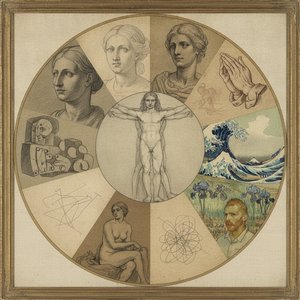 10 Iconic Drawings That Revolutionized the World of Art
 The Eloquent Line: Exploring the Artistic Significance of Sketches Across Movements and Media
 michelle cioccoloni
 Drawing
 Drawing- 02
 Royal Drawing School