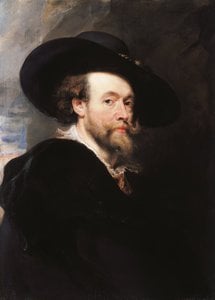
The Equestrian Portrait of Giancarlo Doria: A Baroque Masterpiece
Peter Paul Rubens’s “Equestrian Portrait of Giancarlo Doria,” completed in 1606, is more than just a painting; it's a visceral embodiment of the Baroque era. Measuring an imposing 265 x 188 cm, this oil on canvas work currently resides within the Chiesa di Santa Maria in Vallicella (Chiesa Nuova) in Rome, a testament to its enduring power and artistic significance. The portrait depicts Giancarlo Doria, an Italian nobleman and military leader, not merely as an individual but as a symbol of authority, strength, and the opulent grandeur that defined early 17th-century Europe.
- Subject & Composition: The central figure, Giancarlo Doria, dominates the canvas with a commanding presence. His posture, captured in a dynamic stance atop his horse, speaks of power and control. Rubens masterfully employs a pyramidal composition, drawing the viewer’s eye upwards towards the subject while simultaneously grounding him within the natural setting – a solitary tree that acts as both a backdrop and a subtle symbol of resilience and longevity.
- Rubens' Baroque Style: The painting is quintessential Rubens—a riot of color, movement, and intense emotion. His signature technique, characterized by loose brushstrokes and vibrant hues, creates an almost palpable sense of energy. The red cape draped over Doria’s shoulders isn’t merely decorative; it’s a calculated device to draw the eye and amplify the figure's importance.
A Window into 17th-Century Power
Created during a period of intense political and religious upheaval, “Equestrian Portrait of Giancarlo Doria” reflects the cultural significance of equestrian portraits within European society. These images were not simply representations of individuals; they served as potent symbols of power, nobility, and military prowess. The inclusion of the sword further emphasizes this symbolism, solidifying Doria’s role as a warrior and protector – a figure worthy of commemoration on such a grand scale. Rubens himself was deeply involved in diplomatic circles, and his artistic output often reflected the political realities of his time, lending an added layer of historical context to this remarkable work.
Technique & Materials: A Master's Hand
Rubens’s skill as a colorist is immediately apparent. He utilizes a rich palette – predominantly reds, browns, and golds – to create a sense of depth and luxury. The application of paint is remarkably free and expressive, characteristic of the Baroque style. The canvas itself, treated with multiple layers of preparation, provides an ideal surface for Rubens’s bold brushwork. The use of oil paints allowed for blending and layering, creating subtle gradations in tone and texture that contribute significantly to the painting's realism and dramatic effect.
Symbolism & Legacy
Beyond its technical brilliance, “Equestrian Portrait of Giancarlo Doria” is laden with symbolism. The horse itself represents strength, nobility, and freedom – qualities highly valued in a military leader. The tree, as mentioned earlier, symbolizes longevity and resilience, suggesting the enduring legacy of Doria’s lineage. This painting stands as a cornerstone of Baroque art, influencing generations of artists with its dynamic composition, expressive use of color, and profound understanding of human emotion. Its continued presence within the Chiesa Nuova ensures that this masterpiece will continue to captivate and inspire for centuries to come.



 In echtem Maßstab anzeigen
 Zum Druck wechseln
 Versenden als Grußkarte
 Teilen
 Details anzeigen
 Leitfaden

 Herunterladen
 Ähnliche Objekte
 Röntgenaufnahme
 Diashow
 Besucherstatistiken


 Mehr anzeigen






































 Die Glasoption ist nur für Größen unter 110 cm verfügbar.