In echtem Maßstab anzeigen In AR an der Wand sehen Zum Druck wechseln Zum digitalen Bild wechseln Versenden als Grußkarte
Details anzeigen Leitfaden öffnen Zu Favoriten hinzufügen Herunterladen Ähnliche Objekte Röntgenaufnahme Diashow Besucherstatistiken

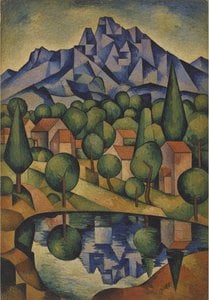
Die Häuser von L'Estaque

Ein Meisterwerk von Cézanne! Die Häuser von L'Estaque beeindruckt durch seine ruhige Landschaft und geometrische Formen – ein Schlüssel zum frühen Kubismus und zur modernen Kunstgeschichte.

Erkunden Sie die revolutionäre Kunst von Paul Cézanne (1839–1906), einem Postimpressionisten, der Impressionismus und Kubismus miteinander verband. Entdecken Sie seine geometrischen Formen, seine einzigartigen Pinselstriche, Stilllebenmalereien und seinen bleibenden Einfluss auf die moderne Kunst. #Cézanne #PostImpressionismus

Handgefertigte Ölreproduktion

Handgemaltes Ölgemälde auf Leinwand in Ihrer Wunschgröße und mit Rahmen, auf Bestellung von unseren Künstlern angefertigt. ( Zum Druck wechseln Zum digitalen Bild wechseln)

Corner sample of the P118B picture frame: formgepresstes Polystyrol, 5 cm wide and 3 cm thick
P118B 10
Corner sample of the P118H picture frame: formgepresstes Polystyrol, 5 cm wide and 3 cm thick
P118H 10
Corner sample of the P118W picture frame: formgepresstes Polystyrol, 5 cm wide and 3 cm thick
P118W 10
Corner sample of the P438Z picture frame: formgepresstes Polystyrol, 5.5 cm wide and 3.5 cm thick
P438Z 10
Corner sample of the P508JH picture frame: formgepresstes Polystyrol, 7 cm wide and 3.5 cm thick
P508JH 12
Corner sample of the P508YH picture frame: formgepresstes Polystyrol, 7 cm wide and 3.5 cm thick
P508YH 12
Corner sample of the P805H picture frame: formgepresstes Polystyrol, 5 cm wide and 3.5 cm thick
P805H 10
Corner sample of the P805Z picture frame: formgepresstes Polystyrol, 5 cm wide and 3.5 cm thick
P805Z 10
Corner sample of the P919BZ picture frame: formgepresstes Polystyrol, 7 cm wide and 3.5 cm thick
P919BZ 10
Corner sample of the P919G picture frame: formgepresstes Polystyrol, 7 cm wide and 3.5 cm thick
P919G 10
Corner sample of the P919XJ picture frame: formgepresstes Polystyrol, 7 cm wide and 3.5 cm thick
P919XJ 10
Corner sample of the P959ZH picture frame: formgepresstes Polystyrol, 5 cm wide and 3 cm thick
P959ZH 10
Corner sample of the P968JZ picture frame: formgepresstes Polystyrol, 6 cm wide and 4 cm thick
P968JZ 12
Corner sample of the W106C picture frame: Massivholz, 5 cm wide and 3 cm thick
W106C 8
Corner sample of the W218G picture frame: Massivholz, 5 cm wide and 3 cm thick
W218G 10
Corner sample of the W218JH picture frame: Massivholz, 5 cm wide and 3 cm thick
W218JH 8
Corner sample of the W218Y picture frame: Massivholz, 5 cm wide and 3 cm thick
W218Y 10
Corner sample of the W307PJ picture frame: Massivholz, 6 cm wide and 3 cm thick
W307PJ 10
Corner sample of the W316G picture frame: Massivholz, 6 cm wide and 3 cm thick
W316G 10
Corner sample of the W316PJ picture frame: Massivholz, 6 cm wide and 3 cm thick
W316PJ 8
Corner sample of the W316Y picture frame: Massivholz, 6 cm wide and 3 cm thick
W316Y 10
Corner sample of the W398PJ picture frame: Massivholz, 5 cm wide and 3 cm thick
W398PJ 8
Corner sample of the W4111J picture frame: Massivholz, 6.5 cm wide and 3.5 cm thick
W4111J 10
Corner sample of the W500HY picture frame: Massivholz, 7 cm wide and 5 cm thick
W500HY 15
Corner sample of the W500JH picture frame: Massivholz, 7 cm wide and 5 cm thick
W500JH 15
Corner sample of the W692G picture frame: Massivholz, 8 cm wide and 4 cm thick
W692G 12
Corner sample of the W849H picture frame: Massivholz, 5 cm wide and 3 cm thick
W849H 8
Corner sample of the W940BG picture frame: Massivholz, 7.5 cm wide and 4.5 cm thick
W940BG 15
Corner sample of the W953PJ picture frame: Massivholz, 6 cm wide and 3.5 cm thick
W953PJ 8

Standardformat
individuell anpassbar
CM
INCH

Wählen Sie aus unseren vordefinierten Formaten, die den ursprünglichen Proportionen des Kunstwerks entsprechen.

Breite
Höhe

Geben Sie die Breite und die Höhe an, die Sie für Ihren Rahmen oder Ihre Wand benötigen. Da dieses Werk handgemalt ist, kann der Künstler bei einer anderen Form etwas mehr um das Bild herum malen oder etwas abschneiden – Sie entscheiden. Wir senden Ihnen ein digitales Mockup zur Freigabe, bevor mit dem Malen begonnen wird. Das auf dieser Seite gezeigte Bild stellt nicht das tatsächliche Ergebnis dar – dies tut nur das Mockup.

Beispiele für Anpassungsmöglichkeiten: Gesicht durch Kundenfoto ersetzen; Haustier hinzufügen (z. B. Katze durch Hund ersetzen); eine versteckte Nachricht im Hintergrund einfügen; Hintergrundlandschaft oder -elemente ändern.
Nach der Bestellung wird das WahooArt.com-Team dem Kunden Anweisungen per E-Mail zusenden und eine Mockup-Vorschau bereitstellen.

Weltweiter Versand () in nur 3 bis 4 Wochen statt der üblichen 5 Wochen. (22 Oktober). Keine Kompromisse bei der Qualität.

Kostenloser weltweiter Expressversand
Hochwertige Leinenleinwand
Vollständiger Versicherungsschutz beim Versand
Zollgebühren-Rückerstattungsgarantie
Garantie für exakte Farbtreue
100-tägiges Rückgaberecht (nur bei Mängeln)
100% Geld-zurück-Garantie
Angebot für Mengenrabatt

Gesamtpreis

€ 239

Die Häuser von L'Estaque

Reproduktionsmedium

Format der Reproduktion

-

Gesamtpreis

€ 239

Kurzübersicht

  • Artist: Paul Cézanne
  • Movement: Postimpressionismus
  • Artistic style: Geometrische Formen
  • Influences: Impressionismus
  • Title: Houses at L'Estaque

Kunst-Quiz

Jede Frage hat nur eine richtige Antwort.

Frage 1:
¿Quién pintó "Casas en L’Estaque"?
Frage 2:
¿En qué año fue creada esta obra maestra?
Frage 3:
¿Qué movimiento artístico pertenece "Casas en L’Estaque"?
Frage 4:
¿Cuál es una característica distintiva del estilo de Cézanne utilizada en esta pintura?
Frage 5:
¿Cómo influyó Cézanne en otros artistas posteriores?

Houses at L'Estaque: A Pioneer of Modern Landscape

Paul Cézanne’s “Houses at L’Estaque,” completed in 1880, stands as an emblem of Post-Impressionism and a cornerstone in the artistic evolution toward Cubism. More than just a depiction of a Provençal hillside vista, it embodies Cézanne's revolutionary approach to representing reality—a method that profoundly influenced subsequent generations of artists and irrevocably altered the course of art history. This oil on canvas masterpiece invites contemplation and reveals layers of meaning beyond its serene surface.

The painting captures a scene near L’Estaque, Cézanne’s beloved village overlooking Marseille Bay. Two buildings dominate the composition—one larger than the other—positioned against a backdrop of rugged mountains bathed in azure skies. Scattered trees punctuate the landscape, adding to the palpable sense of natural beauty and tranquility. However, Cézanne doesn't strive for photographic accuracy; instead, he employs bold planes of color and deliberate brushstrokes to construct an image that prioritizes structure and form over illusion.

Artistic Elements: Geometry and Color

Cézanne’s technique is characterized by a radical simplification of perspective—a departure from Impressionist conventions. He abandons traditional linear recession, opting for flattened planes of color that overlap and interlock to create an impression of depth. This approach anticipates the geometric principles of Cubism, where artists dissect objects into constituent parts and reconstruct them in fragmented forms. The artist’s masterful use of color—primarily blues, ochres, and greens—further enhances the painting's expressive power. Cézanne applies pigment thickly onto the canvas, building up textured surfaces that convey a palpable physicality.

Proto-Cubism: Seeds of Revolution

“Houses at L’Estaque” is considered a pivotal work in Proto-Cubism, marking an important transitional phase between Impressionism and Cubism. Artists like Georges Braque and Pablo Picasso were deeply influenced by Cézanne's explorations of form and color—a shift away from optical realism toward a more conceptual representation of the world. Cézanne’s insistence on analyzing objects structurally paved the way for the groundbreaking innovations of Cubist painters who sought to depict multiple viewpoints simultaneously.

Les Peintres Cubistes: Apollinaire's Vision

Guillaume Apollinaire’s book “Les Peintres Cubistes, Méditations Esthétiques,” published in 1913, offers invaluable insight into the aesthetic and intellectual currents surrounding Proto-Cubism. Apollinaire examines the artistic achievements of Braque, Picasso, Gris, Metzinger, Gleizes, Léger, Delaunay, and Cézanne himself—highlighting their shared commitment to challenging conventional artistic norms and embracing new visual languages.

Conclusion: An Enduring Legacy

“Houses at L’Estaque” remains a testament to Paul Cézanne's transformative vision of art. Its understated beauty belies its profound significance as a precursor to Cubism—a movement that fundamentally reshaped the artistic landscape of the 20th century. By prioritizing form and structure over illusion, Cézanne liberated painting from the constraints of Impressionist observation and ushered in an era of geometric abstraction. This enduring masterpiece continues to inspire artists and captivate audiences alike, cementing Cézanne’s place as one of the most influential figures in modern art.

Fragen & Antworten

Wo finde ich einen Leitfaden zu „Die Häuser von L'Estaque“?

Die Leitfaden-Seite von "Die Häuser von L'Estaque" von Paul Cézanne bietet ein druckbares, zweiseitiges Infoblatt: das Kunstwerk mit seiner Identifikationstabelle, eine Zeitstrahl-Einordnung in die Lebensspanne des Künstlers, weitere Werke des Künstlers, die gemessene Farbpalette sowie kopierfertige Zitate in vier verschiedenen Stilen.

Wo kann ich "Die Häuser von L'Estaque" von Paul Cézanne herunterladen?

"Die Häuser von L'Estaque" von Paul Cézanne kann auf der Download-Seite des Kunstwerks als ein hochauflösender digitaler Bild-Download heruntergeladen werden.

Wie alt war Paul Cézanne, als „Die Häuser von L'Estaque“ im Jahr 1880 geschaffen wurde?

Als "Die Häuser von L'Estaque" im Jahr 1880 entstand, war Paul Cézanne – geboren 1839 – 41 Jahre alt.


Biografie des Künstlers

frühes Leben und Einflüsse

Paul Cézanne, ein französischer Post-Impressionist-Maler, wurde am 19. Januar 1839 in Aix-en-Provence, Frankreich, geboren. Sein frühes Leben war geprägt von einer starken Verbindung zu seiner Familie’s Bankgeschäft, das ihm finanzielle Sicherheit verschaffte. Dies ermöglichte es ihm, sich ohne finanziellen Druck auf seine künstlerischen Bestrebungen zu konzentrieren. Les Nabis, Neo-Impressionismus und Symbolismus beeinflussten Cézannes frühe Arbeit, die sich durch seinen Schwerpunkt auf geometrische Formen und eine reduzierte Farbpalette auszeichnete. Sein Interesse an den Werken von Paul Gauguin und Georges Seurat festigte seinen Post-Impressionismusstil.

Künstlerischer Stil und Techniken

Cézannes innovative Verwendung von Farbflächen und kleinen, sich wiederholenden Pinselstrichen schuf komplexe Felder, die seine intensive Beschäftigung mit den Motiven widerspiegelten. Sein oft explorativer Ansatz in der Kunst führte zur Entwicklung einer neuen bildlichen Sprache, die die zugrunde liegende Struktur von Objekten in einer Komposition betonte.

Vermächtnis und Einfluss

Cézannes bahnbrechende Arbeit im Post-Impressionismus ebnete den Weg für verschiedene Avantgarde-Bewegungen, darunter Kubismus, Fauvismus und Surrealismus. Sein Einfluss ist in den Werken von Pablo Picasso, Henri Matisse und Georges Braque zu sehen. Cézannes Vermächtnis inspiriert weiterhin Künstler und Kunstinteressierte gleichermaßen und festigt seinen Platz als eine zentrale Figur in der Geschichte der modernen Kunst.
Paul Cézanne

Paul Cézanne

1839 - 1906 , Frankreich

Eckdaten zum Künstler

  • Beeinflusste Künstler:
    • Paul Gauguin
    • Georges Seurat
  • Bemerkenswerte Werke:
    • Der Teich in Jas de Bouffan
    • Porträt von Émile Zola
    • Wald
    • Mont Sainte-Victoire
  • Geburtsdatum: 19. Januar 1839
  • Geburtsort: Aix-en-Provence, Frankreich
  • Künstlerische Bewegung: Postimpressionismus
  • Nationalität: Französisch
  • Sterbedatum: 1906
  • Vollständiger Name: Paul Cézanne
  • Von Ihm Beeinflusste Künstler:
    • Pablo Picasso
    • Henri Matisse
    • Georges Braque
Entdecken Sie Kunstwerke, die nach Themen, Stilen und Merkmalen sortiert sind.