Paul Klee’s “Senecio”: A Portrait of Time and Memory
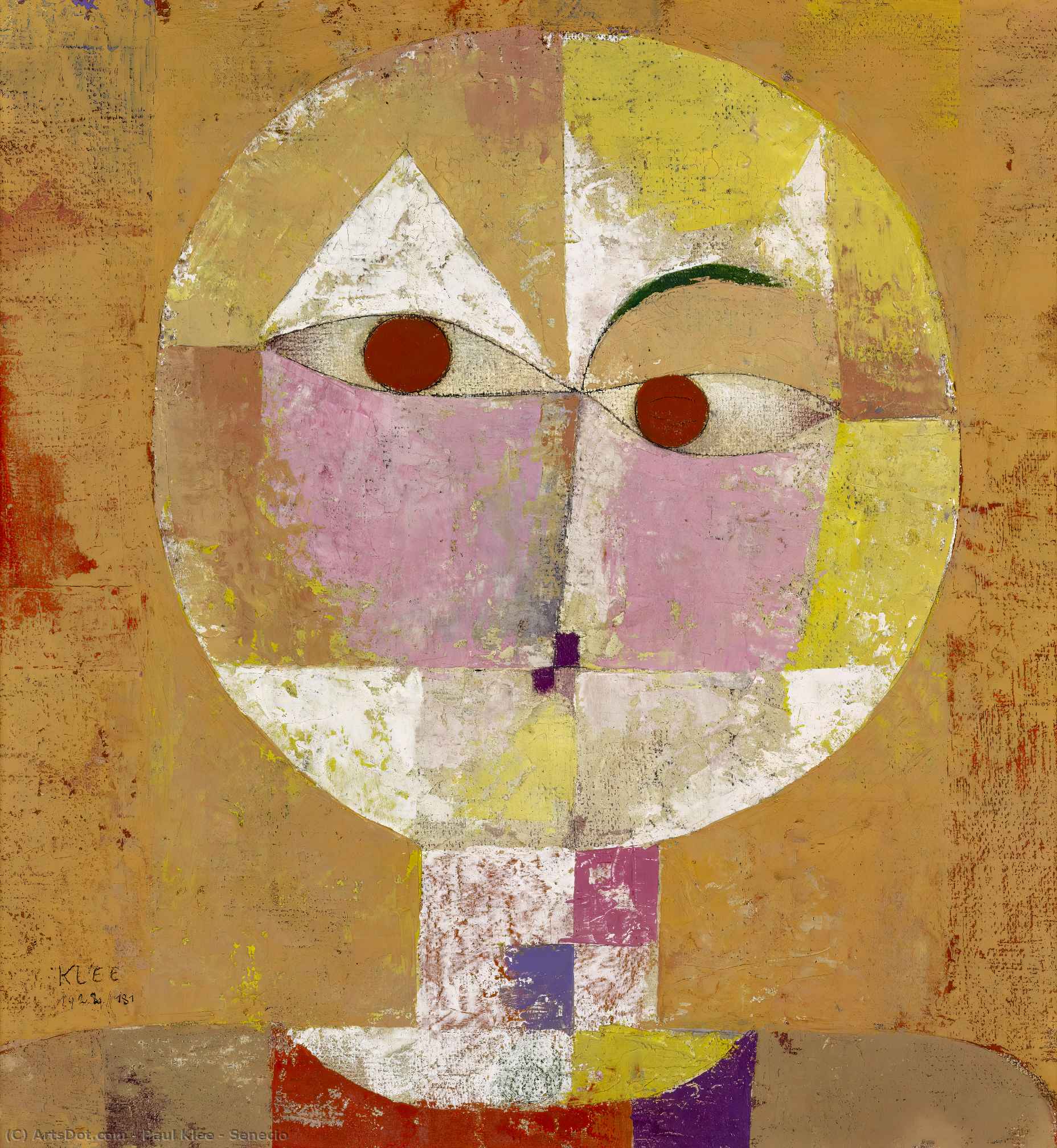
Paul Klee's "Senecio," painted in 1922, isn't merely a depiction of a face; it’s an intensely personal meditation on aging, memory, and the very nature of perception. Housed within the Kunstmuseum Basel, this seemingly simple work—a vibrant tableau rendered primarily in warm oranges, yellows, reds, and whites—holds a profound depth that continues to captivate viewers decades after its creation. Klee, a master of blending Expressionism, Cubism, and Surrealism, here employs geometric forms not as rigid structures but as evocative symbols, inviting us into a world where the boundaries between reality and dream blur.
The painting’s genesis is rooted in Klee's fascination with African masks and puppets – artifacts that he saw as embodying a potent blend of narrative and emotion. This influence manifests subtly within “Senecio,” particularly in the fragmented, almost mask-like quality of the face itself. The careful arrangement of squares, triangles, and circles doesn’t aim for photographic realism; instead, it seeks to capture the essence of a subject – an elderly man – through abstracted shapes that suggest both his physical form and the layers of experience etched upon his countenance. The deliberate flatness of the composition contributes to this effect, creating a sense of timelessness and inviting us to contemplate the image as if viewing it from across a vast expanse of time.
Deconstructing the Face: Cubism and Emotional Resonance
Klee’s masterful use of Cubist principles is immediately apparent. He dismantles the traditional representation of the human face, breaking it down into its fundamental geometric components. The eyebrows, for instance, are rendered as a triangular form elevated by a curved line—a visual suggestion of raised awareness or perhaps even a hint of wry amusement. The eyes themselves, though simplified, possess an undeniable intensity, drawing the viewer in and prompting questions about what lies behind that gaze. This deliberate fragmentation isn’t simply an artistic exercise; it's a way of conveying the subjective experience of memory—how we piece together fragments of the past to form a coherent narrative.
The color palette further enhances this emotional resonance. The warm hues – predominantly oranges and yellows – evoke feelings of warmth, nostalgia, and perhaps even a touch of melancholy. These colors aren’t applied in a purely decorative manner; they are carefully considered to create a specific mood and atmosphere. Notice how the bright tones contrast with the darker areas, suggesting both vitality and the inevitable shadows that accompany the passage of time.
Symbolism and the Figure of Senecio
The title itself, “Senecio,” is deeply significant. It refers to the plant *Senecio vulgaris*, commonly known as ragwort—a flower often associated with aging and decline. However, Klee’s choice of this name isn't intended to be purely negative. Instead, it invites us to consider the multifaceted nature of old age – a time of wisdom, experience, and perhaps even a certain kind of beauty. The painting subtly suggests that the “Senecio” figure is not simply an embodiment of decline but also a repository of memories and stories.
Furthermore, the reference to Senecio, the Roman playwright known for his tragedies, adds another layer of meaning. The image’s fragmented nature mirrors the themes explored in Senecio's plays – loss, memory, and the fragility of human existence. The raised eyebrow, a key element of the composition, can be interpreted as a symbol of intelligence and awareness—a reminder that even amidst the passage of time, the mind remains active and engaged.
A Timeless Masterpiece: Reproduction Possibilities
Reproductions of “Senecio” offer an exceptional opportunity to bring this remarkable artwork into your home or office. WahooArt specializes in meticulously hand-painted reproductions that capture not only the visual details but also the emotional depth and artistic spirit of the original. Our skilled artists utilize archival-quality materials and techniques to ensure that your reproduction faithfully reflects Klee’s genius, providing a stunning addition to any collection or interior design scheme. Consider the size – 40 x 38 cm—a perfect scale for contemplation and conversation. “Senecio” is more than just a painting; it's an invitation to reflect on the beauty of time, memory, and the enduring power of art.