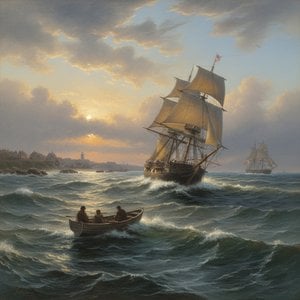
Walter Parsons Shaw Griffin (1861-1935): Bridging Barbizon and Impressionism
Walter Parsons Shaw Griffin (1861-1935) stands as a pivotal figure in American art history, embodying the synthesis of Barbizon landscape painting with burgeoning Impressionistic sensibilities. Born in Brooklyn, New York, Griffin’s artistic journey began modestly but swiftly gained momentum through dedicated study and prolific output, establishing him as one of Old Lyme Art Colony's most influential instructors and producing landscapes imbued with a profound sense of atmosphere and color that continue to resonate today.
Early Life and Artistic Training
Griffin’s formative years were marked by an unwavering commitment to artistic excellence. He pursued formal training at Pratt Institute, honing his skills in drawing and painting before embarking on extended expeditions to Europe – specifically France – during the late 1880s and early 1890s. These travels proved transformative, exposing him to the luminist ideals championed by artists like Jean-François Millet and Frédéric Bazaltzki, profoundly shaping his artistic vision. The Barbizon School’s emphasis on direct observation of nature and tonal painting deeply impacted Griffin's technique, informing his approach to capturing the subtleties of light and shadow in his landscapes.
The Impressionistic Influence
Despite his grounding in Barbizon principles, Griffin wasn’t immune to the allure of Impressionism. Artists such as Claude Monet and Camille Pissarro captivated him with their revolutionary exploration of color and fleeting moments of perception. He began incorporating Impressionistic techniques into his work – particularly layering brushstrokes and utilizing complementary colors – demonstrating a willingness to embrace innovation while retaining core aesthetic values. This blending of styles is evident in paintings like “Lillian Baynes,” where Griffin skillfully combines Barbizon’s tonal harmony with Impressionistic vibrancy, creating images that capture both the grandeur of the landscape and its ephemeral beauty.
Old Lyme Art Colony and Teaching Legacy
Griffin's dedication to artistic education culminated in his tenure as a professor at Old Lyme Art Colony from 1903 until his death in 1935. He fostered an environment conducive to experimentation and encouraged students to develop their own distinctive voices, nurturing generations of artists who would carry forward the legacy of Griffin’s teachings. His influence extended beyond technique; he instilled in his pupils a deep appreciation for the transformative power of nature and championed the importance of conveying emotion through visual art—values that continue to guide Old Lyme's artistic ethos.
Notable Paintings and Artistic Achievements
Griffin produced over 300 paintings throughout his career, showcasing an impressive range of subjects – from expansive vistas of Connecticut’s shoreline to intimate portraits capturing human emotion with remarkable sensitivity. His landscapes are celebrated for their masterful depiction of light and color, conveying a palpable sense of place and evoking profound contemplation. Furthermore, Griffin's meticulous attention to detail—particularly in portraying foliage and atmospheric conditions—established him as a master of tonal painting, securing his position among the foremost landscape artists of his era.
Historical Significance and Artistic Enduring Appeal
Walter Parsons Shaw Griffin’s contribution to American art transcends mere stylistic innovation; he represents a crucial bridge between two dominant artistic movements – Barbizon and Impressionism – demonstrating the capacity for artistic evolution while upholding fundamental aesthetic ideals. His paintings continue to inspire admiration for their beauty, honesty, and profound connection to the natural world—affirming Griffin's enduring legacy as an artist who profoundly shaped the course of American art history.